


michigan, 6a
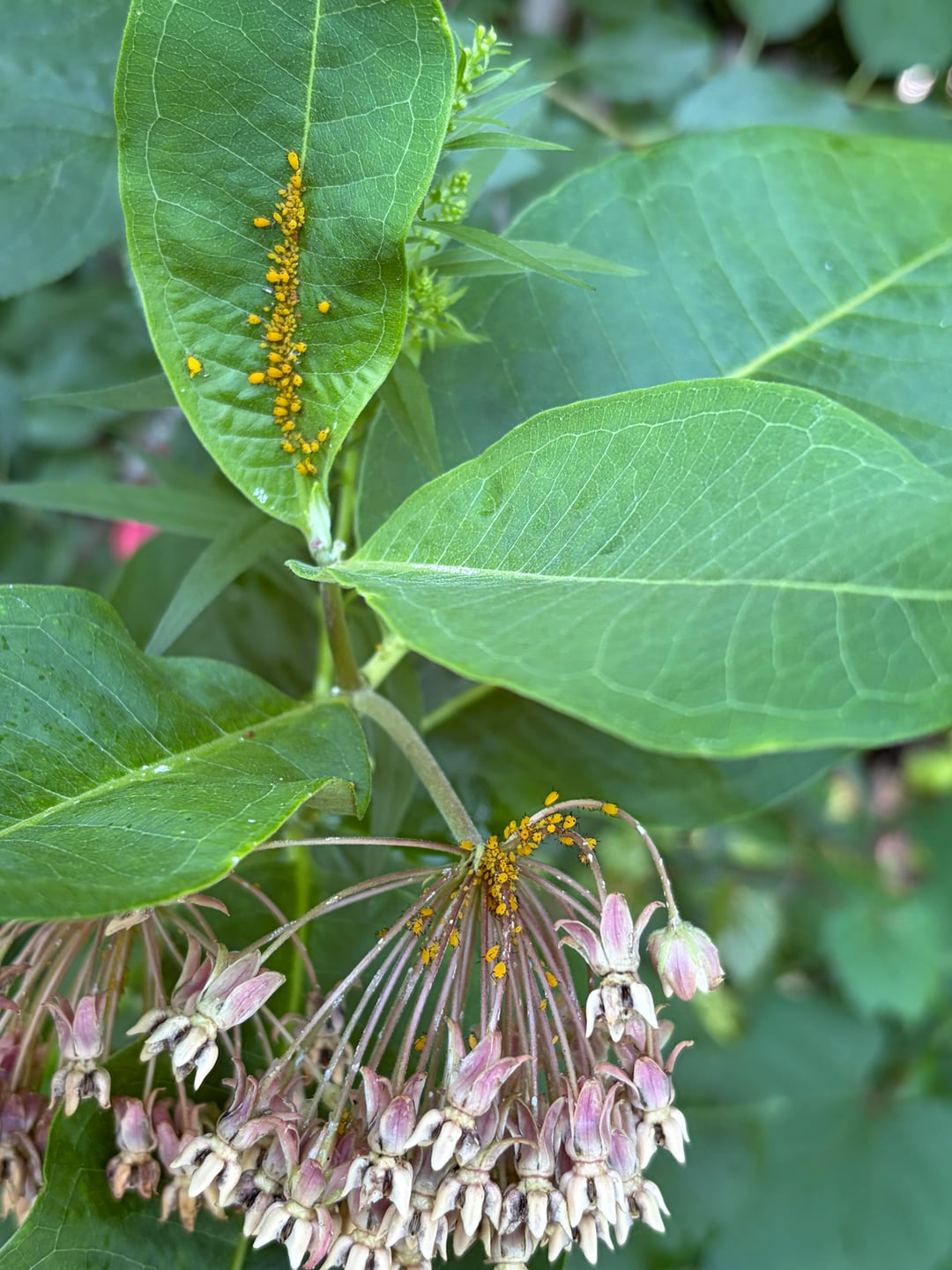
what do i do 😨 this is all one plant, all different blossoms. my other milkweed is not afflicted by the aphids thankfully.
i crushed a lot the other day. my hose doesn't reach this far so i hand water this area. no chemicals, no oils. i haven't seen lady bugs. a few smaller flies… maybe a wasp or 2… i don't know if they could catch up to this anyway. 😨
by anywhere-justnothome
46 Comments
Looks like Aphids. I would just leave it and the predators will come eventually
Let nature be nature as milkweed entails.
what I do with aphids is mix together organic Dr. Bronners soap with water and spritz down the clusters of aphids. It generally kills them or incapacitates them on contact but isn’t a horrible synthetic pesticide
A few rounds of this over a week or so and the population is usually greatly diminished, and I leave it alone, and predators usually take over the rest
i’ve heard of other people spraying them off with just water from the hose with similar results
I know you mentioned your hose isnt long enough BUT you could get an extension and just blast them off with a strong yet of water.
Squish em. Predators will clean up the rest eventually.
My butterfly weed was covered last year and was fine. It’s back again this year just as strong.
The baby ladybugs will come soon. Fear not.
That’s what people don’t tell you about milkweed, aphid magnets
These look like the invasive oleander aphids. Not many predators will eat them bc of the bitterness of milkweed saps but you have two heroes in the garden: hoverfly larvae and ladybugs.
Hoverfly adults need open-faced flowers to survive but their babies eat aphids almost exclusively. One larvae will go serial-killer mode on an aphid colony almost overnight. But keep in mind that it can take two weeks for the whole cycle to occur.
Plant some open-faced yellow flowers – like zinnias, coneflowers, sunflowers, coreopsis – to bring the adults in. Set out mosquito dunk buckets which helps to encourage breeding. Females will lay their eggs close to a colony so that their babies will have food when they hatch. Resist the urge to pick off aphids since the larvae may be forced to eat caterpillars if there aren’t enough aphids to support them.
As for attracting ladybugs, I bring them in with yarrow, dill, parsley, marigolds, zinnias, basil, and cosmos. They also love to “sneak attack” from hiding in the thyme. I was hooting and hollering the first time I saw a ladybug WRESTLE an aphid.
I haven’t done anything to my milkweeds at all, they’re aphid-free now thanks to the killing crew of ladybugs and hoverflies.
I just spray these off with my hose. Never on my common milkweed – they like my swamp milkweed more!
https://preview.redd.it/9o6kdi2ff9ch1.jpeg?width=3024&format=pjpg&auto=webp&s=91542e5297802c15ef3d57c7f4f0b91310d784b9
This was mine last June. They were all picked off by predators within a few weeks. If you find that you just don’t see many predators because you’re native garden is still young, you can manually just crush them with your fingers. Also, consider planting native mints to attract more wasps to your garden. Good luck!
Aphids are a controversial topic around here. In the end, the milkweed will be fine. If it’s just one plant, let it fall on the grenade for others. This will build resilience in your garden that will last several years or forever.
That said, I understand it’s hard to watch. If you want a quick fix, neem spray does the trick, but I urge you to leave it.
Aphids. Just spray them off with a hose.
Mine looked just like that for a few weeks but something has eaten most of them at this point! I saw a small praying mantis eat an aphid this morning
If oleander aphids were only on one of my milkweed plants, I would be thrilled and let them have at it, tbh! If you blast them off, the ones that survive might spread themselves around. They don’t really cause permanent damage to fully grown milkweed plants. I only remove them from seedlings. Aphids are a tasty snack for milkweed bugs, so they might help attract native insects!
My common milkweed looks like this every single summer and it’s going strong. They haven’t managed to harm it yet. The worst part about it is all the aphid dew that attracts flies like crazy. I’ve had to pull up the plants near our front door and along our patio where we barbecue because of it.
Get a small hand pump pressure sprayer and use water to blast them?
Neem leaf extract
The milkweed doesn’t care. Humans may, but the plant will be fine. It will invite native enemies to your plants to feast.
Oleander aphids; they’re gross but they won’t actually harm your plants much.
Strangely I’ve had zero this year. Don’t know why.
I would leave it alone. There is a lot of advice to squish them or hose them off, but by doing so you’ll inadvertently also destroy any developing predator larvae that are amid the swarm (and delicate monarch eggs/caterpillars), potentially prolonging the process. My first couple of years I had huge aphid swarms like this too, but now by year 6 I never see any of these oleander aphids anymore. As your local backyard ecosystem matures, things will balance themselves out.
imo the most helpful thing you can do is add more plant diversity to attract more aphid predators like syrphid flies and parasitic wasps.
For now, I’d just remove mechanically if that and wait for the winged cavalry to show up.
Now and certainly next year, you can plant things that provide food and cover for predatory insects. Here’s a table from a book with what you can plant to attract them.
It’s your excuse to plant herbs, which are stupid easy to grow.
Resist “organic” insecticides like neem oil and diatomaceous earth. Except for biological controls like mosquito dunks, most anything that will kill a bug you don’t like will kill a bug you want.
There’s a great book called Good Bug Bad Bug that is primarily for vegetable gardeners. It walks through how to deal with unwanted bugs without resorting to any pesticides.
https://preview.redd.it/rd668ae8o9ch1.jpeg?width=1179&format=pjpg&auto=webp&s=ed274d8e2b6f963a70abe11ab22e728865948431
Idk but I had aphids on a small day lily , the spread to dahlias and 2 hyacinth bean grape vines and ultimately I had to cut everything to the ground bc the aphids were completely taking over and very thick on the plants.
I just saw them on my milkweed a couple days ago and I cut the leaves back and put them in a plastic bag and sealed the bag.
I’ve heard that if you crush some, predators might smell it and come sooner. Fortunately I’ve never needed to test that.
Don’t panic. I am sure that aphid eaters will be there before long. Then they will be breeding in your garden and after this year you will not have such infestations. It is unattractive now, but wait and see.
Some of my milkweed has it too. But the predators are slowly showing up. Unless a pest is literally destroying my plants I usually let the good guys show up and do the work for me 🤣
https://preview.redd.it/ayn9ggejr9ch1.jpeg?width=2268&format=pjpg&auto=webp&s=dc548db35bf9ad50c22e97d1f2781b7c7e8096f8
I had a plant taken over by these then mealybug destroyer larva and ladybug larva came to the rescue! I really had to bide my time and resist washing them all off! But they got a good meal and no more aphids 💚
Oof this happened to my milkweeds last year when I first transplanted them, and the aphids ultimately killed my plants… They came back strong this year tho and no sight of aphids! I would say remove as many aphids as you can because the lady bugs and lacewings weren’t enough to help me, but just know that even if that milkweed is defeated this year doesn’t mean it won’t come back next year! Just plant more native plants around that area so there’s a diversity of insects that can keep the aphid population under control.
You need ladybugs and lady bug larve
I’m also in Michigan and had the same exact thing happen this year, starting about 1.5 months ago. Oleander aphids absolutely covering our swamp and common milkweed, and now starting to get on our butterfly weed. Our garden is only on year 2 so I felt DOOMED up until yesterday when my husband and I noticed several ladybugs in various life stages that are starting to eat the aphids! I honestly doubt they are going to completely decimate the aphid population at this point because it’s so extensive, but I’m happy I waited and didn’t 1) cut my plants or 2) get aggressive with squishing/hosing as it seems like it’s somewhat balancing itself now. My hope is that the aphid predators will show up earlier next year as I continue building my native plantings/ecosystem and it won’t be allowed to get this bad. Good luck and just know I can commiserate. Hang in there! (And now of course the Japanese beetles have shown up to the party so I have a whole other problem 😅)
I just went through this, and the ladybugs showed up! I still had to do a little spot treatment with a cloth wet with a little bit of soap and water. Between the ladybugs and the spot treatment, they are under control
Do nothing. If you really want the aphids gone, plant some dill weed nearby. It will attract the almighty hoverfly.
Its fine
That’s too many, the plant will suffer, spray or flick some of them off…
Blast ’em with a water hose. They’re too weak to climb back on.
This was my milkweed last year. I waited it out. Ladybugs and other garden helpers showed up eventually but it still looked.. not great.
This year the milkweed came back with a vengeance with not a single aphid to be found!
I bought a lot of native lady bugs. They were absolute terrors to the aphids and knocked out a huge amount of them. Literally right when I released them on the plant they went right for the aphids directly within seconds. It was amazing. They ate hundreds of them. I released them in batches, apparently you can store the ladybugs in the fridge for a week or so, so I would release a few at dawn and dusk each day and they were like velociraptors, would sprint right at the closest aphid and then move on to the next.
Just make sure you get ones native to your area as there are a lot of them sold that are invasive.
Spray with diluted dish soap and then hose them all off.
Blast them off with the hose. If you had predators in your garden, I’d guess they would have found them before the infestation got this bad. The plant may die back, but it should be back next year <–This is all my experience…Apparently no ladybugs in my city garden
Agh!! These nasties got all over my butterfly weed. I sprayed them with dish soap and water first and then rinsed the plant after 30 minutes or so.
Milkweed is tough, even if you weren’t to aid it in any way, and even if it was soo loaded that they did do a number on it, below ground is a large, thick rhizome that can easily resprout. Worst case scenario it’d come back strong next year.
I buy native ladybugs from Natures Good Guys. They will absolutely devastate the aphids. I usually buy 1500, about a month apart. But the first set I bought this year is still around lol.
I saw someone use a lint roller once
I remember reading once to cut back on any fertiliser/additional nutrients being used as it inadvertently feeds the aphids, and just ensure the plant has adequate water to compensate the aphids draining the plants of its sap
Mine looked like this for a while, and then something started eating them and now they’re all gone.
Time to get a decent large high rimmed pots and stick a bunch of dill in it and sit back and wait. for the lacewings to see the dill and then see the aphids. And then sit back and watch the massacre. And don’t squish the skinny green flylike insects those aren’t going to eat you they are looking for the perfect perch and angle to snipe the aphids.
I’ve already seen a lot of great replies, but if you just want to help the milkweed immediately, cut the plant about halfway back. When you cut them back this time of year you’ll get lots of fresh new growth which monarchs love.