
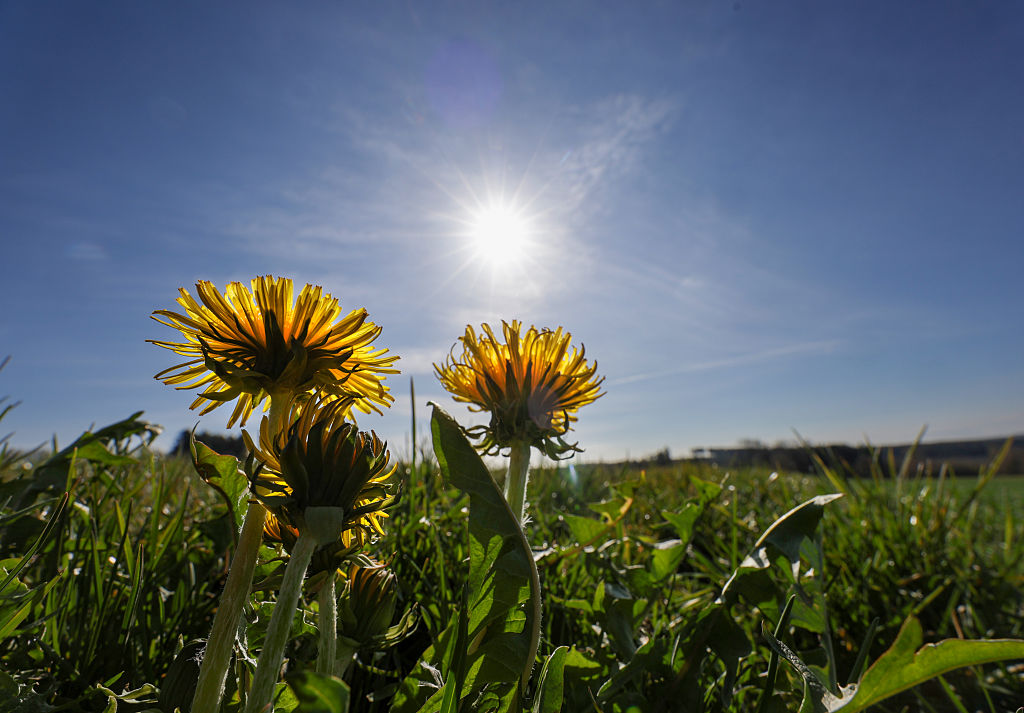
Why dandelions can benefit your lawn, garden and even your dinner table.
picture alliance/dpa/picture alliance via Getty IDan Chalk/Midland Daily News
A few weeks ago, I wrote an article about dandelions and the unsubstantiated fear that many homeowners have of them invading their lawns. I tried to assure homeowners that having dandelions in their lawns isn’t the worst thing in life — or for their lawns.

In doing so, I stated some positive characteristics of dandelions and suggested that maybe you should celebrate them instead of losing sleep.
Article continues below this ad
The reaction to the dandelion article demonstrated the obsessive hate for dandelions. I now have a new sarcastic title of being a dandelion lover and am banned from many public spaces. I now realize more than ever that Americans love their lawns and hate dandelions. The strong passions surrounding the American lawn have encouraged me to put out the white flag and write an article to assist homeowners with the stresses of growing grass in the hot summer months.
We seed Michigan lawns with Kentucky bluegrass, perennial ryegrass and red fescue. We would never put dandelion seed in the mixture. All of these types of grass are referred to as cool-season grasses. Their preferred temperatures are in the 70s, and thus they grow best in the spring, late summer and early fall.
The hot temperatures of summer are stressful for cool-season grasses and are the reason many of our lawns become weak and thin. Modest cultural practices can aid a lawn and reduce the stresses of summer.
When our lawns become stressed in the summer, we often think of adding supplemental water to maintain the health of the grass. Watering is beneficial for the turf if done properly.
Article continues below this ad
Most homeowners actually overwater turf and waste water and, thus, money. Turfgrass roots shorten during the summer months. When too much water is added, the water will move past the root zone of the plants and be wasted.
During hot, dry months, it is more economical and also better for the turf if irrigation is run for short and frequent intervals. Depending on temperature and rainfall, you might have to use supplemental water of ½ to 1½ inches.
The best time of day to irrigate is in the morning or early afternoon. I believe the morning is the most efficient time since water evaporates quickly in the afternoon. Afternoon watering, though, is beneficial in cooling the grass blades.
The worst time to water is in the evening. Watering in the evening causes the water to remain on the grass blades longer, which encourages diseases.
Article continues below this ad
If your decision is not to water during the hot and dry summer months, you will cause your turf to go dormant and become brown. It is okay to allow your turf to go dormant for short periods of time while you are on a short vacation, for example. The concern occurs when the grass is dormant for more than three to five weeks when temperatures are in the 80s. These conditions can cause the crowns of the grass plants to dry out and die.
If there is a drought for more than two to three weeks, you must water your lawn with at least ½ inch of water to prevent death. Your lawn will not green up, but the plants will survive. Once the temperatures cool down, the grass will start to green up. I would not mow your lawn if you allow it to go dormant. The crowns are weakened during droughts and are easily damaged or killed.
Mowing your lawn properly will also reduce stress during the hot, dry months of summer.
Mowers with dull blades will rip and shred grass blades. These grass blades, with rough edges, are more prone to water loss and will brown up more quickly. Most of us only take time to sharpen our blades in the spring. Summer is also a good time to have your blades checked.
Article continues below this ad
The longer grass is allowed to grow, the deeper the roots will grow. It is now recommended to mow your grass at 3 inches. At this height, the soil will be shaded, which reduces evaporation. Also, the shade will reduce weed seeds, like dandelions, from germinating.
Mowing is stressful on your turf. Cut only when needed. It is recommended to mow when you are cutting only a third of the blade. Leave the grass clippings; they will break down. The breaking down of grass clippings adds nutrients and organic material to the soil. The nutrients and organic matter reduce stress during the summer months.
Plants need to be growing and have the availability of water for the uptake of nutrients. With the lack of growth and water, there will be less need for fertilization during the summer months. There is no need to fertilize a lawn unless you are actively watering during the summer months.
If you go to the garden center, you will notice bags of summer fertilizer have a lower rate of nutrients in the bag. I recommend not fertilizing at all during the summer months. As you know, fertilizer is expensive, and this will save you some expense, which can help out with the higher water bill.
Article continues below this ad
The best time to fertilize is when the weather is becoming cooler in the fall. August and September will give you the most bang for the buck. This is just before the turf really starts to grow and there is more rainfall.
Grubs are the last thing that is a concern in lawns during the summer. You will know if you have an infestation of grubs if there are dry patches in your lawn or the lawn is dug up by skunks. The grubs of European chafers and Japanese beetles are feeding on the roots of the grass. There are insecticidal products that will control your problem. The best time to apply grub control is when the grubs are hatching from the eggs. This means you should use control before you see the damage.
If you are obsessed with dandelion control and didn’t enjoy my dandelion article, maybe these tips on growing a healthy lawn might help. The best way to prevent weeds in your lawn, including dandelions, is by growing a healthy lawn. The most stressful time for lawns — and homeowners who are obsessed with a high-quality lawn — is the summer.
Article continues below this ad
This article is just a white flag for the dandelion article, so I can be seen in public again.
Chuck Martin was a senior horticulturist at Dow Gardens for 39 years and is writing a weekly column about gardening. If you have a question or suggestion for a future article, email it to him at riverhaven772@gmail.com.
Comments are closed.