
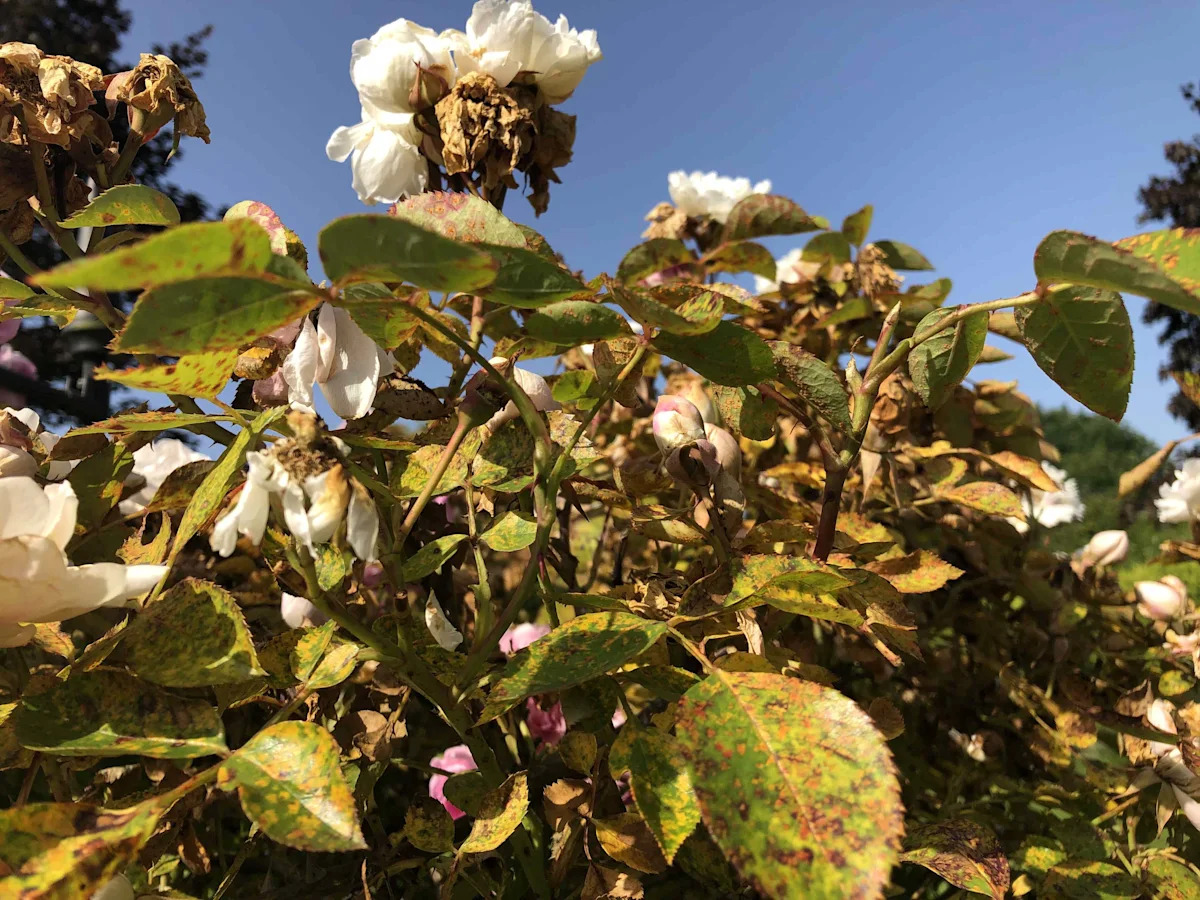
If your rose garden is your pride and joy, it can be devastating to watch as the health of a once-glorious shrub declines. Pests, diseases, and environmental factors can cause rose bushes to look unhealthy and eventually die. Thankfully, you may not need dig up that rose bush just yet. You can sometimes rescue a struggling rose bush and make its blossoms look bouquet ready again. And if that vase of flowers is starting to droop, we have tips to perk them up too. Here’s how to revive a sick or dying rose bush and bring its blooms back to life.
What Causes Rose Bushes To Decline?
Rose bushes can decline and die back due to pest infestations, fungal infections, lack of nutrients, and environment. If more than half of your rose bush is still healthy, you can likely rescue it with some pruning and proper care. To see if your rose bush is dying or just dormant, trim a cane that looks dead and cut away some of the bark. Green means it’s still alive. To save a rose bush that isn’t thriving, follow the steps below to get your rose bush back on track.
Tips For Reviving RosesPrune Regularly
If your rose bush is struggling, prune dead, damaged, or diseased branches back to unaffected areas of growth. If your shrub or hybrid tea rose looks leggy or tall and isn’t producing many blooms, you can cut it back by half after its bloom cycle. Regular pruning should be done in late winter, cutting canes back by a third. Since it redirects the rose’s energy to healthy parts of the plant, pruning can promote new growth and improve airflow around the plant.
Adjust Watering
It’s important to get watering just right for your rose bushes. If the edges of the leaves turn yellow or dry and the flowers fade and appear limp, your rose isn’t getting enough water. This can cause stunted growth and leaf wilt. Root rot and chlorosis, a yellow veining of the leaves, can occur with too much water. During the heat of summer, roses need water about every other day. Check the top 2 inches of soil for moisture to determine when to water rather than sticking to a schedule. Poke your finger into the soil and water deeply if it’s dry. Make sure to water at the base of your roses and never over the leaves or blooms, which can cause fungal diseases. Mulch around the plant can help it retain moisture and keep the roots cool.
Fertilize To Replenish Nutrients
Chlorosis is a sign a rose may not be getting adequate nutrients. It may also not grow very well and may not form buds. Roses that are lacking nutrients are susceptible to pests and diseases. Apply a balanced fertilizer formulated specially for roses. Fertilize every four to six weeks from early spring to late summer, stopping in fall so the plant won’t produce new growth that can be damaged in winter weather.
Get Rid Of Bugs
Aphids, spider mites, and roseslugs are common rose pests that can cause weakness, damage, or even death, and knowing which ones you are dealing with can help you treat the problem. Aphids form clusters on flower buds and new growth, while spider mites create webbing between leaves and stems. Both pests feed on rose leaves, sucking the sap or chewing the leaves, which weakens the plant. Spider mites cause yellowing or stippling on the leaves. Roseslugs feed on the soft parts of the leaves, leaving nothing but a skeleton of veins behind. Spray the rose bush with a strong stream of water from the garden hose to dislodge any pests. Use neem oil or insecticidal soap if pests are a recurring issue.
Prevent Disease
While viruses like rose rosette and rose mosaic are not treatable, fungal diseases like powdery mildew, black spot, and rust are. Knowing how to prevent diseases, their signs, and treatment can get roses on their way to better health.
Advertisement
Advertisement
Black Spot
Extended warm, wet weather can cause black spot, which appears as black spots surrounded by yellow. This fungus causes leaf drop, purple blotches, and reduced flower production. Remove any infected leaves and canes from the plant when they appear to prevent spread of the disease, and treat with a fungicide spray if needed. Clear the ground of any infected leaves that have fallen, as well as any surrounding mulch. Water roses at their base rather than overhead to help leaves dry quickly, and make sure the air can circulate well between plants by spacing them far enough apart during planting.
Powdery Mildew
If you see a grayish-white powder on the leaves, buds, and stems of your rose plant, it’s likely powdery mildew caused by high humidity at night and damp, shady environments. Good air circulation and proper spacing can help prevent infestations. Water by drip irrigation rather than overhead to keep the leaves dry. Remove any infected parts of the rose, and treat with neem or horticultural oil.
Advertisement
Advertisement
Rust
Rust first appears on lower leaves of the rose bush before making its way to the entire plant. Distorted stems, yellowing leaves, and powdery orange or black spots on the undersides of leaves are telltale signs of the fungus. Carefully inspect plants when buying since this fungus is often transmitted by nursery plants. To treat, remove affected leaves and canes, as well as any dead leaves in the area around the plant. Rose-specific fungicides like myclobutanil or propiconazole may help at the onset of symptoms, but rust can be very difficult to control. Avoid rust by not overcrowding the plants and spacing them well to allow good airflow.
 How To Revive Wilting Cut Roses
Whether from your garden or the florist, wilting roses are a sad reminder they won’t last forever. But you can revive them to help them stick around a little longer. Here’s how:
Use clean sharp scissors to cut an inch from each stem at a 45-degree angle.
Submerge the entire flower—stems, blooms, and all—in a sink or container of clean, cool water. Keep the rose submerged for at least 30 minutes. Severely wilted roses may need more time.
Wash the vase and refill it with fresh, lukewarm water and flower preservative, or use 1 to 3 teaspoons of sugar.
When the roses are done soaking, keep them submerged as you cut the stems at an angle again.
Arrange them in the vase and keep them away from drafts and out of direct sunlight.
Advertisement
Advertisement
Read the original article on Southern Living
Comments are closed.