
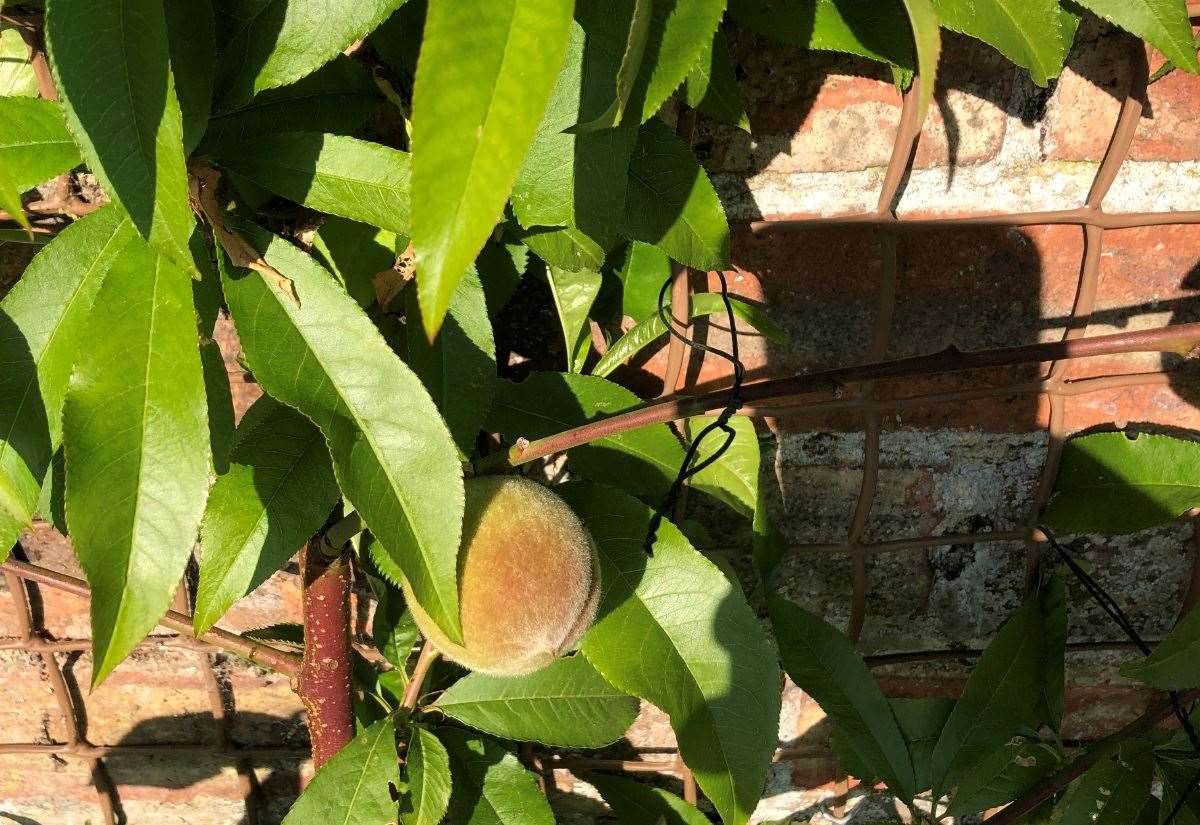
 It’s starting to get ‘peachey’ on Jamie’s allotment
Those huge leaves are constantly losing moisture through transpiration, so in hot weather they need plenty of water to replace that moisture and keep the plants growing.
The greenhouse is another story altogether. When it’s 30 degrees in the shade outside, you can only imagine what it’s like inside. Even with every door and vent open, temperatures can become unbearable, so plants growing under glass often need watering morning and evening to keep them happy.
One thing I have noticed over the years is how much better my no dig beds cope in dry weather. The annual mulch of compost acts like a blanket over the soil, helping to reduce evaporation and keep moisture around the roots for much longer.
Pumpkins and squash are putting on masses of leafy growth – even in this hot weather
It certainly doesn’t stop me watering, but it does mean I don’t have to do it as often.
Hot weather doesn’t just mean watering. It’s also the ideal time to tackle one of the most important pruning jobs of the year.
Peaches picked straight from the tree are definitely one of, if not the most, rewarding things I grow in the garden.
Left to ripen naturally on the tree, they’re incredibly juicy, beautifully sweet and taste nothing like the peaches you’ll find in the supermarket.
I’ve trained mine as an espalier against a west-facing brick wall. The bricks soak up the day’s warmth and slowly release it through the evening, creating a lovely warm microclimate that peaches really appreciate.
Keeping a peach tree productive means giving it a summer prune. Unlike many fruit trees, peaches are best pruned while they’re actively growing because the cuts heal much more quickly, helping to reduce the risk of diseases such as silver leaf and bacterial canker.
Summer pruning also encourages the strong new shoots that will carry next year’s crop. Before I make a single cut, I look at the tree as a whole. Every cut should have a reason.
If I can’t explain why I’m removing a branch, I leave it. I always remove any dead, damaged or diseased wood first, followed by branches that are crossing or rubbing together.
As they move in the wind they damage the bark, creating an easy entry point for disease. I then remove any shoots growing in the wrong direction before tying in the young, flexible shoots that will become part of the espalier framework.
Finally, I shorten the remaining strong new growth, always making a clean cut just above a healthy leaf or bud. The aim isn’t to give the tree a severe haircut, but to let plenty of sunlight and fresh air reach the fruit while encouraging strong new growth for next year’s crop.
If you’ve got an apple tree that’s producing lots of long, vigorous new shoots, a light summer tidy-up can help let more sunlight reach the developing fruit and improve air circulation. The main structural pruning is still best left until winter.
Summer is always a busy time in the garden, but a little extra time spent with the watering can and the secateurs now will pay dividends later in the season. Hopefully, before too long, I’ll be picking another crop of wonderfully sweet, juicy peaches straight from the tree.
If you’ve got any questions or just fancy letting me know what you’ve been getting up to in your garden, drop me an email at: jamieslittleallotment@gmail.com
Comments are closed.