
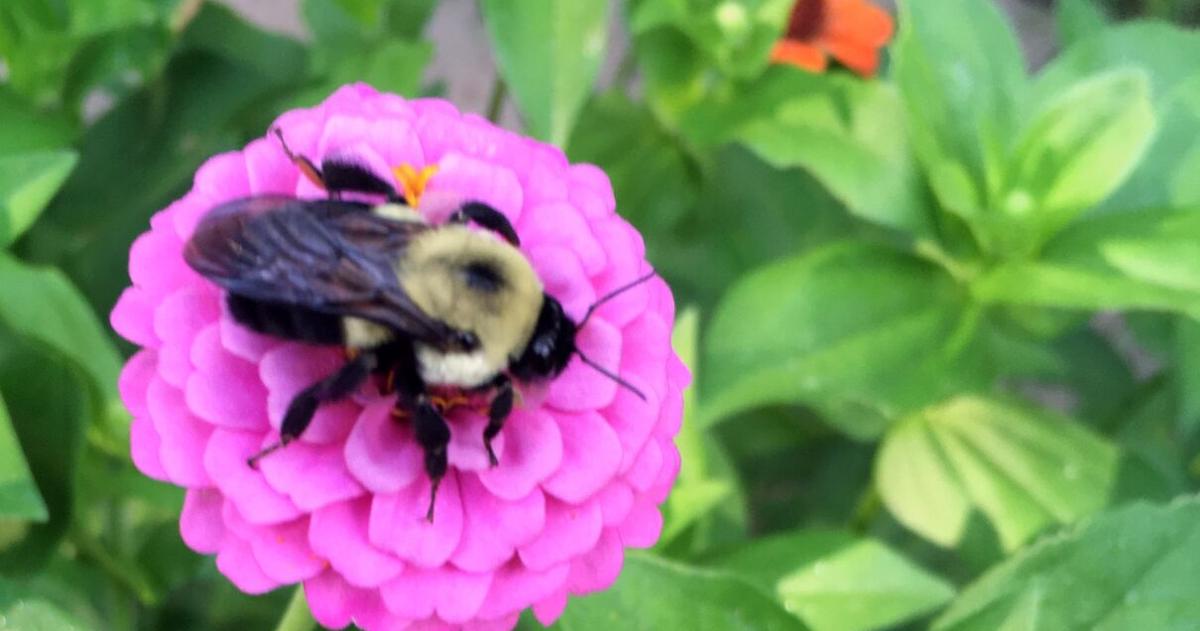
In 2007, the U.S. Senate designated a week in June as National Pollinator Week to increase the general public’s awareness of the importance of pollinators to food production. Pollination is critical for an estimated one-third of the food that ends up on our plates. Planting a pollinator garden will encourage the presence of native pollinators like bees, beetles, flies, wasps and butterflies.
Select a sunny area in your landscape and add native plants to provide nectar and pollen for pollinators through the summer and fall. Natives are the “gold standard” for supporting pollinators since they provide high-quality nectar and pollen. It’s not too late to plant essential native plants now, especially if you put a few in pots that you can keep watered.
Native shrubs that support pollinators include American Beautyberry (Callicarpa americana), Oakleaf Hydrangea (Hydrangea quercifolia), Virginia Sweetspire (Itea virginica) and Rabbiteye Blueberry (Vaccinium virgatum). Native perennials that support pollinators are too numerous to list! My favorites are Black-eyed Susan, coneflowers, swamp sunflowers and goldenrod. And annuals like zinnias and sunflowers are extremely good at attracting pollinators.
Every summer, I plant these colorful annuals in rows next to the beans, cucumbers, peppers, squash and tomatoes. And don’t forget about fragrant herbs. My oregano plants attract more bees, wasps and beetles than almost anything else in my gardens.
Amy Dabbs is the Clemson School and Community Gardening Coordinator and the Great Southeast Pollinator Census coordinator for South Carolina. She encourages educators and nonprofit organizations to begin preparing to assist with this year’s count. This annual census depends of citizen scientists to take a record of pollinators on two specific days, Aug. 21-22.
Dabbs identifies the top five native plants in South Carolina that pollinators visited in last year’s census as Joe-Pye Weed (Eutrochium purpureum), Cutleaf Coneflower (Rudbeckia laciniata), Narrowleaf Sunflower (Helianthus angustifolius, also commonly known as swamp sunflower), Swamp Milkweed (Asclepias incarnata) and Dense Blazing Star (Liatris spicata, commonly known as gayfeather).
The plant most visited by pollinators in last year’s census was the Mexican Sunflower (Tithonia rotundifolia), a native of Central America.
It’s interesting to note that the top five are all fall bloomers, which makes sense because of the August date for counting. I’ve often wondered why August was chosen, but now I know that it’s because census coordinators want teachers and school children to participate when they are in school. The clever teacher will put pollinator plants into pots for the count. Dabbs also encourages groups or educators who plan to participate to sign up for a free and on-demand online course with webinars and marketing materials for groups who plan to host census-related events. For more information or to sign up, visit cpe.clemson.edu.
Of course, many pollinator plants bloom in June and July, so having diverse plants that bloom throughout the summer season is a good idea if you want to attract the pollinators all summer long. Lantana and zinnias are the longest lasting plants that I have in my yard, so definitely include both of these in your plantings. Now is a good time to stop by the nurseries to see if the clearance sales of mid-summer can provide you with some new plants.
A diverse habitat consisting of multiple plant species will attract multiple species of insects. Select several different plant species to attract a greater diversity of pollinators. If possible, group the same species in wide masses for a greater visual impact. These groupings also make flowers easier for insects to find as they gather nectar and pollen. If pollination is needed for an edible crop in your landscape, consider planting your pollinator garden next to the veggies.
To additionally support pollinators, create nesting and overwintering sites. Simply leave un-mulched areas with well-drained soil and full sun to be used by solitary ground nesting bees. Most importantly, reduce pesticide use. If any pesticide becomes necessary, choose the least toxic option and apply in the evening when pollinators are less active.
To contribute to the Great Southeast Pollinator Census, one does not have to be an entomologist. One only has to be able to sort insects into eight groups: Carpenter bees, bumblebees, honeybees, small bees, wasps, flies, moths and butterflies, and “other” (a miscellaneous category for those other beetles and bugs). For fun, practice identifying these different types, and you will be set.
If you need an excuse to plant more flowers, and to spend time outside admiring them, then participating in this census gives you all the reasons that you need. It’s nice to know that by planting a plot of lovely flowers, and enjoying them when they bloom, we can contribute in some small way to the many beneficial insects that help to feed our world.
Find Aiken’s Master Gardeners at the Aiken Farmers Market throughout the month of July.
Comments are closed.