

VAN BUREN, Maine — A plot of land in a northern Maine town that had been unused for over 15 years is now a thriving space that grows food and builds community.
The Van Buren Community Garden, which was funded by a $44,345 Community Action Grant, is one of the town’s many revitalization efforts that use existing assets and grant funding to minimize local costs.
The garden was built on a plot devastated by a 100-year flood in 2008. Besides repurposing the land, the venture allows residents to socialize, spend time outside and learn about food production. It also helps to address food insecurity, which has prompted many Mainers to grow their own produce.
“You wouldn’t believe how much food gets produced in these little plots,” Van Buren Town Manager Luke Dyer said.
At first, Dyer didn’t know what a community garden was. But after visiting his daughter in Vermont and seeing her plot, he began thinking about how such a garden could benefit Van Buren.
The land once housed a cul-de-sac, but after the flood the properties were removed and the parcel went back into the town’s hands. For years, the field sat empty in downtown Van Buren.
 Van Buren’s community garden includes two large greenhouses in addition to an apiary, ten apple trees, and 14 gardening boxes. Credit: Chris Bouchard / The County
Then came the idea to turn it into a garden, which fit right into the town’s quest to revitalize. The CONNECT space project, for example, hosts classes and collaborations with other communities in the former town office building. Van Buren has also collaborated with multiple college classes on revival projects.
The 3.1-acre garden contains 14 enclosed boxes, each accommodating two gardeners, along with two greenhouses and an apiary to raise bees and harvest honey. Ten apple trees have also been planted.
For $30, residents get their own garden plot and seeds for an entire season. A resident donation will cover fees for anyone unable to afford them for the next couple of years, Dyer said.
The greenhouses will help the town save money by growing trees, rather than buying them, to be used as part of the Maine Department of Transportation’s Village Partnership Initiative. The initiative will significantly update the town’s roads, walking paths and greenery, but is currently on hold until funding is available for engineering.
 Van Buren’s community garden contains an apiary which will be used to educate students and residents about the importance of bees. Honey produced will also be sold, with proceeds benefiting the garden. Credit: Chris Bouchard / The County
Further cost savings and efficiency will come from recycling water. One greenhouse features a system that collects rainwater in a 300-gallon tank. Gardeners will eventually be able to use the water on their plants.
“I was completely shocked at how well it captured water,” Dyer said.
Dyer donated a complete solar system so, within a month, the garden should run completely off the electrical grid and function with its own solar power, he said.
A group of local kids involved with the town’s summer recreation program will grow strawberry plants in additional boxes between the greenhouses.
 Van Buren’s community garden is already up to capacity for its second season this year. The garden includes 14 plots for a total of 28 gardeners as well as greenhouses and beehives. Credit: Courtesy of the Van Buren Community Garden Project
The beehives came from a $2,500 grant via the Maine Bee Wellness program. The town hopes to be able to sell honey at its farmers market, Dyer said. Proceeds from any honey sold will go back into the garden.
“It’s not just about making money,” Dyer said. “The educational value of having hives will teach the public about how important bees are in our world. Because without bees, we don’t have one — they pollinate and transfer everything that makes our lives sustainable.”
Volunteer beekeeper Stephen York monitors the hives, checking to ensure they are growing properly and that the queen is present. He and his wife, Melody, have been involved with the garden since it began.
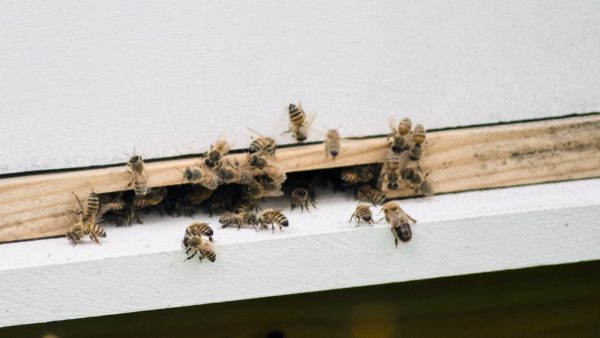 Van Buren’s community garden contains an apiary which will be used to educate students and residents about the importance of bees. Honey produced will also be sold, with proceeds benefiting the garden. Credit: Chris Bouchard / The County
Melody York said she first learned of the garden through a Facebook post by the town.
“We thought, ‘Hey, let’s get involved,’” she said. “We just wanted a garden plot for ourselves to grow some food for our family and to get involved with the community a little bit.”
The family’s plot includes green beans, yellow beans, tomatoes, peppers and lettuce. She said they have met several new people in the community through their involvement. Last year she met a couple who had never gardened before, and was happy to see that they returned again this year.
“It’s just really fun to see, and to walk around each plot to see who is growing what, and to see the beautifully curated and planned gardens,” she said. “Some people put flags in their gardens, and each plot has someone’s name on it. It’s really neat.”
 Van Buren’s community garden is already up to capacity for its second season this year. The garden includes 14 plots for a total of 28 gardeners as well as greenhouses and beehives. Credit: Chris Bouchard / The County
The venture helps people in different generations connect, Dyer said. Many help each other out and connect over their shared interest in the space.
The town plans to add more boxes and has applied for grants that would help create walking paths connecting the garden to the town’s other natural areas.
“It’s just beautiful over here,” he said. “It’s a great outdoor asset that was underutilized.”
Comments are closed.