
Why did a former Winston-Salem cop become a Master Gardener?
“It’s in my genes,” explained Sherry Smith at her farm near Walnut Cove.
Smith, a sixth-generation farmer, spent seven years as a police officer, patrolling the streets of east Winston-Salem. An on-the-job injury one night cut short her fast-paced law enforcement career.
After a stint as a lifeguard, Smith grew homesick for her Stokes County farm. A lucky find — an ad in the Danbury Reporter for help at the Animal Hospital of Walnut Cove — provided the perfect opportunity to return home in 1994.
Today, Smith’s farm is on land that has been in the family for generations. “Our family doesn’t move,” Smith said. “We’re here to stay.”
“My grand-dad grew soybeans, corn, and pumpkins. He had hogs and chickens. And we always had a milk cow,” Smith said.
Like many other Stokes County farmers, they grew a little tobacco. “I primed tobacco,” laughed Smith.
Smith grew up with good influences.
“My mama could grow any plant. But it was my grandma who taught me to garden.”
Smith returned to her roots after moving home to Walnut Cove. She grew her first garden there in 1994. She harvested her first one -and-a-half acre corn crop the following year.
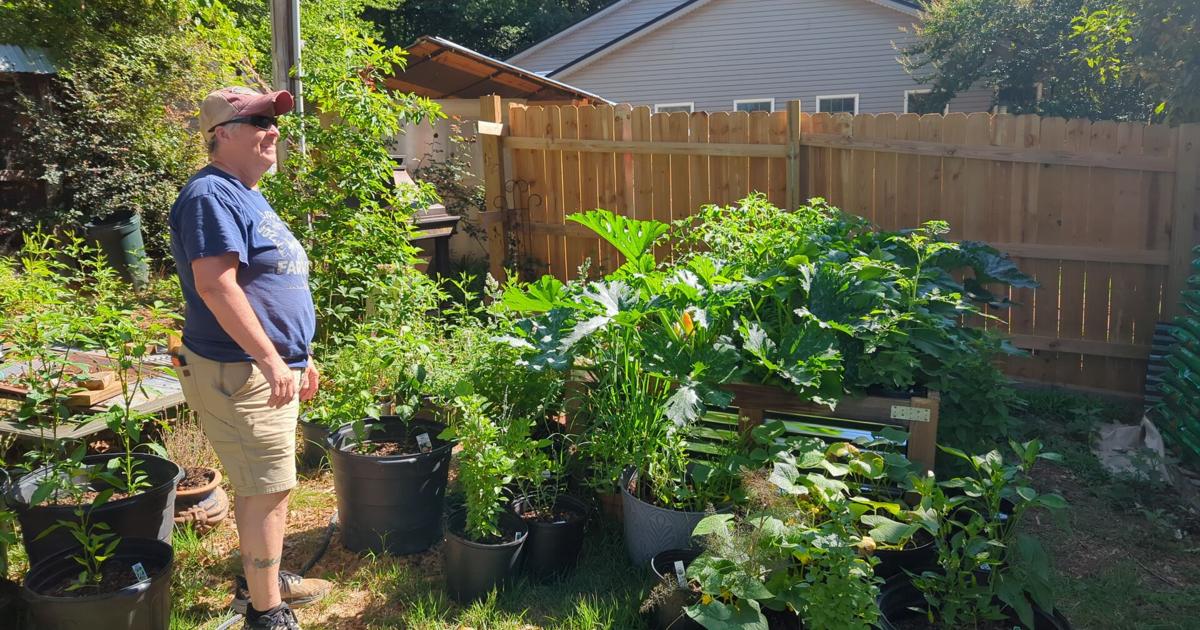
An impressive array of vegetables, herbs, flowering plants, and North Carolina native plants currently populate scores of containers and a raised bed in Smith’s garden. Pallets of raised bed soil stand ready for the garden’s expansion next year.
Thirty-four years at the animal hospital — most with veterinarian Dr. Deb Cowen — gave Smith the knowledge, skills, and confidence to keep an unusual assortment of animals on her homestead.
Sheep, cows, donkeys, dogs, horses, and hogs live the good life under Smith’s care.
“They’re all pets. Most are rescue animals. We’re like The Island of Misfit Animals.”
Smith’s sheep represent breeds that are listed as Endangered or Critical by the Livestock Conservancy. On Smith’s homestead, they shear the sheep and sell wool.
“I have a toboggan made from wool from these animals. That’s kind of special,” said Smith.
Smith uses her experience with animals as Chair of the Stokes County Animal Advisory Board, a member of the Stokes County Cattlemen’s Association, and of the Stokes County Beekeepers Association.
Smith learned about the Master Gardener program during a raspberry pruning workshop at Plum Granny Farm. She finally took the plunge in 2025.
“I never stop learning,” Smith said. She gained skill in pruning effectively. “I learned more about herbs than I’d ever known was possible. I learned how to read soil samples and the importance of the right amendments for the plants you’re growing. And I learned a lot about turf.”
“You can’t take that class and not learn anything,” Smith said. “The best part of the class is the fellowship with others who share similar passions.”
Her primary win was “the confidence from the class,” both in discussions with other gardeners and in decisions about her own garden. “I’m becoming more deliberate about buying plants,” she explained. “Before I make the purchase, I need to know where I’ll plant it and whether that spot is ready for it.”
Her tip for gardeners this season: “Water!”
Every Master Gardener has an area they are passionate about. Smith’s is pollinators. “Every third bite you eat is the result of pollination,” she explained. A beekeeper since 2022, Smith is currently in the depths of the University of Georgia’s Great Southeastern Pollinator Course.
The Extension Master Gardener℠ program in Stokes County is an intensive course in consumer horticulture. In exchange for their training, Extension Master Gardener℠ volunteers contribute time as volunteers and work through N.C. Cooperative Extension, Stokes County Center, to provide horticulture-related information to the public through classes, plant clinics, demonstration gardens, and much more.
Comments are closed.