
In 1776, growing conditions in the American colonies ranged widely. Plant hardiness zone designations that we use today were non-existent. New Hampshire (Zone 2b) to northern Georgia (Zone 8b) reflected a broad range of growing seasons, precipitation, microbial environments, and soil conditions that created environments that helped or hindered growing vegetables and herbs.
To complicate matters, the seeds brought to the New World from England often failed to grow under the new conditions.
The colonists had to eat. They had to figure out what to grow and how to grow food. And the soil of New England especially was hard and rocky compared to the soft, lusciously rich soil of their native England. Growing seasons were shorter, and winters far more brutal.
Immigrants in the American colonies often experienced extreme hunger and starvation because of these obstacles. Yet history shows that they rose to the challenge.
Learning from the wisdom of indigenous people Thankfully, indigenous people provided guidance. According to the article Native Americans and Plants by Barbara Kline on the Penn State Extension Master Gardener website, they introduced colonists to acorns, hickory nuts, persimmons, paw paws, and highbush cranberries. They taught colonists to forage for fiddlehead ferns and wild ramps.
Native communities were already cultivating the “three sisters”—corn, squash, and beans—when European settlers first arrived. However, these crops did not originate in North America. Instead, they spread gradually and deliberately across the continent as Indigenous groups throughout North, Central, and South America traded and shared seeds, according to the Charlotte Botanical Gardens.
These crops, developed through Indigenous farming knowledge, grow in a way that allows each plant to support and strengthen the others, while also offering a balanced and reliable source of food for the people who tended them (Marsh, 2021).
Growing vegetables and herbs
The vegetables and herbs that were cultivated then, we continue to grow in our own gardens today.
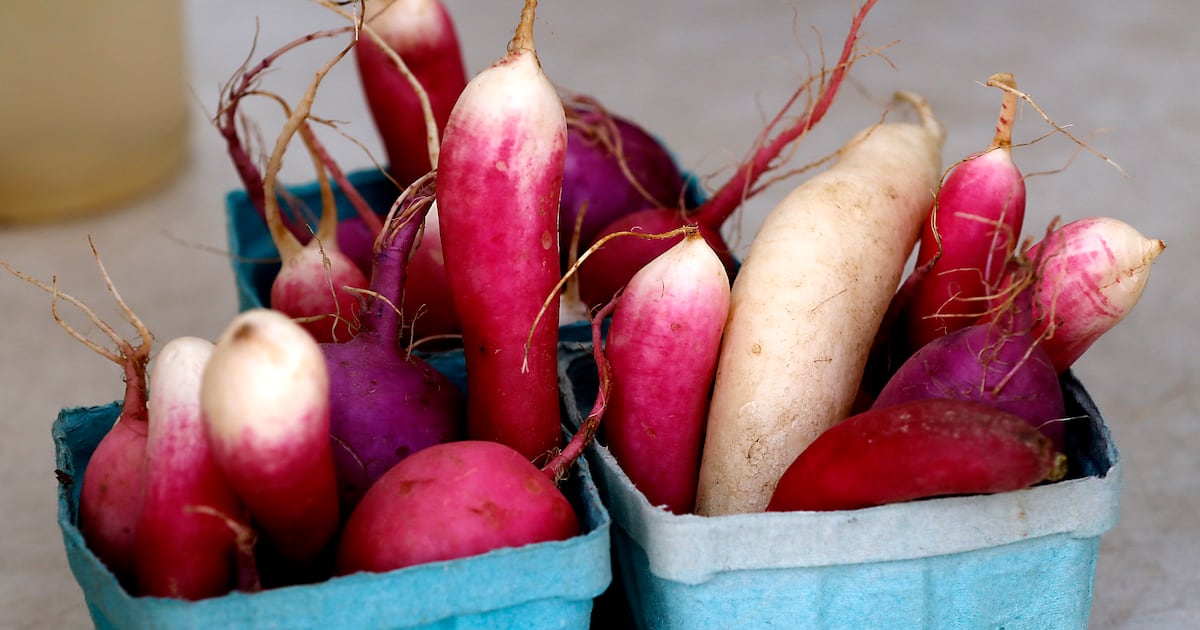
Most every day vegetables were cultivated in a protected garden close to the home. This smaller plot supplied leeks, onions, garlic, melons, English gourds, radishes, carrots, cabbages, and artichokes. In contrast, crops that were needed in much larger amounts—such as maize, beans, and pumpkins—were planted out in the main fields. (Favretti, 1971)
Herbs were grown for practical household purposes, their medicinal value, or for use in cooking, according to the New Canaan (CT) Garden Club. Some of these are recognizable to us, such as lavender, echinacea, and yarrow for treating fevers, wounds, and digestive issues; chamomile for calming tea; and rhubarb roots to make a golden dye.
Others may be unfamiliar to us, like tansy to repel fleas and insects and as a dye, or borage, used to treat fevers and to add a cucumber-like flavor to foods.
The lists of what was grown in colonial gardens are quite extensive. The Arnold Arboretum of Harvard University has a hefty list published as Colonial Garden Plants (Favretti and DeWolf, 1971). In addition, both the Mount Vernon and Monticello websites share information on crops and plants grown by George Washington and Thomas Jefferson, respectively.
Paula Kosin is a certified Master Naturalist volunteer with the University of Illinois Extension. In 2020, she was the recipient of the UrbanForestry Community Stewardship Award from the Chicago Region Trees Initiative at the Morton Arboretum.
Comments are closed.