
EAU CLAIRE, Wis. (WEAU) – In Eau Claire, midsummer often brings a wave of tiny, fast‑moving visitors across sidewalks, gardens and shaded patches of lawn.
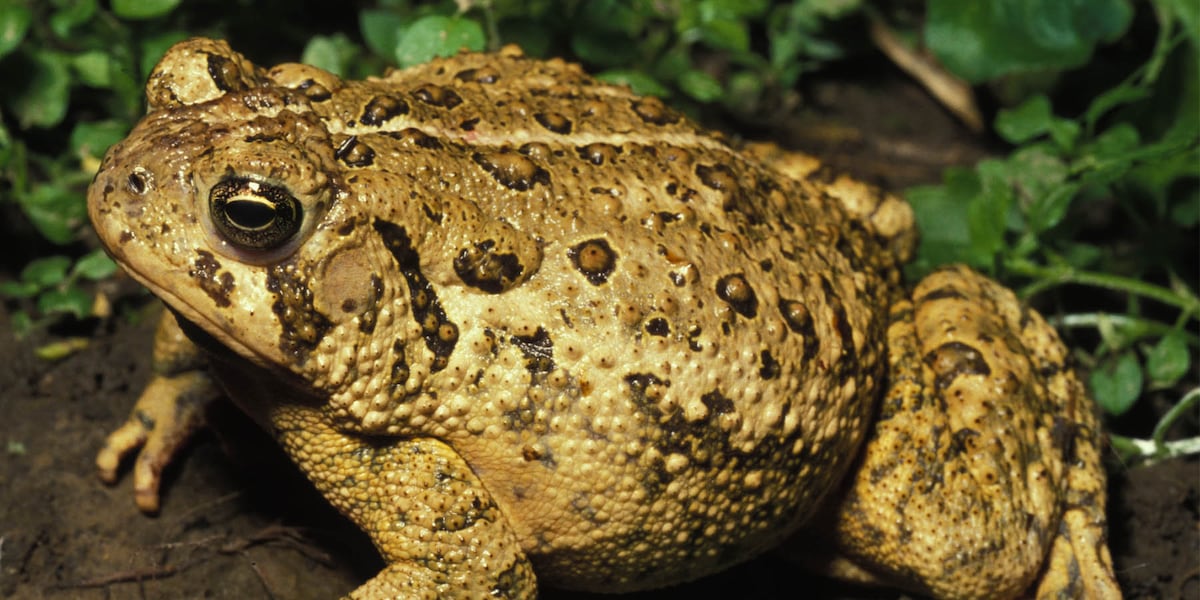
These thumb‑sized hoppers are juvenile American toads and are the only toad species found in Wisconsin. They are identifiable by their dry, warty skin, short limbs and dark dorsal spots containing one or two wart‑like bumps according to the U.S. Forest Service.
Their appearance matches what biologists describe for newly metamorphosed American toads: small, stout bodies; mottled brown, olive or reddish coloration; and a textured, “dry” look rather than the smooth skin typical of frogs.
These juveniles often measure only a quarter‑inch to half an inch long, reflecting how recently they completed metamorphosis which is a process that typically wraps up by early July in Wisconsin wetlands.
American toads breed explosively in ponds, ditches and small wetlands, producing large schools of tadpoles. The Wisconsin Department of Natural Resources says that behavior is unique among Wisconsin’s frogs.
When thousands of tadpoles transform at once, residents across the Chippewa Valley often see miniature toadlets spreading into yards, gardens, wooded edges and neighborhood walkways.
These tiny toads linger in noticeable numbers for only a week or two before dispersing into leaf litter, mulch, rocks and logs, where they become much harder to spot. As they grow, many remain in the area, eventually reaching adult sizes of roughly 2 to 3.5 inches.
Harmless and beneficial, American toads feed primarily on insects and thrive in both natural and suburban habitats — including gardens and parks throughout Eau Claire. Their brief midsummer appearance is a reminder of the healthy wetlands woven through western Wisconsin and the small, resilient wildlife living quietly alongside us.
Copyright 2026 WEAU. All rights reserved.
Comments are closed.