

 4 min read
There’s a lot to consider when cultivating a garden in your own backyard, from the overall style to the type of antiques and birdbaths you plan to sprinkle throughout. Watering may be one of the most important factors to a lush garden, yet it seems to be an afterthought, with many people resorting to a simple garden hose. Effective, yes, but the tedious task of rolling and unrolling that hose every few days to give your potager and sensory garden a drink can get old quickly. Though, what if we told you there’s an ancient watering method that is much more relaxed, saves water, and doesn’t require all the setup of modern-day irrigation systems?
Ollas date back nearly 4,000 years to China and North Africa where farmers would bury porous clay ceramic vessels into their garden area, leaving only the top opening above the soil surface. They would then fill the pots with water and let it naturally seep through the clay directly to the root zone of the plants. The eco-friendly technique spread across the world and is still used today as it saves water and is a lower-maintenance approach to gardening.

Mint Images RF//Getty Images
Justin Dervaes, head farmer at the Urban Homestead in Pasadena, California, has used ollas in his family’s garden for more than 25 years, citing that the simplicity and longevity of these vessels have made them a staple. “It lasts for thousands of years if you don’t hit them with a shovel,” jokes Dervaes. He adds, “Most gardens fail because of a lack of water, and ollas take that guesswork out. If you’re traveling or leaving, you can just fill it up and go.”
The beauty of the olla irrigation system is that it requires little intervention once it is buried. Water doesn’t just start pouring out of the microscopic holes once the olla is filled. Instead, through the natural process of soil moisture tension, the plants’ roots pull the water out of the olla if the soil is dry, whereas the water remains in the olla if the soil is already moist from rainfall or surface watering.
Dervaes says a variety of plants benefit from watering through ollas, whether planted directly in the ground or in raised beds and containers. However, there are a few instances where you may want to evaluate your garden before investing in a handful of vessels. For example, in regions that experience hard freezes, the ollas can crack if left in the ground, meaning you’ll need to plan to dig them up before each winter.
Dervaes warns against planting ollas with more shallow-rooted plants, like lettuce, as the water from ollas tends to seep lower than the roots. He explains, “If you had a three-foot-wide garden bed, and you put the olla in the middle, the lettuce roots on the edge of the bed will never reach the olla. It’s just too shallow.” Instead, he much prefers pairing ollas with heavy feeders and plants with bigger root systems like tomatoes, beans, corn, and squash.
Dervaes also says to be cautious about burying ollas around fruit trees—such as guava and figs—and other plants with woody roots as they have “pretty aggressive root systems.” The strong roots tend to wrap themselves around the ollas as they are seeking water and can easily crush them.

Igor Paszkiewicz//Getty Images
Choosing the right olla for your garden depends on its size and how often you plan to water, as the larger sizes can hold upward of two gallons. Depending on how many you need for the size of your garden, Dervaes says ollas can be quite a pricey investment—yet a worthwhile one as they can last you decades. “If you’re looking at 20 or 30 years’ worth of use, you buy them once and you don’t have to buy them again,” says Dervaes. “They’re definitely worth the expense.”
Most medium-sized ollas (which hold from 1.5 to 3 liters) will work wonderfully in standard planter boxes, whereas small containers or pots may only need an olla that holds 1 liter of water. You can also make your own olla by gluing two unglazed terra-cotta pots together with a waterproof sealant and plugging any holes with a cork or rubber stopper, so the water can naturally seep through the clay.
Once you find the right size for your garden beds, spread the ollas throughout about every two to three feet (larger ollas can be spread out to three to four feet). Bury the olla into the soil, leaving the top about one to two inches above the ground and gently packing the soil around it to prevent any air pockets that may cause the water to stop moving. After filling it with water, Dervaes highly recommends putting lids on your ollas to prevent debris from falling in or pesky slugs and snails from sneaking into them. While you may think it will help target the roots better, avoid putting anything like fertilizer in the ollas as it will clog them since it’s not fine enough to leak through the microscopic pores.
Check them regularly to understand how often you’ll need to top them off with water and develop a routine. While they’re an investment upfront, ollas help conserve water by delivering it directly to plant roots for deep watering. They may even help cut your water bill since you’ll be using less water.
Where to Buy Ollas The Olla Company Classic Olla Watering Pot with Lid
 Karen & Matt Wosoba Self-Watering Terracotta OllaCredit: Courtesy of Uncommon Goods
 Lehman’s Ollas Watering PotCredit: Courtesy of Lowe’s
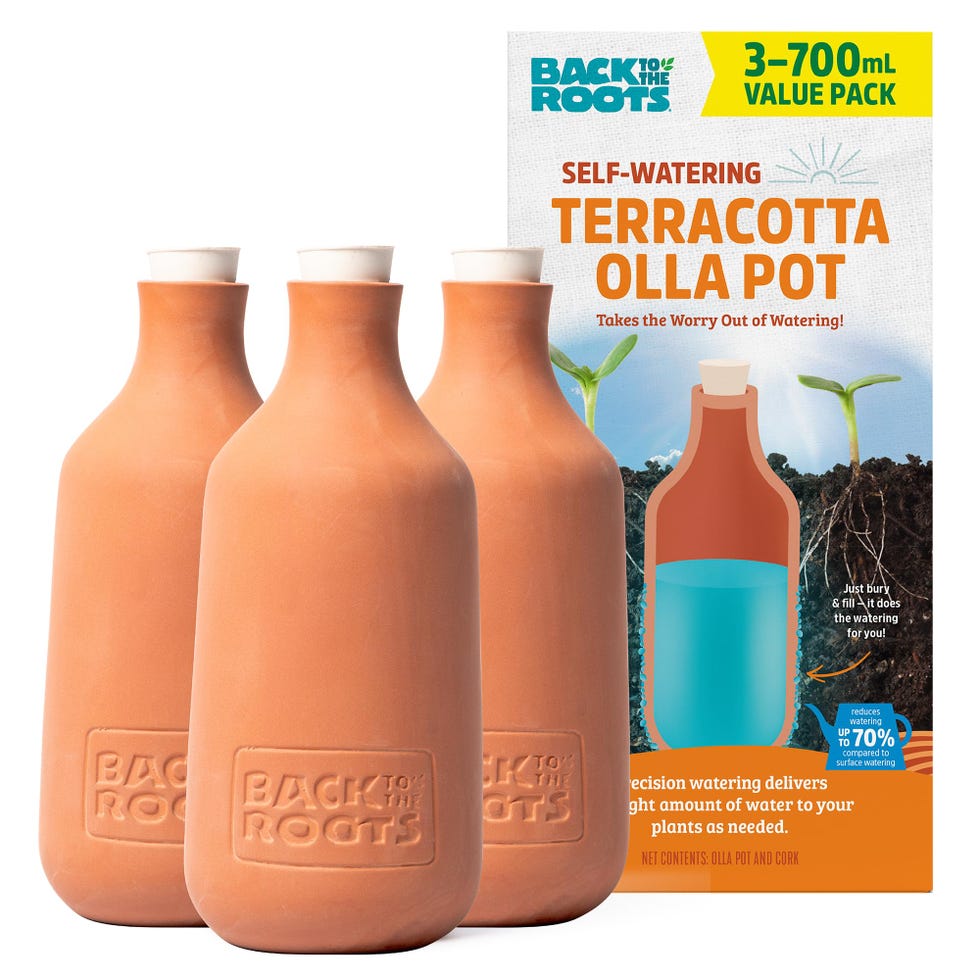 Back to the Roots Self-Watering Terracotta Olla Pot
 Pepin Olla Self-Watering Pot
Sarah DiMarco (she/her) is the associate editor at VERANDA, where she produces and edits engaging content covering design, architecture, art, gardening, and travel. Since joining the team in 2019, she has written captivating house tours, in-depth features on emerging design trends, practical gardening guides, and inspiring travel stories. Over the course of her five-year career, she has cultivated a strong network of multidisciplinary designers whose expertise she frequently draws on for her stories. Prior to joining VERANDA, she earned her master’s degree in Magazine, Newspaper, and Online Journalism at Syracuse University. When she’s not writing or researching her next feature, you’ll find her experimenting in the kitchen, making pottery, or volunteering at the Desert Island Supply Co.
Comments are closed.