
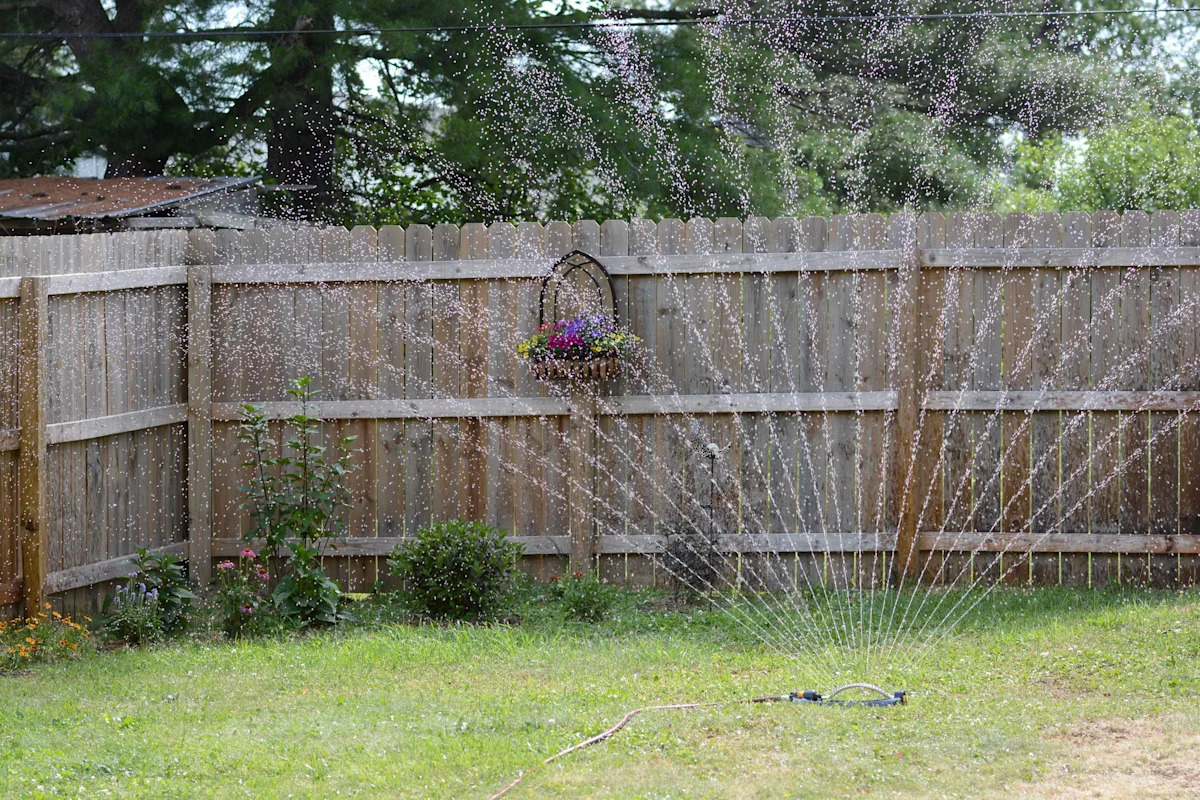
You love a lush lawn so you try to do everything right: You knock back crabgrass before it takes over, monitor for pests, and mow your lawn at the proper height. But if you’re making a common watering blunder, you could be hurting your lawn. “Watering incorrectly is the biggest mistake that can harm your lawn,” says Clint Waltz, PhD, turfgrass researcher and specialist at the University of Georgia. “When a lawn is weakened, it doesn’t have the strong root system it needs to overcome other stressors such as heat, drought, disease, and pest pressure.”
While you may think you need to water every day, that simply isn’t true. “Overwatering is the number one issue that weakens your lawn,” says Waltz. “In the Southeast, you water to maintain color and density from one rainfall to the next. Turf is more robust that we give it credit for.”
Though you might not realize this, turfgrass does better growing on the dry side. “When turf is allowed to grow under more dry conditions, it creates a signal for the roots to find water,” says Waltz. “That means it will have a deeper, more extensive root system that’s better able to withstand environmental stresses.”
Advertisement
Advertisement
Read on to learn how to water your lawn correctly so it stays healthy:
Why You Shouldn’t Overwater Your Lawn
Disease is a top reason not to overwater. Although disease-causing fungi are always present in the environment, you don’t want to make it any easier for them to flourish. “Most pathogens need 12 hours of moisture to take hold,” says Waltz. “When you’re watering too much, you’re maintaining an environment for disease to occur.”
Overwatering also negatively impacts your lawn’s roots. “Many people don’t realize that soil has pores that are filled with air,” says Waltz. “When you overwater, those air pores fill with water, essentially drowning the roots. This allows the soil to compact more over time, further reducing the amount of oxygen accessible to the roots.”
In addition, overwatered lawns may be prime for opportunistic weeds because some weeds, such as goosegrass, do better in compacted soils. If you notice certain weeds are popping up, it may be a sign that you are overwatering, says Waltz.
How To Tell How Much You’re Watering
Research has shown that most lawns—whether cool season or warm season grasses—require about one inch of water per week. Sandy soils, which drain rapidly, need about 1 1/2-inches per week. Anything more than that is excessive, says Waltz.
Advertisement
Advertisement
But how do you know how much water your irrigation system is putting out? Do a simple audit: Use a straight-sided can to collect water from your sprinklers for 15 minutes, multiply by 4, and you’ll have the amount you’re putting out per hour. Do this in four to five different spots on your lawn, says Waltz.
Next, average these numbers to get a rough estimate of how much water you’re applying. This will give you an idea of how often you need to run your system to achieve 1 to 1 1/2 inches per week, depending on your soil type, says Waltz.
How To Water Your Lawn The Right Way
Overwatering is wasteful and doesn’t do your grass any favors, so follow these tips from Waltz for proper watering and best practices on growing a healthy lawn:
Install a rain sensor. If you don’t already have one, install a rain sensor, an inexpensive device which will push back your timer to delay turning on after you’ve received a certain amount of rain.
Watch your irrigation system run. Don’t just see that the heads popped up; check the entire cycle to ensure it’s not getting stuck, leaking or not delivering water as expected to certain areas.
Don’t spray the street or driveway. Ensure you’re not wasting water by dumping it on your drive, street or sidewalk.
Consider new grass cultivars. If you’re planning a lawn reno, a new lawn installation or even planning a fall overseeding of cool season grasses, look for new grass varieties that have been bred to use water more efficiently. These new products have come to market in the past 10 to 12 years and are worth investigating.
Read the original article on Southern Living
Comments are closed.