
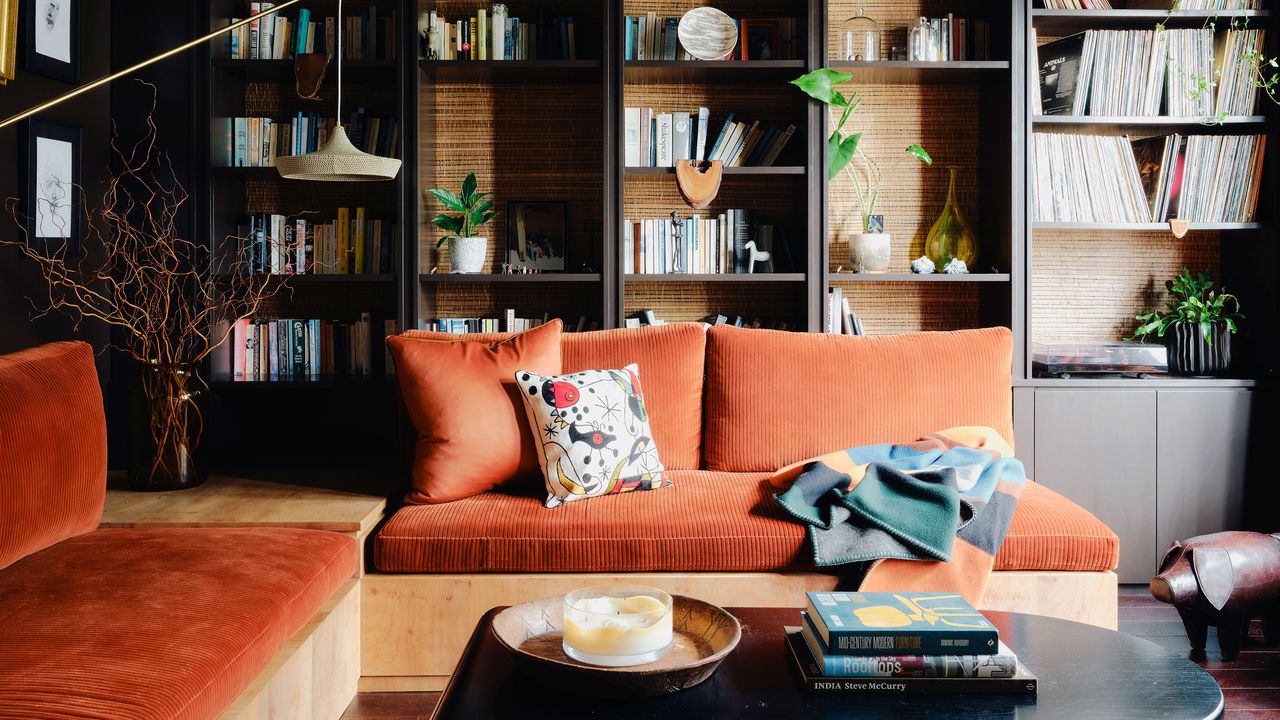
Janine explains that these spaces are usually multi-purpose: they could be a meditation room during the day, and a reading nook when the sun sets. But they’ll often centre on a specific hobby to allow for maximum enjoyment for the homeowner, and ‘light, storage, surfaces and levels of practicality’ will all be factored into the space’s design. Designing a no-screen room isn’t as easy as finding a piece of furniture that’ll fill the space where a TV would go.
‘A screen-free space has to be quietly compelling. It needs its own pull; through comfort, texture, natural light, acoustics, books, objects or materials that invite touch, so people want to spend time there without feeling the need to bring technology back in,’ Janine continues. ‘I think true luxury now is having the choice to switch off, to create spaces that are calm, private and emotionally grounding.’
In direct opposition is the media room; images of windowless spaces more reminiscent of cinemas than living spaces might have popped to mind. But despite the no-screen boom, the demand for media rooms hasn’t lessened, it’s just how they look has evolved.
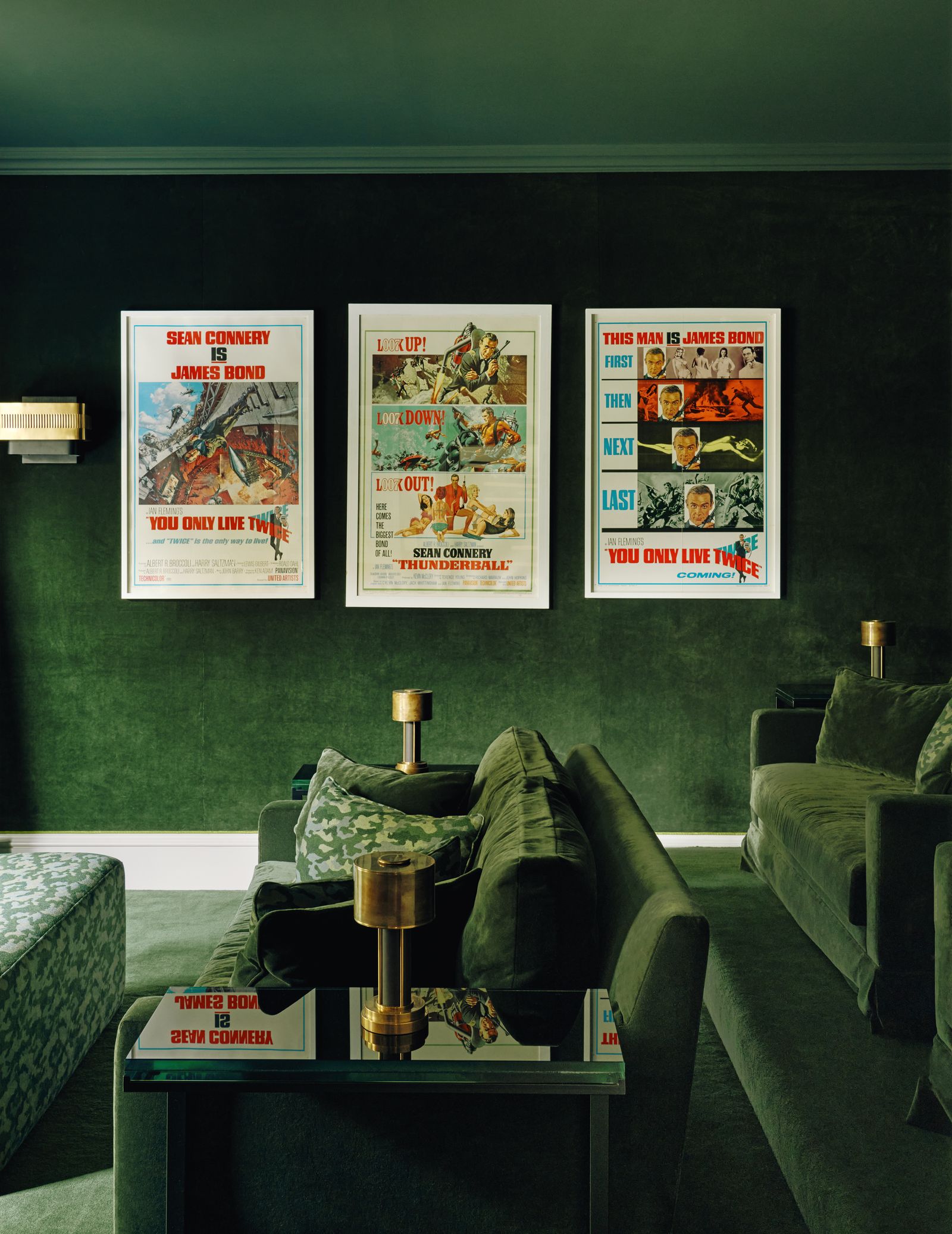
A screening room in a west London house by Studio LO2. 1960s James Bond posters, a footstool and cushions in Holland & Sherry’s ‘Cavendish’ and ‘Mini Drum’ lamps from Collier Webb add distinctive touches to the walls and sofas in green velvet from Güell Lamadrid.
Michael Sinclair
‘Rather than having televisions throughout the home, clients are choosing to concentrate that experience into a single space,’ says interior designer Clare Gaskin, attributing it to an increased emphasis on wellness as well as aesthetic choices. ‘A media room can become somewhere to fully immerse yourself in a film, sporting event or favourite series, creating an experience that feels intentional rather than incidental.’
‘We’ve concealed televisions behind sliding panels, integrated them into joinery, specified projector screens that disappear into ceiling recesses and used products such as Samsung’s Frame TV, which helps the screen to feel more like part of the overall design scheme,’ adds Clare. ‘In one project, the media room featured dark-toned joinery and wall finishes, allowing the television to visually recede into the background when not in use. In many ways, it’s not about eliminating technology but being more thoughtful about where it sits within the home.’
A reimagined media room appeared at this year’s WOW!house designed by Russell Sage with home tech company Nucleus, hinting at what their future purpose might be. Named the ‘Momentarium’ by Russell, this immersive space could, at first glance, be mistaken for a no-screens environment. Soft, neutral fabrics from Fromental drape the walls and act as a cover for the TV, while a circular daybed designed by George Smith sits in the centre of the room. It is serene and calming, but discreetly filled with the latest audio and visual technology.

The Nucleus Immersive room by Russell Sage at WOW!house 2026.
Milo Brown
Comments are closed.