
For all of us anxious parents desperately trying to break up with our phones, we are now also negotiating daily screen time with our children. In Jonathan Haidt’s The Anxious Generation, he argues that the nature of childhood has been swapped surreptitiously under our noses — a play-based childhood has been traded for a phone-based one. In the UK, the Smartphone Free Childhood movement — started in 2024 by two mothers and now signed by well over a hundred thousand parents — has turned that anxiety into something collective: the under-16 social media ban announced last week, and due to be enshrined in law by summer 2027, was a victory and bellwether for how we negotiate pervasive tech. Jonathan Haidt’s own prescription is almost quaintly horticultural — more unstructured play, more real-world independence, more time outdoors, more work with their hands. A garden is one of the few places left that offers all of that in a single afternoon.
But the big question is how. How do we tempt our children away from the cerebral delights of Paw Patrol to the slower pace of the compost heap? The truth is it is not always easy, but over the years, I’ve worked with plenty of patient, experienced people who have offered hard-earned ideas of how to begin.

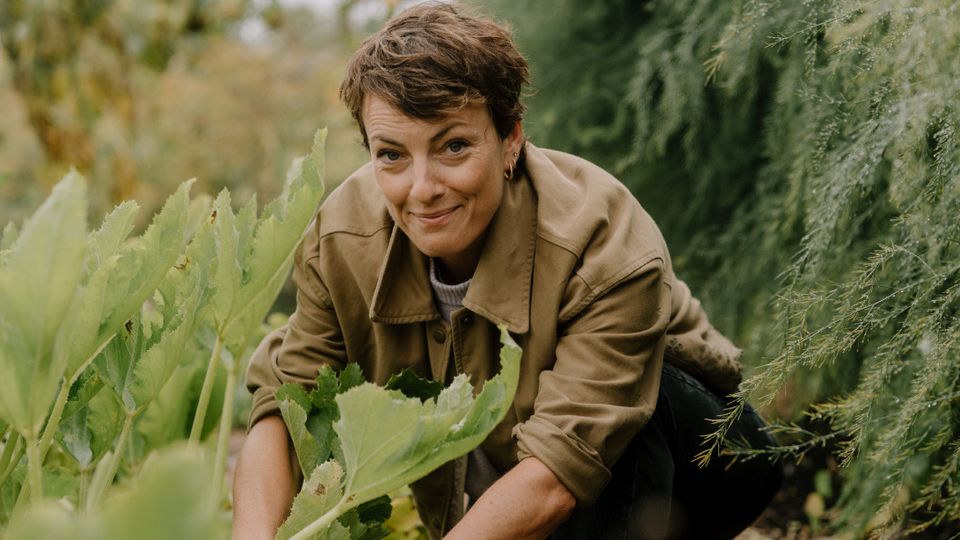
Freyja Lee and Rollo Dunford Wood spend as much time as possible outdoors with their children (from left) Brody and Sylvester near their home in Snowdonia.
Andrew Montgomery
You’d think a good place would be schools. I set up a school gardening club a couple of years ago, and deludedly expected it to be a sell-out, with children queuing up for the excitement of growing their own carrots. It turns out that football was more tempting for many. But thanks to the wisdom of Ida, who has run the community garden in our town for years, gardening club is now not a fixed weekly club, but a part of daily life at school: the raised beds sit in the grounds, children dip in and out as they like, and I go once a week to check on things. As a result it’s hugely popular.
The same applies at home. Children have a sixth sense for organised fun; the trick is to let them discover it. Lara Honnor who runs an award-worthy children’s allotment in Somerset (and whose Instagram is a brilliant resource) knows this all too well: ‘For children who say they find gardening boring, never force it on them. If you’re out pottering in the garden, it’s most likely your child will want to come out and play near you; the cat and dog will want to join too. It’s that feeling of togetherness and having a lovely time.’
Another early lesson for me was staking your turf. Children are territorial (and so, it turns out, am I), so giving them their own patch – which spares you from begging them, in barely concealed fury, not to trample your precious plants – is key. Children love a sense of ownership, their own kingdom, even if said kingdom is a single raised bed, a half-barrel, or a den littered with toys of dubious aesthetics.
Comments are closed.