
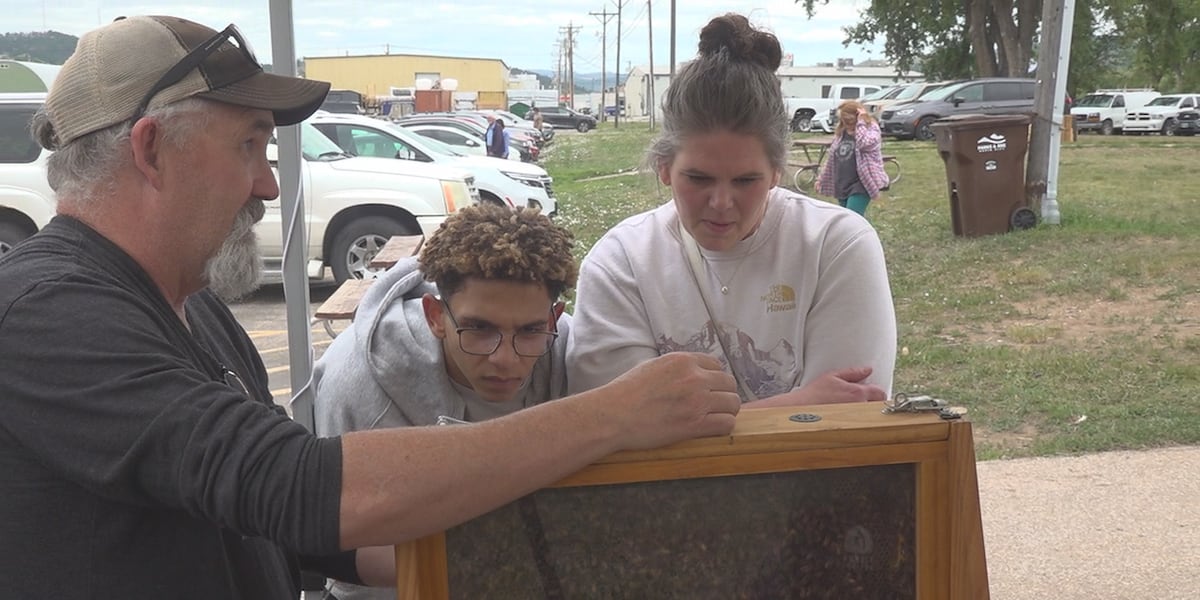
RAPID CITY, S.D. (KOTA) – Shoppers at the Rapid City farmers market got more than fresh produce this week. Rapid City Parks and Recreation set up a booth recognizing National Pollinator Week, sharing ways residents can support bees, butterflies and other pollinators at home.
Melissa Petersen, a landscape architect with Rapid City Parks and Recreation, said Pollinator Week is a nationwide effort focused on protecting pollinators and the habitats they depend on.
“Pollinator Week is a national celebration of pollinators… a time of year to promote how we help pollinators,” Petersen said, pointing to steps like planting native plants, reducing pesticide use, and creating habitat.
Petersen said the city has hosted its Pollinator Week booth at the farmers market for several years, using the busy, garden-friendly crowd as a chance to talk about native plants and why pollinators matter.
“We’ve been doing this pollinator week booth at the farmer’s market the last few years,” she said. “I think this might be our fifth or sixth year now.”
Petersen said pollination is essential because it helps many plants reproduce, supporting not only wild ecosystems but also much of the food people eat.
“Pollination is important because that is how a lot of plants reproduce,” Petersen said. “That’s how a lot of fruits and vegetables come to be… [and it’s] an important part of the ecosystem.”
While bees and butterflies are often top of mind, Petersen noted other insects can play a role too, including moths, beetles and wasps.
In the Rapid City area, she said the city encourages people to consider “low-mow” practices earlier in the season to recognize that some early yard growth can provide food when few flowers are blooming.
“Some of the things that come up in our yards are actually bee forage,” she said. “Dandelions… [are] a really important early forage for bees.”
Petersen said the booth is only at the market this week, but residents can support pollinators throughout the season by choosing native plants, cutting back on pesticides, and leaving spaces that provide shelter and resources.
“If you have a garden, try to plant some native plants,” Petersen said, adding that native pollinators can be closely tied to native species. She also suggested simple habitat ideas such as providing a water source, leaving shrubs through the winter, and allowing some natural areas to remain.
Petersen said small changes in backyards and gardens can add up, helping pollinators that play a major role in local ecosystems and food production.
See a spelling or grammatical error in our story? Please click here to report it.
Do you have a photo or video of a breaking news story? Send it to us here with a brief description.
Copyright 2026 KOTA. All rights reserved.
Comments are closed.