

Los Angeles sits in a semi-arid basin that sees most of its modest rainfall between December and March. The rest of the year, the sun bears down with little relief, and the soil dries fast. Los Angeles wouldn’t exist without imported Colorado River water and the Los Angeles Aqueduct, which transports water from the Owens Valley over 200 miles away. That context matters when you’re designing a front or backyard that needs to look good year-round without a constant drip line.
A traditional grass lawn can use up to 1.5 inches of water per week during the growing season, amounting to approximately 62 gallons per square foot annually. Swap that grass for the right succulents, and your garden bill and your watering routine shrink dramatically. The five plants below are well-suited to LA’s climate, available at most Southern California nurseries, and genuinely beautiful in the ground.
Why Succulents Work So Well in Los Angeles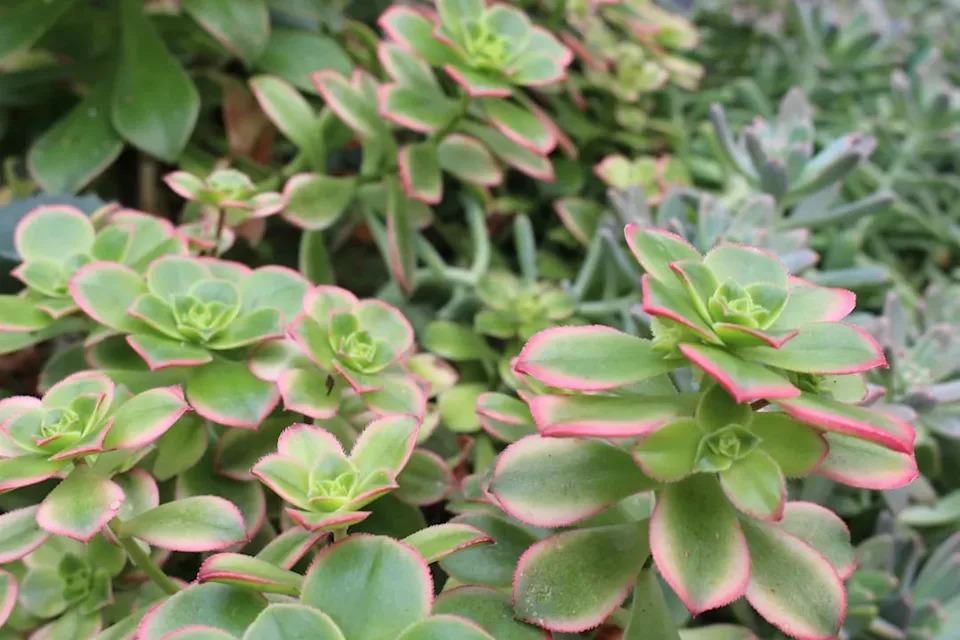
Why Succulents Work So Well in Los Angeles (Image Credits: Unsplash)
By definition, succulent plants store water in their fleshy leaves, stems, and roots, and there are over 10,000 varieties worldwide, with nearly 200 native to California. That makes them an unusually good fit for a region where summer drought is not an exception but the rule.
Succulents are better than thirsty shrubs because they are drought tolerant and grow densely to choke out weeds. Using medium-size succulents adds interest to the garden with color and texture and is a smart choice to reduce maintenance and watering.
Succulents are low-water plants that ask very little of the gardener. Some contribute colorful flowers, while others add striking foliage or sculptural forms. They may be planted in decorative pots, borders, or in the hard-to-water corners of the garden.
Succulent 1: Agave Attenuata (Foxtail Agave)
Succulent 1: Agave Attenuata (Foxtail Agave) (Image Credits: Unsplash)
Agave attenuata, also known as the foxtail agave, dragon’s tail agave, or lion’s tail agave, is one of the most prized succulent plants in both home gardening and professional landscaping. Its combination of hardiness, low maintenance, and ornamental appeal makes it an ideal choice for dry gardens and urban spaces. Its ability to survive for long periods without water is one of its defining traits.
It is the only thornless agave variety, with soft leaves and a light green color, making it ideal for urban gardens and low-maintenance spaces. That distinction matters if you have children or pets sharing the yard.
It prefers full sun and at least six hours of direct sunlight daily, and while it can tolerate partial shade, too little light can stunt growth and make the plant susceptible to rot. It does best in temperatures between 60 and 100 degrees Fahrenheit. LA’s Mediterranean climate checks all those boxes with ease.
Succulent 2: Echeveria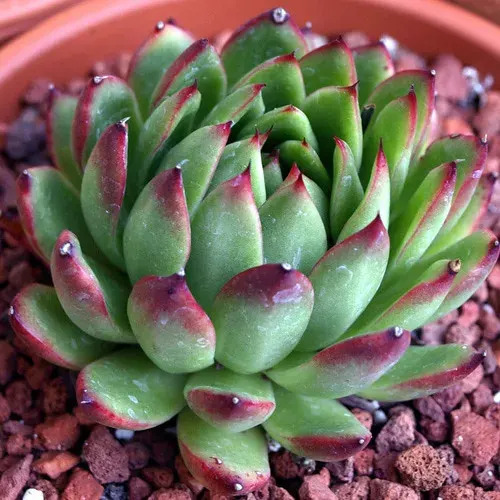 Succulent 2: Echeveria (succulentcity35, Flickr, CC BY 2.0)
Succulents are the cornerstone of any water-wise garden. These plants store water in their leaves, making them ideal for dry climates. With varieties like Echeveria and Aeonium, succulents offer a range of colors and shapes, adding both texture and vibrancy to your garden.
Echeveria is a genus of succulent plants that includes over 150 species, though far fewer are commonly grown. The rosette structure is compact and tidy, making Echeveria a natural for borders, container clusters, and rock gardens throughout LA neighborhoods.
Choose a location with full sun to partial shade, as well-draining soil is essential. Plant succulents in raised beds or containers if your soil is heavy or clay-like. Water deeply but infrequently, allowing the soil to dry out between waterings. That regime suits LA’s dry summers perfectly.
Succulent 3: Aeonium
Succulent 3: Aeonium (Image Credits: Unsplash)
Aeonium is known for its adaptability, and it shows. The plant handles LA’s range of microclimates well, from coastal fog belts near Santa Monica to sunnier inland valleys like the San Fernando.
Aeonium prefers afternoon shade in hot environments, increased watering in fall through spring, and is propagated by stem cuttings. Its growth calendar is actually inverted compared to most plants, thriving actively through the cooler, wetter months and going semi-dormant in the heat of summer.
Aeonium ‘Jack Caitlin’, for example, is a small succulent shrub around two feet tall and wide with gorgeous wine and spring green rosettes. It is a hybrid made at Huntington Gardens. This succulent does best in full sun where the colors intensify. Finding cultivars like this one at a local LA nursery is usually straightforward.
Succulent 4: Dudleya (California’s Native Liveforever)
Succulent 4: Dudleya (California’s Native Liveforever) (Image Credits: Pixabay)
There are nearly 200 succulents native to California, with some of the most common being Dudleya, Agave, and Stonecrop. Dudleya stands out from the rest because it is genuinely local, evolving in the same coastal scrub and rocky hillsides that make up a large part of greater Los Angeles.
Dudleya caespitosa, or coast dudleya, is native along or near the coast from San Francisco to Los Angeles. Grayish white rosettes of 20 to 30 finger-like leaves are highlighted with rose-colored tips, and offsets develop to form slowly broadening clumps. Good drainage and infrequent watering are essential, and bright yellow flowers form in summer atop foot-tall stalks.
Dudleya Brittonii, often called Britton’s Dudleya, is a stunning succulent known for its large, silvery-white rosettes that shimmer in the sunlight. These chalky rosettes contrast beautifully with vibrant yellow flowers that appear on tall stalks in late spring. This succulent thrives in rocky, well-draining soil and full sun, making it perfect for xeriscapes and rock gardens.
Succulent 5: Aloe Vera
Succulent 5: Aloe Vera (Image Credits: Pixabay)
Aloe vera is a succulent renowned for its medicinal properties. This plant requires very little water and can survive in full sun, making it an excellent option for Los Angeles gardens. It’s also one of the most widely available succulents at any Southern California garden center, which makes starting with it a low-risk choice.
Succulents like aloe store water in their fleshy leaves, making them extraordinarily drought-resistant. These virtually indestructible plants add texture, color, and architectural interest to rock gardens and containers.
Aloe vera also produces tall orange-red flower spikes that attract hummingbirds, a bonus for anyone trying to build a wildlife-friendly yard alongside a water-wise one. The plant’s visual structure – upright, spiky, and bold – makes it a strong counterpoint to the rounder, rosette-shaped Echeveria or Dudleya nearby.
How to Set Up the Right Soil Foundation
How to Set Up the Right Soil Foundation (Image Credits: Unsplash)
Succulents need well-draining and sandy soil. They dislike waterlogged soil, which can lead to root rot. Using a cactus or succulent mix, or amending garden soil with sand or gravel, dramatically improves drainage.
Most succulents are drought-tolerant, but some prefer partial shade to avoid sunburn in extreme heat. In LA, this is worth noting particularly during late summer heat waves, when even established plants can show stress from direct afternoon exposure in zones like the Valley.
Good soil prep does most of the heavy lifting. Once roots are established in a well-drained mix, you can step back and let the plants do what they evolved to do: survive on almost nothing.
Watering Strategy That Actually Works
Watering Strategy That Actually Works (Image Credits: Unsplash)
Most established xeriscape plants can survive on natural rainfall alone. During droughts, you may have to supplement with watering. Water deeply and infrequently to encourage root growth. That last point is especially important in LA, where shallow watering trains roots to stay near the surface and leaves plants vulnerable in dry spells.
Aeonium thrives in dry soil and should be watered sparingly. The same principle applies across most of the five succulents in this list. Overwatering is genuinely the most common mistake in LA succulent gardens, not underwatering.
Applying mulch around plants helps suppress weeds and retain soil moisture. A layer of decomposed granite or coarse gravel does the same job while also blending visually with a dry garden aesthetic.
Designing for Year-Round Visual Appeal
Designing for Year-Round Visual Appeal (Image Credits: Pexels)
A common misconception is that drought-resistant gardens are dull and lacking in color. In reality, there is a vast array of drought-tolerant plants available that offer vibrant flowers, unique foliage, and diverse textures. A drought-resistant garden can be just as beautiful, if not more so, than traditional gardens.
The colors, shapes, and textures of succulents naturally give your landscape impressive curb appeal. Mixing rosette-forming Echeveria with the bold upright spires of Aloe vera and the silvery chalky platters of Dudleya creates contrast that holds interest through every season.
These plants come in a wide range of shapes, sizes, and colors and are extremely easy to grow. A little planning around height and color temperature goes a long way toward making a planting feel considered rather than random.
Propagation: Getting More Plants for Free
Propagation: Getting More Plants for Free (Image Credits: Unsplash)
Succulents are also easily propagated. A stalk, or even a leaf of a plant, may root itself and grow into a new plant. That means once you have a few established plants, expanding the garden costs almost nothing.
Jade plants, for instance, are so easy to grow that a leaf will propagate when it falls from the plant and lands on the ground or soil. You’ll commonly see jade plants growing randomly on untended hillsides around Los Angeles. That kind of self-reliance is what makes succulents so useful in a city that consistently faces water pressure.
Aeonium and Echeveria both propagate easily from stem cuttings placed in dry soil. Let the cut end callous over for a day or two before planting, and roots typically follow within a few weeks in LA’s warm conditions.
The Bigger Picture: Water Conservation in Los Angeles
The Bigger Picture: Water Conservation in Los Angeles (Image Credits: Pexels)
California has faced numerous droughts in recent years, leading to heightened awareness of water conservation efforts. By selecting drought-resistant plants, gardeners can play a vital role in addressing this issue. Individual yard choices add up across millions of properties in a metro this size.
Xeriscaping – a landscaping method designed for water efficiency – leverages drought-tolerant plants, mulch, and efficient irrigation systems to reduce water consumption. Replacing even a small section of turf with a thoughtfully planted succulent bed is a meaningful step, not just an aesthetic one.
The five plants covered here are not obscure or hard to source. They’re available at most LA-area nurseries, they thrive in the local climate with minimal intervention, and they bring genuine visual interest through texture, form, and seasonal color. A low-water garden doesn’t ask you to settle. It just asks you to choose smarter from the start.
AI Disclaimer: This article was created with the assistance of AI tools and reviewed by a human editor.
The post If You Want Your Low-Water LA Garden to Flourish, Plant These 5 Striking Succulents appeared first on The Garden Magazine.
Comments are closed.