
Plants can start to look tired in summer when you live in the South. Foliage burns and thirsty flowers wither away. Working in the garden loses any appeal. We’d much rather be sipping lemonade while taking shelter on a shady porch, away from mosquitoes and the scorching sun. This is the time of year when we need flowering shrubs that will thrive rather than fade, keeping the garden looking beautiful no matter how hot it is outside.
Below, we’ve collected a list of easy summer-blooming shrubs that shine through the hottest months in the South.
01 of 10
Panicle Hydrangea
Panicle hydrangea (Hydrangea paniculata)
Credit: Skymoon13 / Getty Images
Botanical Name: Hydrangea paniculata
Sun Exposure: Full, partial
Soil pH: Acidic, neutral, slightly alkaline (5.0-8.0)
Advertisement
Advertisement
Panicle hydrangeas are the easiest hydrangeas to grow in the South. They can even handle the heat in Zone 9A, blooming from June into August. These hydrangeas are less tricky to prune since they bloom on new growth. Plant your panicle hydrangea in well-draining soil of any type and water regularly until established.
Learn More
02 of 10
Japanese Spirea
Credit: Cyndi Monaghan/Getty Images
Botanical Name: Spiraea japonica and hybrids
Sun Exposure: Full, partial
Soil Type: Average, well-drained
Soil pH: Acidic to neutral
Some spirea are springtime bloomers, but many Japanese spirea produce flushes of delicate pink flowers in summer. Japanese spirea can be grown as far south as Zone 8 or 9 in full or part sun and in well-draining soil. Look for sterile varieties that won’t be invasive in the South.
Advertisement
Advertisement
03 of 10
Knock Out Rose
Credit: Fast Growing Trees
Botanical Name: Rosa radrazz
Soil Type: Well-draining, moist
Soil pH: Acidic to neutral (5.5-7.0)
The famous Knock Out rose grows into a 4-foot shrub and comes in red, white, yellow, pink, and peach. These disease-resistant roses can be planted anywhere in the South, where they will bloom continually throughout summer. Grow them in loamy, moist soil with good drainage.
Learn More
04 of 10
Clethra
Botanical Name: Clethra alnifolia
Sun Exposure: Full sun to part shade
Also known as sweet pepperbush, clethra is a native plant with sweet-smelling flowers. The flower spikes appear from June to August and will attract bees, butterflies, and hummingbirds. Varieties like ‘Ruby Spice’ have a more compact form and pink blooms. Clethra can be planted in consistently moist soil in Zones 3 to 9.
Advertisement
Advertisement
05 of 10
Oleander
Oleander
Credit: Ursula Alter / Getty Images
Botanical name: Oleander nerium
Soil Type: Average, well-drained
Soil pH: Slightly acidic to alkaline (5.0-8.0)
Oleander is a gorgeous summer and fall bloomer for coastal areas and frost-free gardens. It tolerates heat, drought, poor soil, and salt exposure, growing into a large hedge in very tough environments. Oleander is highly toxic to both people and pets, and should not be burned or handled without gloves.
06 of 10
Butterfly Bush
Credit: Nancybelle Gonzaga Villarroya / Getty Images
Botanical Name: Buddleja davidii
Soil Type: Clay, loamy, sandy, well-drained
Soil pH: Slightly acidic, neutral (6.0-7.0)
Butterfly bush lives up to its name due to incredibly fragrant, nectar-filled flowers. Because of its invasiveness, growers have developed new varieties that are sterile and won’t spread by seed. Butterfly bush does well in almost any soil in Zones 5 to 9. The rangier types can be cut back each year to maintain an attractive form.
Advertisement
Advertisement
Learn More
07 of 10
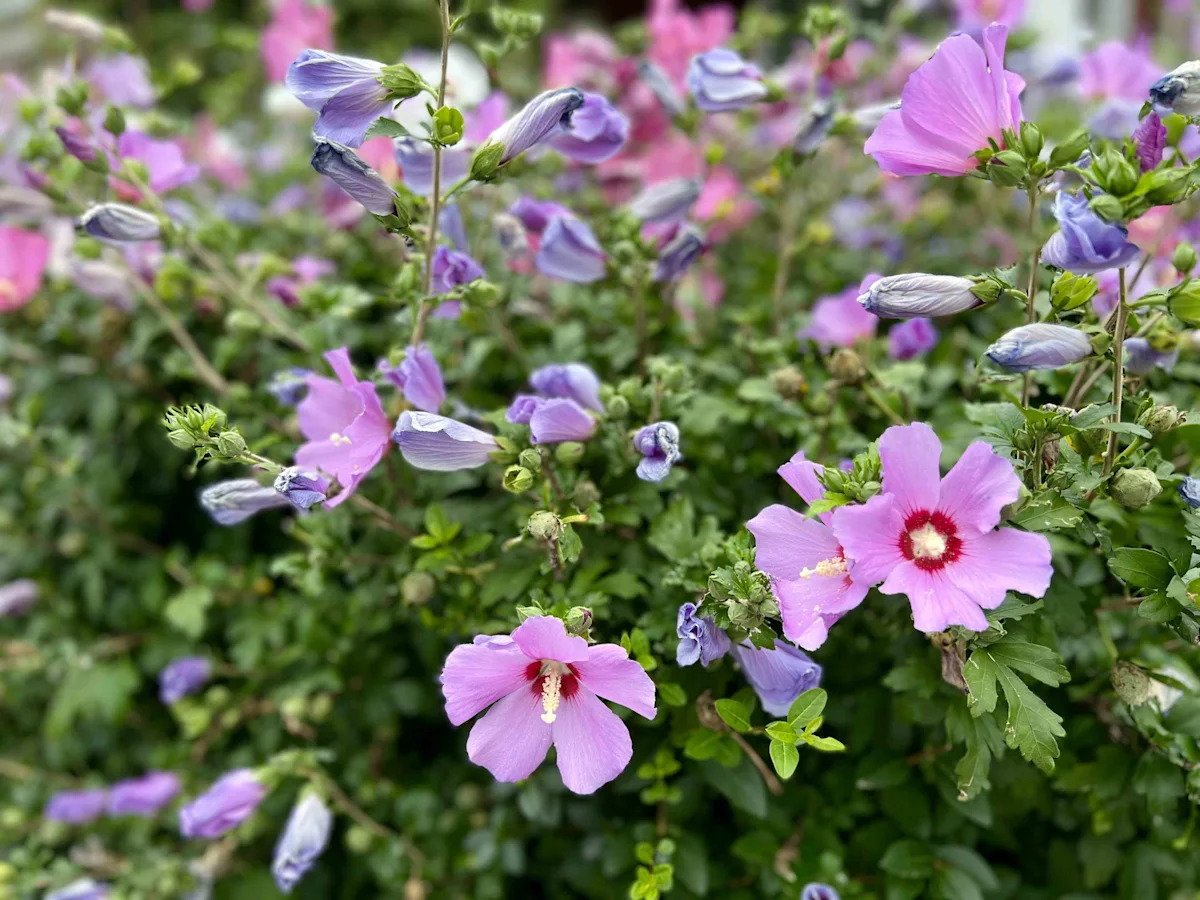
Rose Of Sharon
Botanical name: Hibiscus syriacus
Soil Type: Well-drained but moist
Soil pH: Neutral, slightly acidic (5.5-7.5)
Rose of Sharon is an adaptable, heat-loving shrub for Zones 5 to 9, as long as it gets some moisture. The tropical-looking flowers only last a day, but appear continuously in summer. These shrubs grow quite large and can spread aggressively by seed. Keep them in check by pruning or choose selections that produce little seed.
08 of 10
Crepe Myrtle
Credit: magicflute002 / Getty Images
Botanical name: Lagerstroemia indica
Soil pH: Slightly acidic to slightly alkaline (6.0-8.0)
Advertisement
Advertisement
Crepe myrtles thrive in the sweltering summer sun in Zones 6 to 9. You’ll often see them growing in a sturdy line of 20-foot-tall trees, covered in pink, white, or purple blooms. You can also find crepe myrtle shrubs that stay under 5 feet tall and wide. Though they like moist, well-draining soil to start, once established you can simply admire them from afar.
Learn More
09 of 10
Chaste Tree
Chaste tree (Vitex agnus-castus).
Credit: Mark Turner/Getty Images
Botanical Name: Vitex agnus-castus
Soil pH: Slightly acidic, neutral (6.0-7.0)
Chaste tree is a multi-trunked shrub that produces bluish spikes of flowers in spring and summer. This plant prefers lean and dry soil but doesn’t mind the humidity in the South. In Zone 6, chaste tree will die back to the ground in the winter and vigorously regrow in spring to a 5 or 6-foot shrub. Without pruning, it may grow as large as 20 feet tall and wide in Zones 7 to 9. Some selections like ‘Blue Puffball’ remain at a compact size. Deadheading will prolong blooming in summer.
Advertisement
Advertisement
Learn More
10 of 10
Cape Plumbago
Botanical Name: Plumbago auriculata
Sun Exposure: Full, partial
Soil Type: Sandy, well-drained
Soil pH: Slightly acidic, neutral (6.0-7.5)
Cape plumbago is an arching, evergreen shrub that can be grown in Zones 9 to 11. It grows to 6 feet or taller and produces pretty blue blooms from spring through fall. Plant this shrub in light or sandy, well-draining soil and enjoy the show all summer.
Read the original article on Southern Living
Comments are closed.