
Struggling to keep your houseplants alive? The problem may be with your watering schedule, which is the most common cause of sad, listless plants. Knowing how to water indoors can be especially tricky because plants aren’t growing under natural conditions, explains Maksim Kazakou, resident botany expert at Plantum, an app that helps identify plants and improve plant care. “In an artificial system, the balance is fragile and easy to disrupt,” he says. “When it comes to watering, you’re the only source of water for houseplants. The substrate in a pot dries out very quickly, but overwatering is also a common problem.”
But there is hope! Keeping your plant babies alive is possible with better water practices. Here are five simple ways to tell if your houseplants need some H2O.
01 of 05
Perfect Your Potting Mix
Credit: Elena Medoks/Getty Images
The wrong potting mix can affect a plant’s hydration, explains Kazakou. “A person may seem to be watering correctly but still see signs that the plant’s water balance is off. The growing medium should hold moisture while still allowing water and air to move through it; otherwise, the root system can’t develop or function properly,” he says. He recommends adding aerating and moisture-retaining components, such as perlite or vermiculite.
02 of 05
Schedule Check-Ins
Credit: Maskot/Getty Images
But avoid watering on the same day every week. “Watering on a schedule is common advice and super-convenient to help remember when to water, and it can work a lot of the time,” says Justin Hancock, plant expert and horticulturist at Costa Farms. But light, temperature, and relative humidity levels affect how much water a plant drinks, so it’s not fool-proof, he explains. “If you stick to a schedule and give a plant the same amount of water as you do in the summer, you could inadvertently be overwatering in the cool months,” Hancock says.
To stay on top of watering duties, Kazakou recommends setting a reminder to check on your plant instead. You can use an app like Plantum or use your calendar.
03 of 05
Inspect the Leaves
Credit: FreshSplash/Getty Images
You can learn a lot about your plants’ health from inspecting the leaves, our experts say. What to look for: Thirsty plants often have droopy, wilted leaves that curl inward, according to Kazakou. They often feel soft or limp before drying out. Plants with thick leaves may develop wrinkles.
A less obvious, and more subtle sign: dullness in color. “Many houseplants will lose a bit of their sheen as they start to dry out. So they’re telling you they’re thirsty without being stressed enough to wilt,” Hancock says.
04 of 05
Check the Soil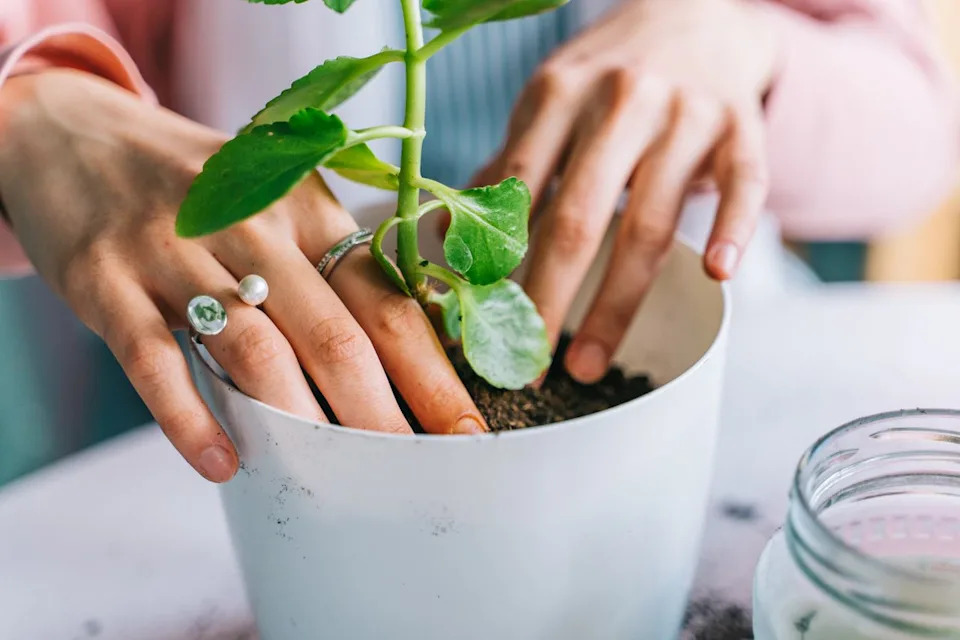
Credit: Olga Rolenko/Getty Images
Plant leaves can appear wilted and droopy if they’re overwatered too, warns Kazakou, which is why it’s important to also check the soil. If you notice the leaves look a little sad and the potting mix is dry, then your plant is likely thirsty, he explains. To check the soil, push your fingers slightly into the mix, roughly half an inch in, he advises. “Over time, you’ll learn to judge whether the plant needs water from the condition of the top layer of the potting mix, simply by touching it and pressing lightly,” he says.
You can also glance at the color, according to Hancock. “Many potting mixes will show you if they’re wet or dry based on the color of the potting mix,” he says. “Coir, for example, gets lighter in color the drier it is.”
05 of 05
Lift the Pot
Credit: FreshSplash/Getty Images
With time, you may be able to tell if your plant needs watering by checking the weight. “Picking up your plant tells you how heavy it is, so that’s a great test with smaller plants,” Hancock says. “Potting mix largely acts like a sponge and absorbs water; the wetter it is, the heavier it is,” he says.
Read the original article on Real Simple
Comments are closed.