
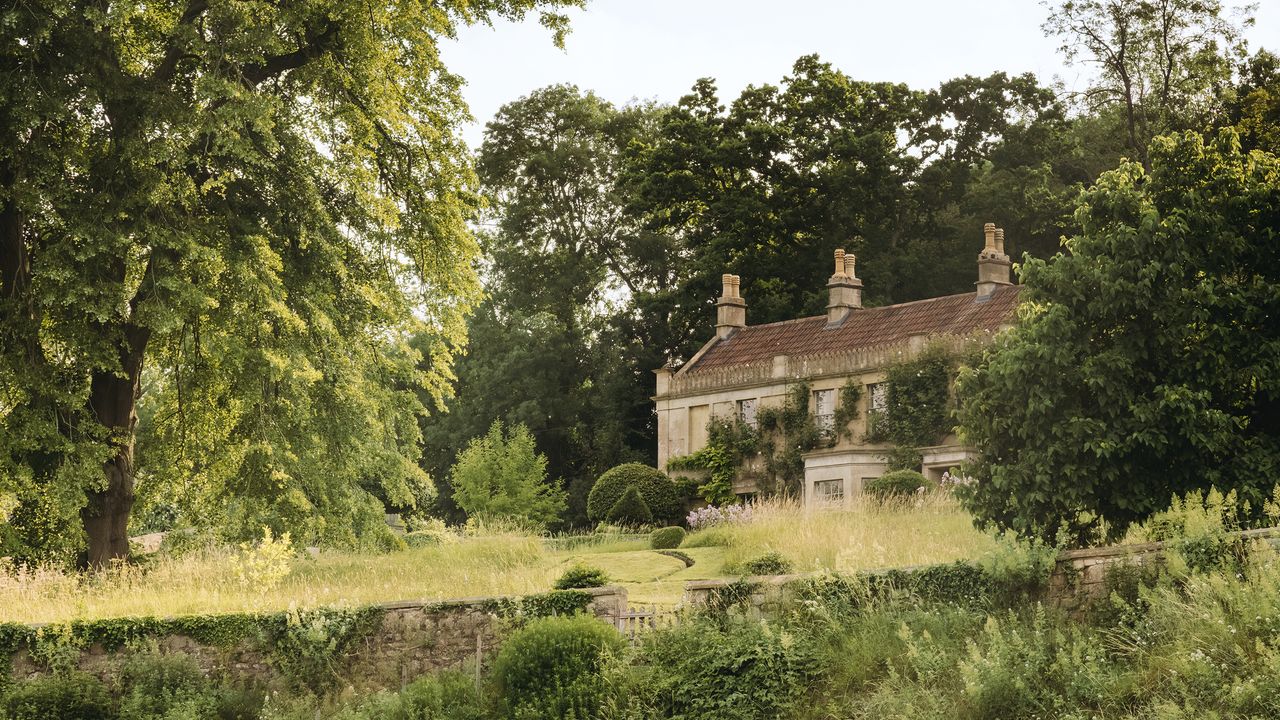
As you wander through the garden, on paths made from pieces of stone unearthed on their land or along routes mown through the meadows beyond the walled garden, you feel as if this relaxed, naturalistic garden has always been here. But, as Amanda explains, when they were planting the topiary, mostly bought as 1.5-2-metre plants, she and Phil were able to draw on their experience of building green sets – where ‘every vista and angle mattered’ – in order to place each one to maximum effect, taking into account its eventual size.
Another aspect of their sensitive approach is the network of routes that they have introduced that subtly encourage exploration. ‘What I always love about gardens we’ve visited is when they offer options,’ says Phil. ‘Dead ends always seem wrong to me.’ A new path beside the box parterre is aligned with an oak gate (one of five designed by Amanda) that opens into the walled garden, the last piece in the restoration jigsaw. Here, the removal of a worn-out fruit cage at one end of a long border inspired the new design of a grid of metal-edged, rectangular beds filled with vegetables, cut flowers and companion plants.
The balance between employing sustainable methods – they use no chemicals in the garden and prefer natural and repurposed materials – and creating a place of beauty is exemplified here. Prunings from the garden’s many hazels and from the mulberry trees providing shade for the dining terrace at the back of the house are woven by Caisson’s head gardener, Tristan Thomas, to make circular ‘baskets’, which are filled with twigs and topped with garden compost. Hazel stems are used to make arches for sweet peas and other climbers and supports in the beds, and on the outer walls they form curved panels at the base of climbing roses, as protection against deer.

Phil and Amanda in the greenhouse, where French marigolds and climbing Cobaea scandens add dashes of colour.
Eva Nemeth
The couple are constantly exploring ways of making Caisson more sustainable and biodiverse. Phil has been experimenting with natural tonics, particularly ones based on Korean natural farming. Already, a fungicide he has brewed from marestail is showing very good results on box plants, strengthening them against blight and moth. And LAB (lactic acid bacteria) in diluted applications is used to stimulate plants. They also make their own biochar that, when soaked in natural tonics, can be used as a slow-release fertiliser. Increasing biodiversity doesn’t just bring the joy of hearing bees feasting on blossom and crickets stridulating in the meadows, or watching the resident kingfisher resting on a bulrush stem in the pound pond. It also restores the natural balance ensuring that there are plenty of ladybirds to keep aphids under control, and legions of frogs and toads to eat slugs and snails. The succession of wildflowers in the meadows returned as soon as Amanda and Phil brought in sheep to graze during the winter months, and they waited until July to cut the meadows for hay once the wildflowers had set seed. One of their greatest joys is spotting orchids; they have so far recorded seven varieties.
Comments are closed.