
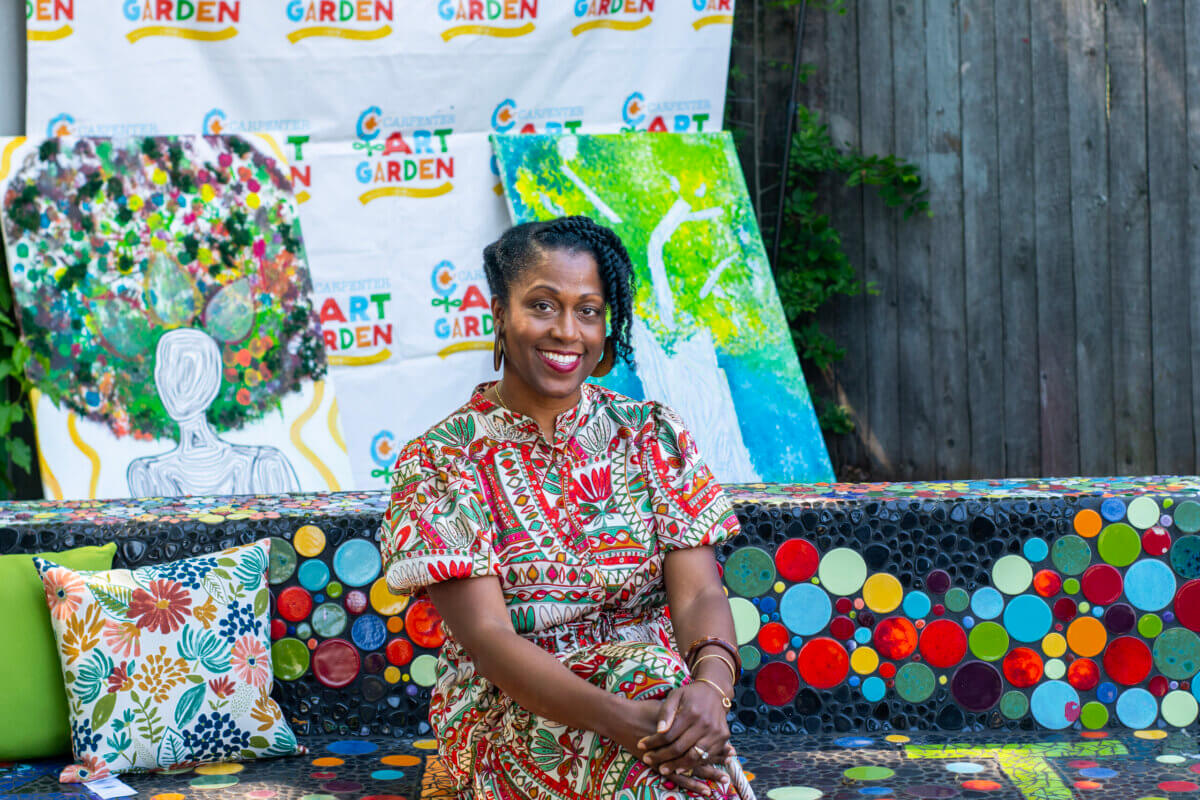
As Executive Director of Carpenter Art Garden, Ayanna Murray is creating a space where art, education, and community intersect. Beyond the garden, she’s a children’s book author, crafting stories that spark imagination. We sat down with Ayanna to talk about storytelling, leadership, and the power of possibility.
We are grateful to all our sponsors:
Your journey spans homeschooling, writing, and now leading the Carpenter Art Garden. What is the common thread?
At first glance, my path might look a little disconnected, but the thread has always been children and the arts.
My years as a homeschool educator taught me to slow down and see kids as whole people — not just students — and give them as many experiences as possible. You never know what might spark something in a child’s heart. Writing became a way to capture those moments, reflect on my own childhood, and hold on to the stories that shaped me (and, honestly, to stay a little bit sane along the way).
At Carpenter Art Garden, that same thread shows up on a bigger canvas. Our mission is to grow young creatives and empower children to create their best futures. It’s the same work I poured into my own children, now extended to youth in Binghampton and across the Mid-South. Whether it was around my kitchen table or now in a community garden, I’ve always been drawn to places where kids can be curious, creative, and fully themselves.
We are grateful to all our sponsors:
How would you describe the magic of Carpenter Art Garden?
The “magic” of Carpenter Art Garden is consistency. In a place where so much can feel unstable or ever-changing, we’ve become a steady after-school presence families can rely on. We show up, we stay, and we grow alongside the neighborhood and its children.
That stability is what makes our Seeds of Peace Community Programs so meaningful. Built on the four pillars of After School & Youth Enrichment, Youth Workforce Development, Community Outreach, and Community Gardens, our programs are a deliberate alternative to boredom, isolation, and violence. We exist in the gap, providing a safe, creative refuge where young people can learn, play, and simply be kids.
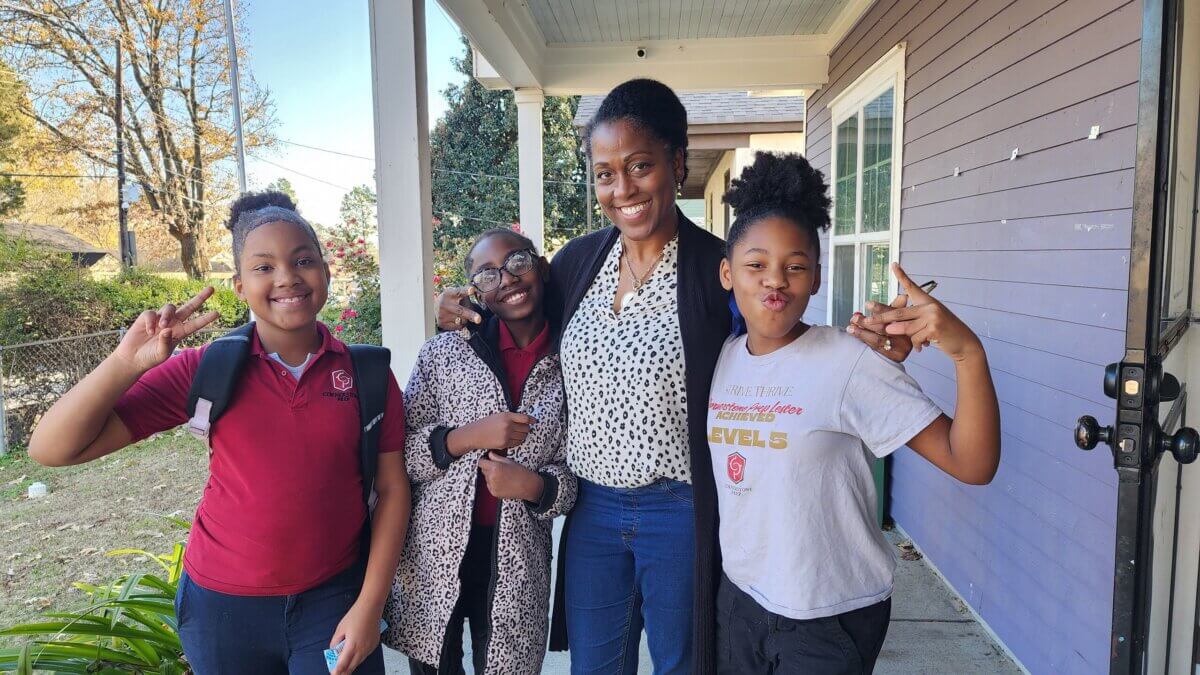 Pin“Carpenter Art Garden is special because it is both simple and profound: presence, care, and possibility taking root in real time,” Ayanna says. Image: Carpenter Art Garden
The garden began as an outdoor art classroom and has grown into something much larger. How do you balance staying true to its roots while continuing to expand its impact?
The garden started very simply, but I still see that original space in everything we do. As Executive Director, my job is about protecting the heart of it.
Growth is exciting, but I’m careful not to let expansion pull us away from what made Carpenter Art Garden matter in the first place: kids having consistent access to creativity, care, and community. If something doesn’t serve the children in a real, tangible way, we pause and rethink it, no matter how good it looks on paper.
At the same time, staying rooted doesn’t mean staying small. For me, it means being deeply intentional — listening closely to our staff, staying connected to the young people we serve, and building trust over time with the families in the neighborhood. The work has to evolve in response to what’s actually needed, not what’s trending.
We are grateful to all our sponsors:
What lessons have you learned that might surprise people?
One thing that might surprise people is how much my leadership has been shaped by my 20+ years as a homeschool educator. I often saw myself as the “CEO” of our learning environment. But my definition of leadership was never about control; it was about service. My main goal wasn’t just instruction; it was to raise up leaders and empower my children to reach their highest potential.
That mindset has carried directly into how I lead at Carpenter Art Garden. I approach my team the same way — looking for strengths, creating space for people to grow into their gifts, and building an environment where leadership is modeled more than it is constantly explained.
Maybe the most unexpected lesson is this: some of the best leadership happens quietly, in observation, consistency, and the discipline of seeing potential in someone before they fully see it in themselves.
 PinAyanna nurtures creativity at the Art Garden with praise, encouragement, and making people feel seen. “So much creativity shuts down when people are afraid of failure or judgment, but when people feel safe and believed in, they begin to flourish,” she says. Image: Ayanna N. Murray
What are some new or upcoming Art Garden programs or additions that you’re excited about?
Our pilot workforce development program, Teen Maker’s Club, gives youth hands-on experience in art, entrepreneurship, and job readiness. Watching teenagers fill up our little yellow house — determined to learn, create, and earn money through their creativity — has been incredibly encouraging to me.
Community partner The Little Garden Club of Memphis helped us secure grant funding to create the Sankofa Garden. “Sankofa,” a word from the Akan people of Ghana, teaches that true progress comes from remembering our roots — learning from the past while moving forward with wisdom.
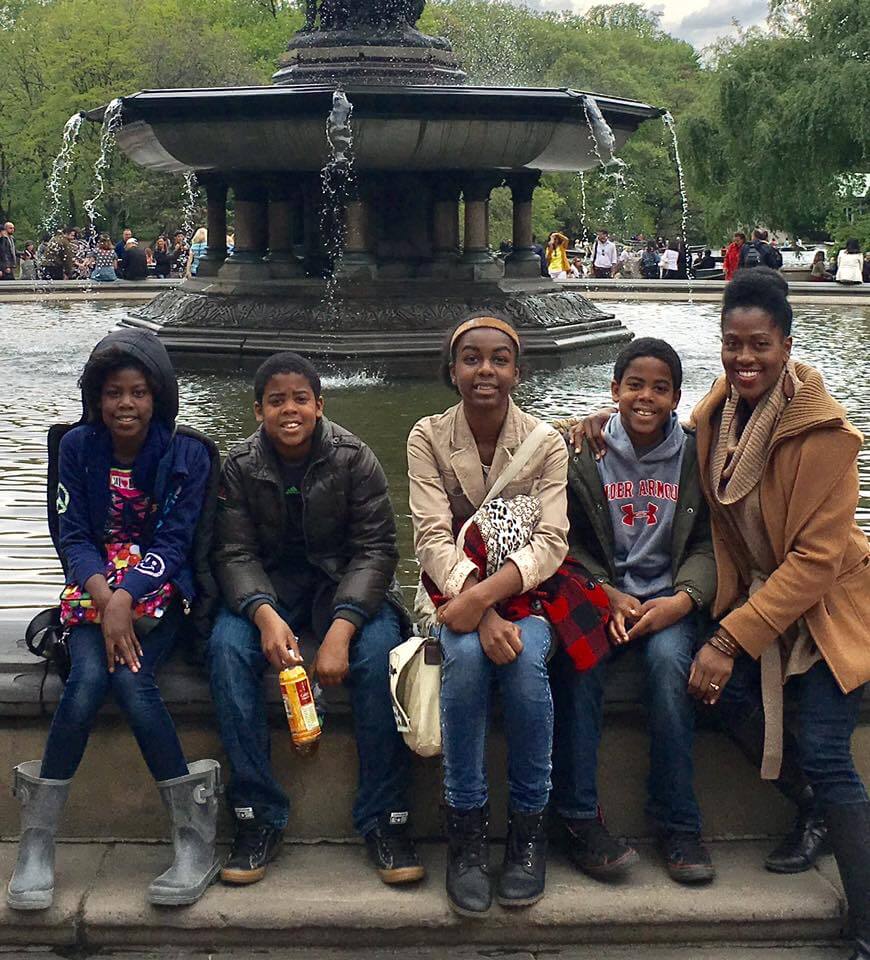 PinTogether, these four homeschoolers earned more than a million dollars in college scholarship offers! “Most people don’t expect that level of structure, strategy, and long-term planning to come out of a homeschool setting,” Ayanna says. Image: Ayanna Murray
The Sankofa Garden celebrates the foods, stories, and traditions of the African Diaspora while also honoring the diverse foodways represented throughout the Binghampton community, which has a large international population. It’s a space where children, teens, adults, and elders can plant, learn, taste, and share the world together.
You’re also a published children’s book author. What inspired you to begin writing for children?
When I was in high school, I filled journals with poetry and original song lyrics that I would perform at school, church, and weddings. I wrote a play that was performed at my church. So storytelling has always been there for me — it just didn’t always have a formal title.
It wasn’t until I became a mother and found myself immersed in hundreds of books with my own children that the seed was planted to begin writing for children. Reading to them opened my eyes to both the beauty of children’s literature and the gaps that still existed in the stories being told.
 PinAyanna focuses on telling unheard or untold stories, often centered around justice, equality, and overcoming obstacles, prejudice, discrimination, and racism. Her book Keep Moving Forward, Henry! shares her father’s experience as one of the first Black firefighters in her hometown. Image: Ayanna Murray
You’ve spoken about the importance of children seeing their own stories reflected in books and experiences. What does meaningful representation look like to you?
Writers have a superpower. With the stroke of a pen, they can make characters appear or disappear. Growing up, most of the books I read were written by white authors, and rarely did children of color have a central or meaningful place in the story. Whether intentional or not, that sends a message about whose stories matter and who gets to be seen.
 PinAyanna’s most important daily ritual? Prayer. “In many ways, it’s less of a moment in my day and more of a constant conversation,” she tells us. “I’m always praying about something.” Image: Ayanna Murray
Now that I’m a writer myself, I’m very intentional about the stories and illustrations I create. Meaningful representation portrays a world that is honest, diverse, and deeply human. It allows children to recognize themselves, their families, cultures, features, experiences, and voices in the stories they encounter.
Representation matters because visibility matters. When children can see themselves reflected in books, art, and experiences, it affirms their value and expands their sense of what’s possible.
What’s the best piece of advice you’ve been given?
“Do unto others as you would have them do unto you,” spoken by Jesus Christ. It’s simple, but it’s shaped the way I try to live and lead, how I treat people, how I make decisions, and how I show up in both my work and my relationships.
This article contains product affiliate links. We may receive a commission if you make a purchase after clicking on one of these links.
**********
For more inspiring FACES of Memphis, click HERE!
Comments are closed.