
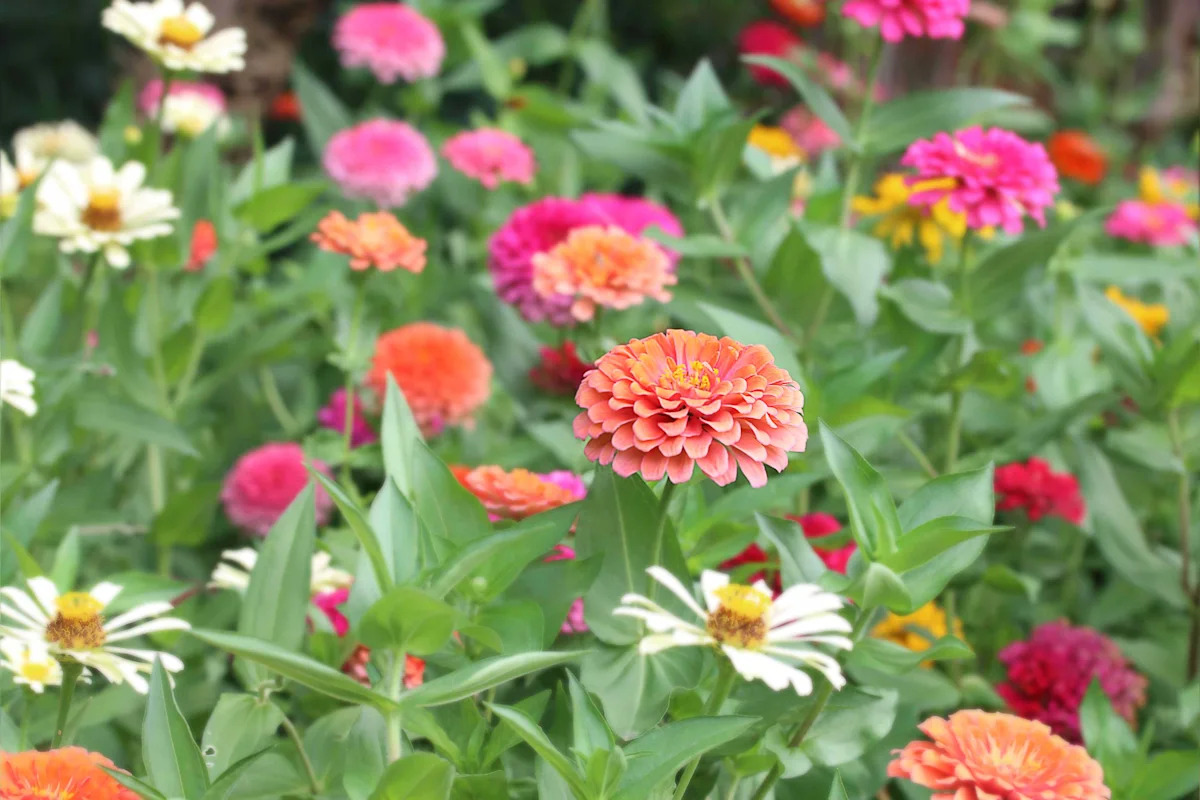
Key Takeaways
Gardeners recommend zinnias because they thrive in intense sun, tolerate drought well, and continue blooming through heat waves.
Zinnias are especially resilient thanks to their deep root systems and fast growth cycle, which allows them to survive for months with relatively little maintenance.
To keep zinnias healthy all season, gardeners recommend giving plants enough airflow, watering at the base, and deadheading regularly.
Even well-intentioned gardeners have a plant or two they accidentally test to the limit. Maybe they forgot to water it during a heat wave or simply went on vacation with a zero-maintenance plan for the week. Some flowers literally shrivel up under that kind of pressure, while others may look half-dead for a few days but somehow come back looking even better.
To find the toughest sun-loving annuals for real-life gardens, we asked professional gardeners for the flowers they consider almost impossible to kill. While there were several contenders, everyone agreed on zinnias. They share why these plants are so hardy, their best growing tips, plus a few runner-up annuals worth planting in full sun.
Meet the Experts
Lucie Bradley, gardening and greenhouse expert at Easy Garden Irrigation
Trisha Nieder, master gardener and regenerative farmer at Nieder Farms
Related: When to Use Annual vs. Perennial Plants in Your Garden
The Most Resilient Sun-Loving Annual
Zinnias love the sun and the heat, which is a must for any low-maintenance annual. “Since they’re native to Mexico and the Southwestern U.S., they’re actually built to thrive in hot, sunny, and dry conditions,” says Trisha Nieder, master gardener and regenerative farmer at Nieder Farms. “At the end of each season, I chop my zinnias to prepare for the next, and am always surprised by how deep their roots run. That deeper root helps them reach down deeper in the soil for water, so they’re not as impacted by those stretches you forget to water them.”
It’s not just that they survive in the summer heat; they actually do better with hot, sunny weather, whereas other annuals tend to struggle or stop blooming altogether. “Warm temperatures and 6 to 8 hours of full sun each day are essential to their rapid growth cycle, allowing plants to bloom just 50–90 days after planting in ideal conditions,” says Kate Schneider, garden expert and founder of Ibis Coastal Landscapes. “The combination of heat and sunlight also helps keep foliage dry, reducing the risk of diseases such as powdery mildew.”
The biggest takeaway is that zinnias can withstand long periods without rain or regular watering. “This means that zinnias will bloom continuously throughout even the hottest of summers,” says Lucie Bradley, gardening and greenhouse expert at Easy Garden Irrigation, who also references their ability to grow quickly and establish strong root systems.

Credit: Zoom Travels/Getty Images
Top Species and Cultivars
We’re told there are over 20 types of zinnias, and most are very easy to grow. “The best variety often depends on the style of bloom you prefer and how much time you want to dedicate to maintenance,” says Schneider. “Double-flowered zinnias, for example, typically require more ideal growing conditions, including consistent watering during their early stages, so they demand slightly more attention.”
“I personally love the larger zinnias because they’re such showstoppers with bigger blooms,” says Nieder. “Benary’s Giant is a great option, because it comes in a variety of colors and it’s a disease-resistant, heirloom variety, which is great if you’d like to save seeds and plant again year after year.”
Here are a few other zinnia series (or cultivars) Schneider and Bradley recommend.
Profusion Series
The Profusion series has an exceptional germination rate of 85 to 90% and a short germination time (as little as five days). “You’ll find Profusion zinnias with both single, daisy-like blooms or double blooms,” says Bradley. “Profusion ‘Cherry’ has vibrant cherry red petals and a yellow center. Profusion ‘Double Fire’ has double blooms, which appear as dense, fluffy blooms with multiple layers of petals for intense, fiery red-orange flowers.”
Oklahoma Series
Not every zinnia needs those oversized blooms to look stunning. “If you prefer a more compact double-flowered variety, the Oklahoma series offers smaller, densely petaled blooms,” says Schneider. “They come in an array of colors from salmon to ivory, typically growing 2–3 feet tall.” Another bonus: Their smaller flower heads tend to hold up well during summer storms.
Queen Series
For cut flowers that feel a little more “vintage,” Schneider recommends the Queen series. “The Queen series is another favorite among gardeners for its uniquely colored double blooms, many featuring striking lime-green centers,” she says. Like other zinnia varieties, they are heat-tolerant, pollinator-friendly, and relatively easy to grow from seed.
Blooming and Planting
Zinnias usually flower 8 to 10 weeks (or up to 90 days for some varieties) after you plant the seed. “You can direct sow the seed after your last frost date, or start them indoors 4 to 6 weeks before your last frost date and then plant the seedlings outside if you’re looking for earlier blooms,” says Nieder. “They will bloom all the way up until the first hard frost. I’ve had zinnias growing in November!”
More specifically, Bradley says you will usually have blooms starting to appear around early to mid-July. “With a single plant capable of producing between 20 and 50 blooms, this means it blooms continuously until the first frosts in fall, which typically kills these tropical, sunny-weather annuals,” she adds.
To encourage fuller plants and maximize flower production, Schneider recommends pinching off the top of young plants early in their growth. “Removing the top leaf node encourages the plant to develop side branches, which leads to more stems and ultimately more flowers,” she says.
You can also save some time by starting plants from transplants, thereby eliminating the uncertainty of seed starting. But Schneider cautions that young plants will still need regular irrigation for the first few weeks after planting.
Best Care Practices
Although zinnias are hard to kill and love the heat, there are a few best practices to keep in mind. Schneider says they still benefit from occasional watering, especially early in their development or if temperatures exceed 90°F. Just make sure you water them at the base to keep the leaves dry and less likely to succumb to powdery mildew. Here’s what else to keep in mind.
Avoid Overcrowding
First, Nieder recommends double-checking the variety’s spacing needs to ensure they have room to grow and adequate airflow. If you can’t find the exact guidance, stick to about a foot. “Space zinnias about 12 inches apart to promote strong air circulation, longer stems, and healthier overall growth,” says Schneider. “Crowded plants tend to trap moisture around the foliage and soil, increasing the risk of fungal diseases and other moisture-related problems.”
Fertilize Twice
During the growing season, feed zinnias once during the early growth stage and again when blooms start. “Apply a balanced fertilizer at germination, then switch to one slightly higher in phosphorus during the flowering stage, such as a 5-10-5 blend, to encourage continued flower production,” Schneider says.
Deadhead Regularly
To maximize the bloom time and number, you’ll need to deadhead by cutting the stem just above a leaf or bud node once a bloom begins to fade. “This signals the plant to produce additional branches and new flower buds,” says Schneider. “Whether you are harvesting flowers for bouquets or simply enjoying them in the garden, regular deadheading is essential for continuous blooming. If spent flowers are left on the plant, zinnias will begin producing seeds and gradually stop flowering.”
Other Resilient Annual Options
Zinnias weren’t the only low-maintenance annuals the gardeners recommended. Schneider also likes sweet alyssum, cosmos, and marigolds. Bradley mentioned nasturtiums and angelonia. Nieder sticks to sunflowers and calendula, and she also seconded the marigold recommendation for its nonstop blooms.
Many of these annuals share similar traits: They tolerate heat well, bounce back after dry spells, and continue blooming throughout much of the summer with relatively little maintenance. Happy planting!
Read the original article on Real Simple
Comments are closed.