
Subscribe to our Monthly Newsletter for native garden designs, planting tips, and inspiration!
https://mailchi.mp/brightlanegardens/youtube
Designing a native woodland garden under trees is one of the most rewarding ways to turn a shaded yard into a thriving ecosystem. In this video, we walk through a complete understory native plant landscape design, showing exactly how to evaluate your site, choose the right plants, and lay them out for long-term success.
This is not just about planting flowers. This is about understanding how native plants grow together in a natural woodland environment and how to recreate those patterns in your own yard.
We cover key concepts like microhabitat traits, soil conditions, leaf litter, moisture retention, and how tree canopy affects light levels throughout the day. These factors determine which native plants will thrive in shade and which ones will struggle.
You will also see how to evaluate existing landscape topography and use it to your advantage when designing a native plant garden. Small elevation changes, root zones, and drainage patterns all influence plant placement in a shade garden.
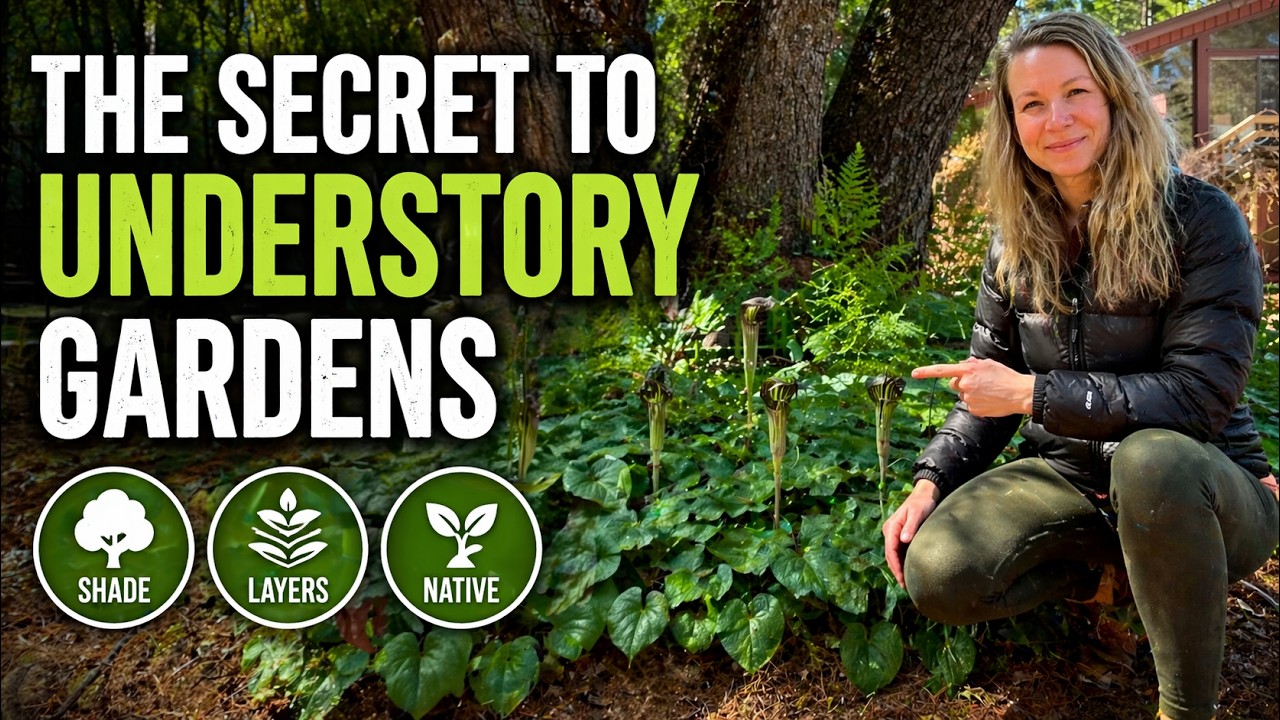
One of the most important concepts we break down is matrix planting. Instead of spacing plants evenly, we show how to create a natural, layered planting design using groundcovers like wild ginger, structural plants like jack in the pulpit, and seasonal bloomers like trillium and bloodroot.
We also dive into plant growth patterns, including how native groundcovers spread, how root systems develop, and how to plan for long-term expansion without overcrowding. Using wild ginger as an example, we show how slow-spreading plants can create a dense, weed-suppressing carpet over time.
Understanding root systems is critical in woodland design. We look at how jack in the pulpit grows underground, how it establishes in shaded environments, and how to position it within a layered planting design.
This video also emphasizes planning for future growth and plant harmony. Native plant gardens are not static. They evolve over time. The goal is to design a system where plants support each other, fill space naturally, and reduce maintenance.
You will see a full walkthrough of planting techniques for woodland species, including how to plant in leaf litter, how much to disturb the soil, and how to work around existing tree roots without damaging them.
If you are trying to replace lawn with native plants, create a shade garden, or build a low-maintenance woodland landscape, this step-by-step design process will give you a clear path forward.
This approach supports pollinators, native insects, birds, and the entire food web, while also creating a beautiful, natural-looking landscape that fits seamlessly into your environment.
Chapters:
00:00 Intro
00:42 Microhabitat Traits
01:51 Existing Landscape Topography
03:09 Plant Options and Selection
04:18 Designing our Layout
04:27 Matrix Planting
05:42 Identifying Growth Patterns (Wild Ginger Example)
06:34 Jack in the Pulpit Roots and Growth
07:25 Planning for Future Growth & Harmony
08:43 The Key to Planting Native Plants
12:01 Planting Wild Ginger
17:13 BONUS Woodland Friend!
17:37 Layout Overview
#NativePlants #ShadeGarden #WoodlandGarden #UnderstoryPlants #MichiganGardening #NativePlantDesign #PollinatorGarden #GardenDesign #WildlifeGarden #PlantNative #EcologicalLandscaping #LowMaintenanceGarden
16 Comments
Looking forward to see how it turns out 🌱 We’ve moved recently to a house on a wooded acre in NC, unfortunately covered with a ton of invasives such as Japanese Stiltgrass, Crabgrass, English Ivy, Periwinkle, to name a few of the most prominent. We’ve begun covering everything with cardboard and woodchips with hope to eliminate these invasive plants. Have you ever dealt with something similar?
Yay! This video feels tailor-made for me! The deciduous trees have just started to really leaf out here in Cincinnati, so my shade/part shade woodland edge yard is sort of wrapping up the ephemeral season.
I had my first Jack in the Pulpit come up! But it felt super gratifying to have something to show for years of patient restoration when my friends with full sun yards have super exciting, showy native summer gardens.
I wish you didn’t fast forward through the ginger planting. How far apart did you plant them? Did you matrix plant them or just in a line? Thanks!
Holy volcano mulch on that poor pine?!
👋🏻 new here, this will be a gorgeous planting but I never heard any mentioning of watering besides your spring rains. What about summer water needs? Thank you
Pine needles are acidic but they don't make the soil acidic. Stop spreading disinformation.
Leopard frog😊
Hello, Neighbor! Were you affected by the recent ice storm? I lost some huge branches from several century old white pines 😢. I may have to take one of them down.
I'm waiting for my Jacks, thanks for the inspiration 💚
I love wild ginger. It is one of my all time favorite plants.
Overall, how many plants did you plant? I think I generally don't buy enough…
I like having creeping myrtle in some places, but creeping Jenny is better if you will be walking on it occasionally. I know the Myrtle isn't native.
My favorite but hard to keep happy plant is Native Rhododendron. I have 2 that are slowly growing in my yard. My soil is slightly acidic loam, which I think they like.; But, I've had at least 4 die on me. They are in shade, which they like. But, I have to keep them in a small fence or the deer will eat them. I am having a hard time finding them to buy more. And, seed growing attempts have failed.
I’ve never seen wild ginger grow thickly. It is just a thing that wants to be sparse. The European evergreen kind can grow thickly but the deciduous North American varieties just don’t.
According to several university extensions, pine needs do not increase soil acidity.
there are two gingers, the european ginger Asarum europaeum and the native american ginger Asarum canadense
Greetings from Franklin Mass, fellow zone 6
Recently cleared a large area of old brush and over growth…want to plant a native garden! Should I till the ground or plant as is like you mentioned?