

Story audio is generated using AI
It’s safe to declare a war on weeds now. And be sure to win.
The recent heavy rains have softened the ground, making it easy for you to pull them out, roots and all.
You could engage the children with the task (for the weeds in the lawn, which are easily lifted if they know how), offering a reward for them pulling out a plastic grocery bagful.
If you don’t have a weed lifter, an old fork will do.
We had an unpleasant surprise in the garden this week when an obelisk-shaped termite mound appeared in the middle of the garden bed.
Google came to the rescue with advice on how to get rid of it. The suggestion was to pour boiling water on it.
But what of the queen in residence at the base of the mound?
I found a hollow tube in the garage which I inserted in the top of the mound and pushed it down to the bottom where her chambers were most likely situated.
Holding the tube in place with a pair of braai tongs, and a funnel inserted at the top of the pipe, allowed me to pour boiling water from the kettle down the pipe without getting burnt myself.
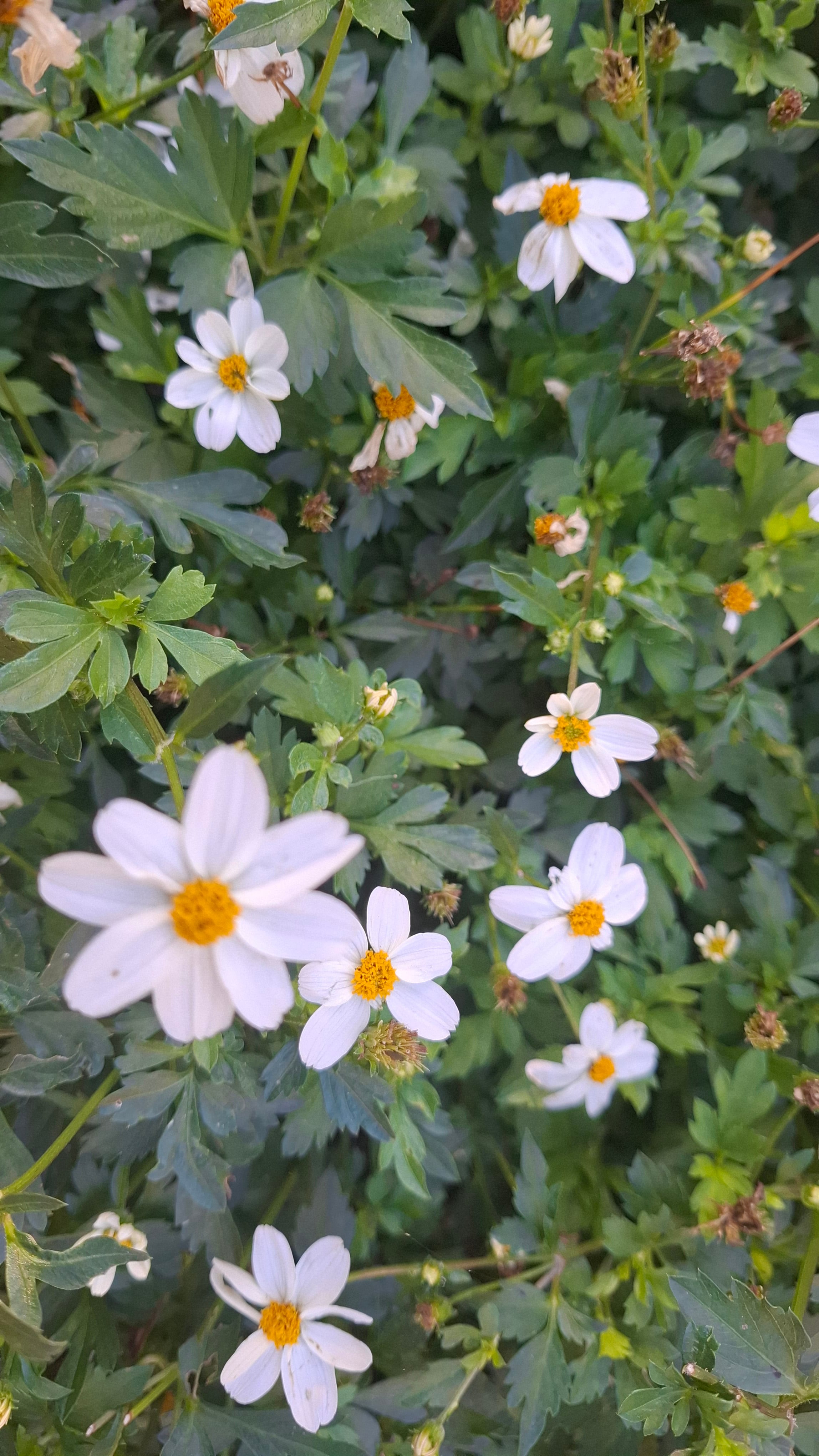 The author’s favourite plant at the moment – the Bidens ferulifolia. Picture: SUPPLIED (supplied)
The mound collapsed and after pouring another kettle of hot water onto it had to wait till morning to finish it off. (It had become dark).
These drastic measures were called for as we have a special garden gate which I sourced from Colonial Antiques in Gqeberha years ago and couldn’t bear the thought of it being attacked by these creatures.
The following day, though the mound had collapsed, there were still some writhing about in the remnants of the mound. So, I sprinkled Blue Death on what was left.
John Sebastian, my gardener, dug down into the nest to remove the soil from the collapsed mound and its surrounds, which he tipped into a gardener’s bag and disposed of it.
Despite three phone calls and messages left on their answering machines, I was unable to reach Rentokil for advice.
The start of winter calls for a visit to the nursery where you may choose new shrubs and trees to plant in the garden.
Azaleas and camellias will be showing their colours in the nursery right now, tempting you to add them to your shade/semi-shade garden. Remember they love acidic soil.
In my garden, young Shasta daisies, the obedience plant, coreopsis and gaura are popping up beside their parent plants.
It’s a time to lift and separate them to plant where they may enjoy their own space.
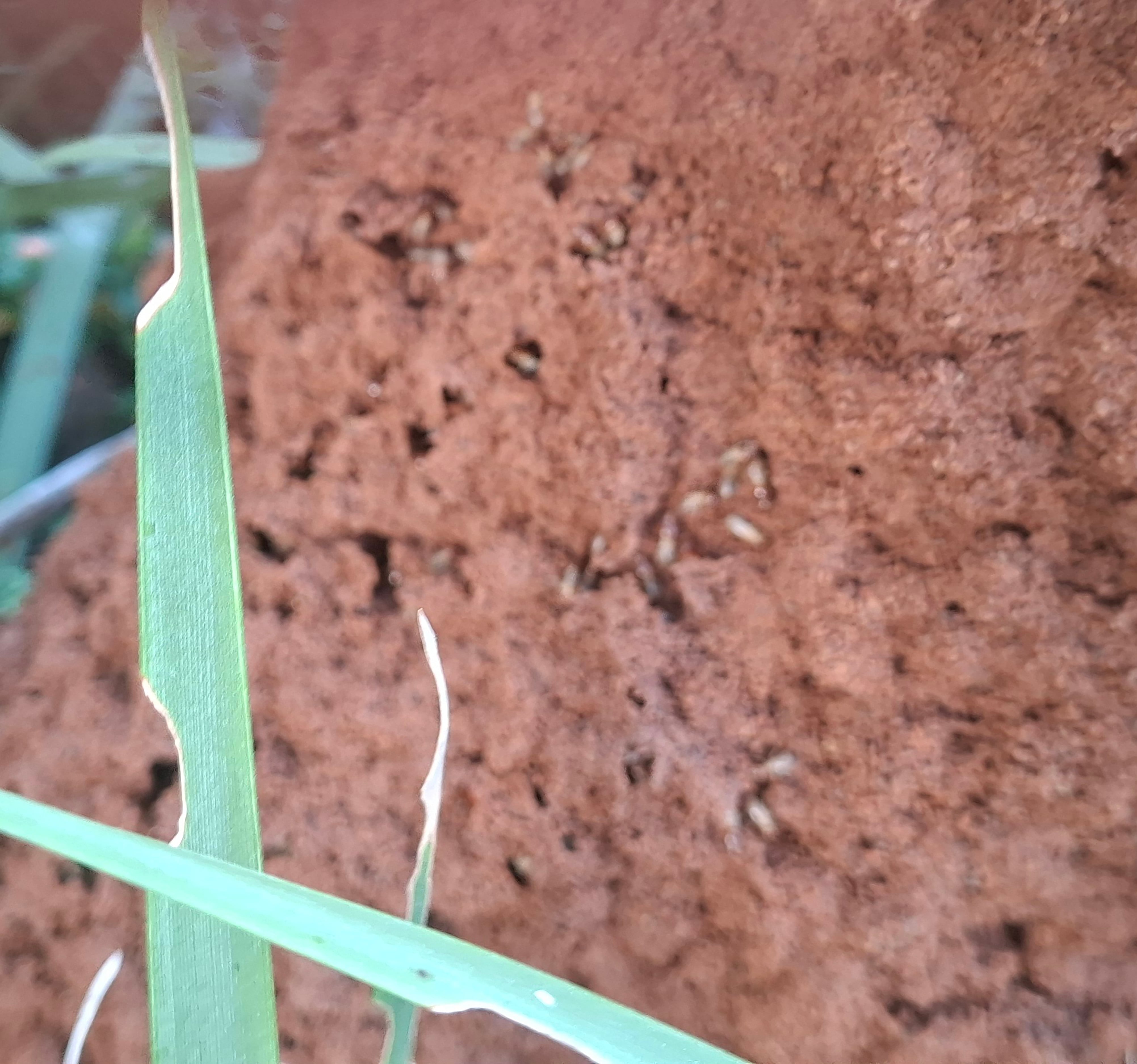 Termite-infested soil. If left to multiply termites can create havoc with any wooden features in the garden. Picture: SUPPLIED (supplied)
Or, if you have some extra of these perennials to share, do so.
Generally, remove spent plants and cut off dead branches from shrubs, perennials and trees which did not manage to continue performing through the drought.
Apply mulch and loosen the soil with a fork to allow it to mix with the soil beneath it.
If you are still not trusting that we have had enough rain to plant colour and support tender annuals in the garden, contain your planting where they may be easily cared for.
Replace the soil in empty planters, arrange them where they will be appreciated: in garden beds, along a pathway and at the front and back entrance.
Seagro liquid fertiliser is available again. (Or use another product.)
Water the plants before planting and then again once settled in the ground.
Then weekly. Don’t forget to use bonemeal in the planting holes to feed the roots.
Continue planting spring flowering bulbs. As they appear, water them with liquid fertiliser.
If you have not yet planted the bulbs, it is not too late to do so.
 This is the perfect time of year to pick up that rake and gather all the fallen leaves in the garden. Feed them to your compost heap. Picture: SUPPLIED (supplied)
My latest favourite plant at present is Bidens ferulifolia.
I was encouraged to plant the white flowering perennials last year by Annie Waterson. I planted three of them.
They have spread into a flowerful, compact mounded bush which has not stopped showing off its prettiness the whole year.
They are enjoyed by pollinators. I’ve noticed butterflies of all colours have been constant visitors.
They are available in white, pink, yellow and orange flowering plants.
Bidens are drought and heat tolerant and have cruised through our unfriendly weather and continued to flower.
They are useful as a groundcover, to fill in gaps, act as a border or spill over the sides of hanging baskets or window boxes. Their spread is about 30cm x 30cm.
Plant them in full sun in well-draining soil.
A general tidy-up includes trimming back hedges, shrubs and trees.
Think of the plants in the garden as a big family where one member is not permitted to outshine the other.
See that each plant has its own space and is not dwarfed by its neighbour.
This could guide where pruning is appropriate.
If you rake up fallen leaves to begin a compost heap now, it will be ready in time for incorporating in the garden in spring.
Choose a site in a sunny spot. The heat speeds up the composting process.
If you realise the heap is drying out, sprinkle it with water.
Do not build your compost heap over a cemented or hard landscape area as it will affect aeration of the heap, gogga activity and prevent effective drainage.
A metre by a metre size is manageable. Once it has reached a manageable proportion, start another one beside it.
Start the heap with a 20cm layer of sticks and twigs which facilitates good aeration.
Then alternate green (45%) and brown (35%) layers.
A 10% layer of manure (cow, sheep, or chicken) accelerates the speed at which the heap decomposes.
Including it will make the heap heat up as the tiny creatures within it are hard at work decomposing.
The green layers are nitrogen-rich scraps from the kitchen such as peelings, fruit (not citrus), spent plants, garden clippings, washed seaweed, coffee grounds.
The brown layer is carbon-rich and consists of eggshells, shredded newspaper, unprinted cardboard, egg cartons with labels removed, dead leaves, corn cobs and sawdust (from untreated wood).
Remember that organic waste will decompose more quickly if it is cut into small pieces.
With the simple exercise of using suitable waste to create compost you are enriching the environment, as sent to a landfill it contaminates underground water as it decomposes.
Methane gas is produced, which is more harmful than carbon monoxide.
Compost improves the soil by making sandy soil less porous, or prevents “oily beads” forming on the soil’s surface.
It becomes more receptive to water as it makes the grains/particles stick together.
Clay soils tend to allow water to dam up on the surface, preventing it from sinking to the roots of the plants.
Compost incorporated into clay soil separates the particles, allowing it to nourish the plant.
Click here to join the Daily Dispatch’s WhatsApp channel and get the latest news delivered straight to your phone
The Herald
Comments are closed.