

For a few hours every fortnight, a green oasis in an otherwise bland and rundown Tel Aviv neighborhood functions like a small state within a state, run on its own currency.
The Lira Shapira, named for the Shapira neighborhood and the Israeli lira, Israel’s official currency between 1952 and 1980, enables residents to buy fresh organic vegetables at a produce garden along with wares such as oils, soaps and bread — and even therapeutic treatments. All are offered by local craftspeople and entrepreneurs at stalls adjacent to the vegetable beds.
The Lira Shapira is distributed in exchange for organic waste dumped into containers located throughout the neighborhood, from which it is turned into compost. One kilogram (2.2 lbs) of waste earns one Lira and saves one shekel ($.34) in municipal waste treatment costs, according to Lira Shapira’s founder and board chairman, Perry Samnon.
It’s a win-win, he explains: The municipality gains by not having to transport organic waste to landfill sites, and the environment benefits because keeping organic waste out of landfills creates less methane, which is a major cause of global warming.
Residents are encouraged to adopt a more sustainable lifestyle, and, by earning vouchers, gain access to healthy, organic, locally-grown food or other products sold at a discount. They also meet their neighbors within the warm community setting of the garden, while local businesses find new customers.
Now, similar programs are being planned or implemented elsewhere in Israel.
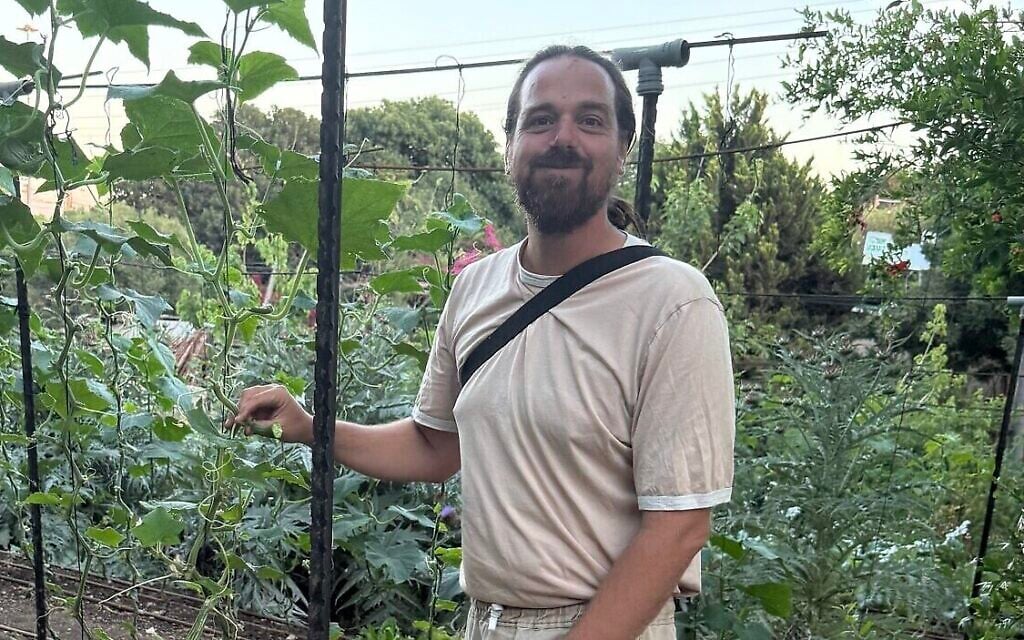
Lira Shapira’s founder and board chairperson Perry Samnon poses with cucumbers at the Tel Hubbes garden in south Tel Aviv, May 28, 2026. (Sue Surkes/Times of Israel)In northern Israel, the Bat Galim neighborhood of Haifa hosts the ShtarGalim market — shtar means banknote in Hebrew — while Lish Harish, which also references the old Israeli lira, is being set up in the city of Harish. AsimonTziv’on — the asimon was Israel’s iconic public telephone token with a hole in the middle — is being created in Kibbutz Tziv’on. In southern Beersheba, activists have launched Groo-v, a play on words based on grushim, or small change, and the first letter of Beersheba.
ShtarGalim, which will hold its third market on June 26, also pays currency for organic waste — but it is based in a small, existing community garden that cannot yield enough vegetables to sell. The main aim, according to volunteer Noa Perry, is to link the community with the many local businesses and creators who use the garden as a marketplace.
Lira Shapira, which has 300 household members, most of them from the Shapira neighborhood, holds a market twice a month at its produce garden, Tel Hubbes, first planted four years ago.
On a Thursday evening late in May, people dotted a wooden picnic table, bagging tomatoes, cucumbers, zucchini and other vegetables before eyeing fresh loaves baked by a woman called Cadia (“the name’s Yemenite for a flower”), and specialty oils, soaps and preserves by Merav Komash.

Deliberating over which specialty bread to buy at Lira Shapira’s Tel Hubbes garden market in south Tel Aviv, May 28, 2026. (Sue Surkes/Times of Israel)
At the latter, Dora Kaikov, one of many local immigrants who belongs to the Bukharian Jewish community, was exchanging paper Liras for olive oil. “There was just sand here before,” she said, gesturing over the three-dunam (three-quarter-acre) site.
Felicia Donatus, a bashful migrant worker from Nigeria, was wandering around with her confident, 9-year-old Israeli-born daughter Debbie, who appears in a movie about Lira Shapira produced by a community filmmaking group.

Dora Kaikov hands over Lira Shapira vouchers for a bottle of olive oil at the Tel Hubbes garden market in south Tel Aviv, May 28, 2026. (Sue Surkes/Times of Israel)
All were part of a human mosaic that characterizes this south Tel Aviv neighborhood, located on the poorer side of an overpass, the gleaming towers of the business district just visible beyond — religious and secular, native-born Israelis, immigrants, refugees and foreign workers, along with bohemian types who show signs of gentrification to come.
The site serves a dual purpose. Locals rent 22 garden strips, each 10 meters (33 feet) long, for 10 Lira a month to grow their own food. The waiting list is long, notes Orly Nackler, who takes pride in the vegetables she cultivates with her children.
Furthermore, Tel Hubbes hosts educational courses — one for gardening, which supplies the market’s produce, and another for groups seeking to replicate the Lira Shapira model.
Idan Goldberg is one of just three garden activists earning a small salary. He coordinates the courses, garden tours and events, which raise most of the income needed for Lira Shapira’s NIS 200,000 ($70,000) annual budget. The Tel Aviv-Jaffa Municipality subsidizes the courses and provides the land and other services.

Idan Goldberg stands in front of garden beds cultivated by course participants at the Tel Hubbes garden in south Tel Aviv, May 28, 2026. (Sue Surkes/Times of Israel)
“This is a place of healing,” Goldberg said, adding that he had helped build the garden during the coronavirus pandemic.
Samnon said Lira Shapira, launched seven years ago, drew inspiration from various international models, including a Brazilian program that rewarded public transport users with free rides for separating trash. To his knowledge, however, Lira Shapira remains the only initiative that specifically ties organic waste to compost production.
The project is based on trust.
Residents who want to join the scheme apply online.
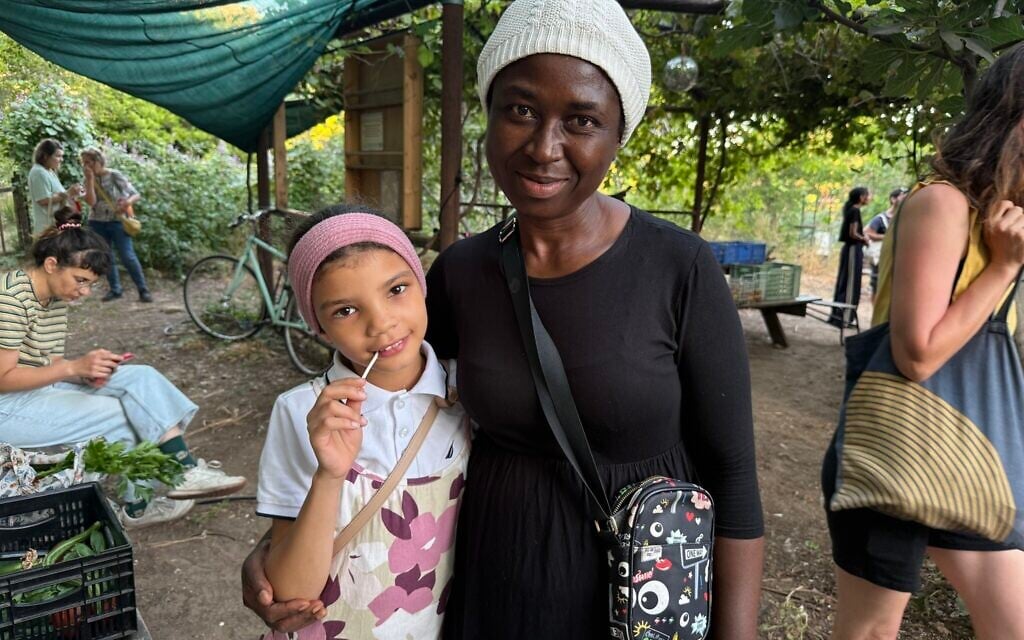
Felicia Donatus, a migrant worker from Nigeria, poses with her Israeli-born daughter Debbie at Lira Shapira’s Tel Hubbes garden market in south Tel Aviv, May 28, 2026. (Sue Surkes/Times of Israel)
The only vetting is an initial online get-to-know-you conversation. Compost bins and weighing scales are distributed throughout the neighborhood. Residents weigh their organic waste before dropping it into a container, and register the weight on the application to receive the currency or pick up paper notes at the garden.
The Lira Shapira community generates five to 10 tons of organic waste monthly, which accounts for 20-30% of the compost used at Tel Hubbes.
Teams of two to three volunteers man groups of neighborhood compost bins, ensure that the right balance between wet and dry material is maintained, and receive 10% of the value of whatever they collect in Lira.
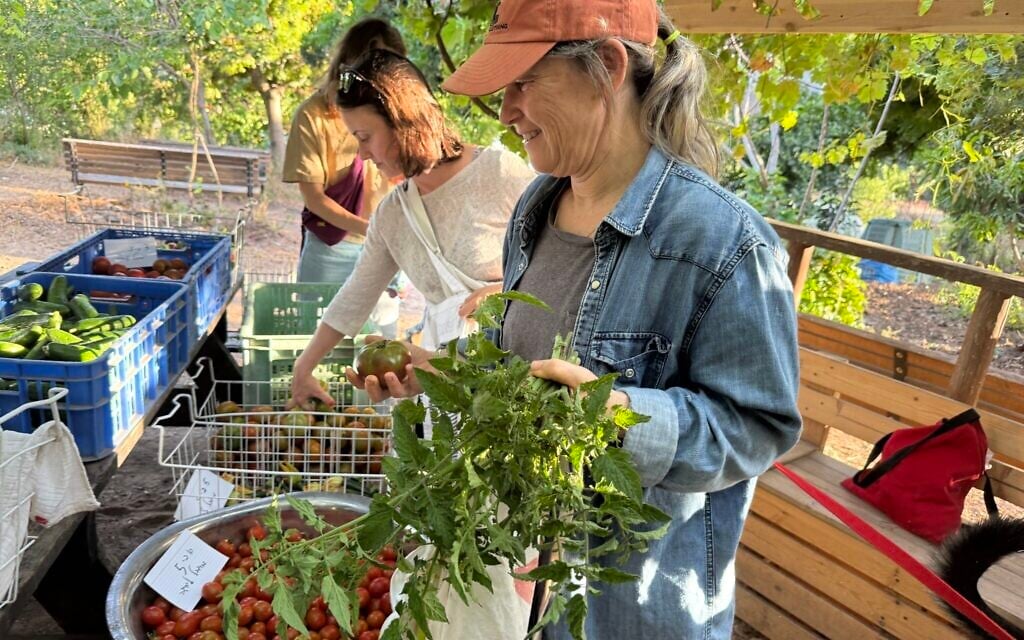
Sarah Auslander (right) came on her bicycle to buy vegetables at Lira Shapira’s Tel Hubbes garden market in south Tel Aviv, May 28, 2026. (Sue Surkes/Times of Israel)
One such volunteer, Sarah Auslander, said the job helped her to “lead the [sustainable] life I believe in,” adding that her family of six produced 30 kilograms of waste each week, which was going to productive use rather than being thrown into the trash.
Samnon estimates that the bins and the garden are maintained by around 50 volunteers, including himself.
“This was a dirty, neglected site, where people dumped building waste,” he recalled. “The birds and insects have returned, there’s biodiversity and the plants are healthy. Everyone wins.”
Comments are closed.