


Gorica Poturak/Getty Images
After the first flush of spring, early summer brings with it a jump start of new growth. Everything from shrubs to flowers to trees bursts to life in the month of June. And as the days start to heat up, it’s a good time to find ways to expand your garden. June is a great month to propagate many different perennial species. Propagation, a process that creates new plants out of other plants, saves gardeners money in the long run. Most perennials propagated in June will be either herbaceous perennials or woody plants.
Some of the best perennials to propagate in June are those plants that grow well from softwood cuttings, like hydrangeas, lilac, and spirea. Softwood cuttings should be taken from certain woody perennial plants in either spring or early summer, making June an ideal time for propagation. By the time the warm weather rolls around, most perennials have established new growth that is just starting to mature. The new growth, in the form of soft and succulent shoots, is flexible, but still should snap when bent. Taking cuttings from this new growth in your perennials allows you to expand your summer garden beds with more of your favorite lush plants.
Azaleas

Tatiana Terekhina/Getty Images
If you have an evergreen azalea (Rhododendron sp.) in your yard, you should be able to grab stem cuttings for propagation. Early summer, including the month of June, is a great time to consider taking stem cuttings of this perennial. You want to take cuttings from new growth, checking to make sure the wood is not too soft or too brittle. Using the proper rooting hormone and media, you can expect an evergreen azalea cutting to root within 6 weeks. Deciduous azaleas can be propagated similarly, but it can be more difficult and the month of June may be too late.
Lavender

dhruvkumar192/Shutterstock
If you have this fragrant purple perennial growing, you can multiply your lavender plants with one easy gardening technique. Simply take a 2-to-3 inch cutting from a healthy lavender plant (Lavandula angustifolia) and pop it in soil until it forms roots. Softwood cuttings can be taken from lavender starting in late June during the main growing season so that they have time to establish themselves before their dormant period. Roots take between 30 and 40 days to grow in lavender cuttings. Lavender is hardy in zones 5 through 9.
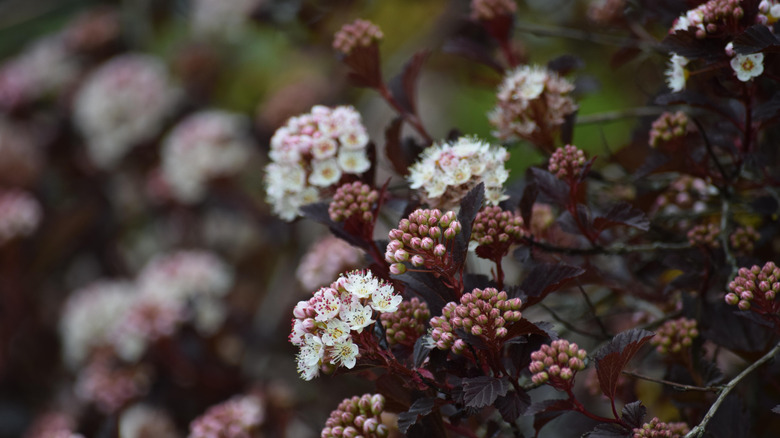
Ninebark
rumxde/Shutterstock
A popular native shrub that is adaptable to many areas, ninebark (Physocarpus opulifolius) should be propagated via softwood cuttings in the summer. Take 4 to 6 inch cuttings from tender stems, place them in a growing medium, and wait about 4 to 6 weeks for roots to form. Once roots form it is possible to move the plant into an individual pot where it can grow established roots before being planted in its permanent place in the fall. Common ninebark is a perennial that is hardy in zones 2 through 8.
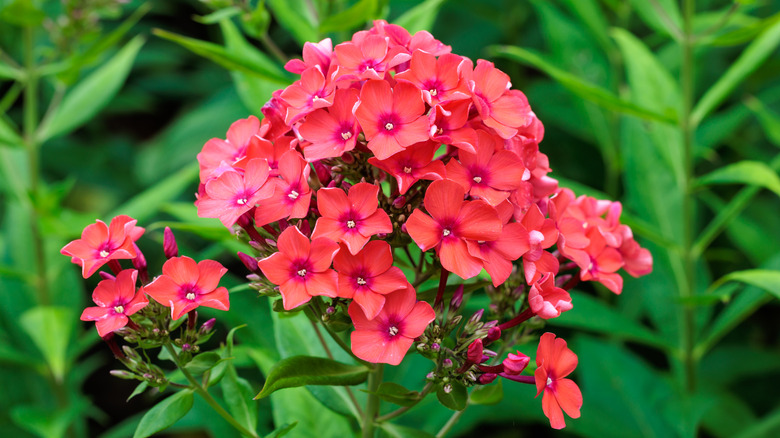
Garden phlox
Billy_fam/Getty Images
A herbaceous perennial with a long blooming period that will last until late summer, garden phlox (Phlox paniculata) easily attracts pollinators like bees and hummingbirds to your garden. Adding more of this native flower to your beds is a good way to support pollinators. You can do this by dividing phlox in the fall or spring, but you can also take stem cuttings to propagate it in June. Keep in mind that you should only take stem cuttings in early summer, waiting until fall for root cuttings. Garden phlox is hardy in zones 4 through 8.
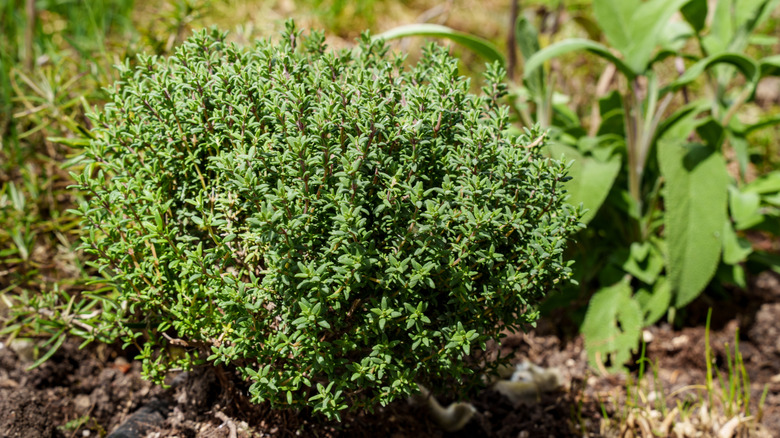
Thyme
Sandra Alkado/Shutterstock
Early summer, including June, works well for propagating herbs like thyme (Thymus vulgaris). When propagating thyme, wait until the new growth on your plant has partially matured, making it a semi-hardwood cutting. Grab cuttings from a stem node where the leaves form and place the bottom inch or so in a moist planting medium. It will take about 4 to 6 weeks for your thyme cuttings develop roots. New plants grown from cuttings can be overwintered inside in containers and planted outside in spring.
Lilacs

Marisha Radchenko/Shutterstock
One of the most popular methods for propagating lilacs (Syringa sp.) is through softwood cuttings taken in mid-June into early July. If you have a large bush that you would like to use to add to other areas of your yard, wait until there is new growth. Snip off a section about 4 inches to 10 inches long that is healthy and sturdy. You can then dip it into rooting hormone to wait for roots to develop. Move the young plants to pots to allow them to get bigger before planting in the ground. Lilacs are hardy in zones 3 through 7.
Oakleaf hydrangeas

Bowonpat Sakaew/Shutterstock
In early summer you can take small cuttings of new, immature growth from your hydrangea bushes (Hydrangea sp.), including oakleaf hydrangeas (Hydrangea quercifolia). Take cuttings that are about 5 to 6 inches, removing the bottom leaves. And remember the critical step you’re missing to help propagate your hydrangeas perfectly, which is to cut the leaves on the stem cuttings in half. Cutting the larger leaves reduces moisture loss and prevents wilting while the cutting works to grow roots. Oakleaf hydrangeas are perennials that are hardy in zones 5 through 9.
Candytuft

Emer1940/Getty Images
Hardy in zones 3 through 8, candytuft (Iberis sempervirens) is an evergreen groundcover native to southern Europe with appeal as a drought-tolerant perennial. Evergreen candytuft can be propagated easily from cuttings. In early summer, take tip cuttings of your evergreen candytuft plants. A tip cutting is a few inches long and comes from the end of a shoot, unlike a stem cutting that is taken near the base of the plant. Place the end of your cutting in a moist potting medium to encourage it to establish new roots.
Comments are closed.