
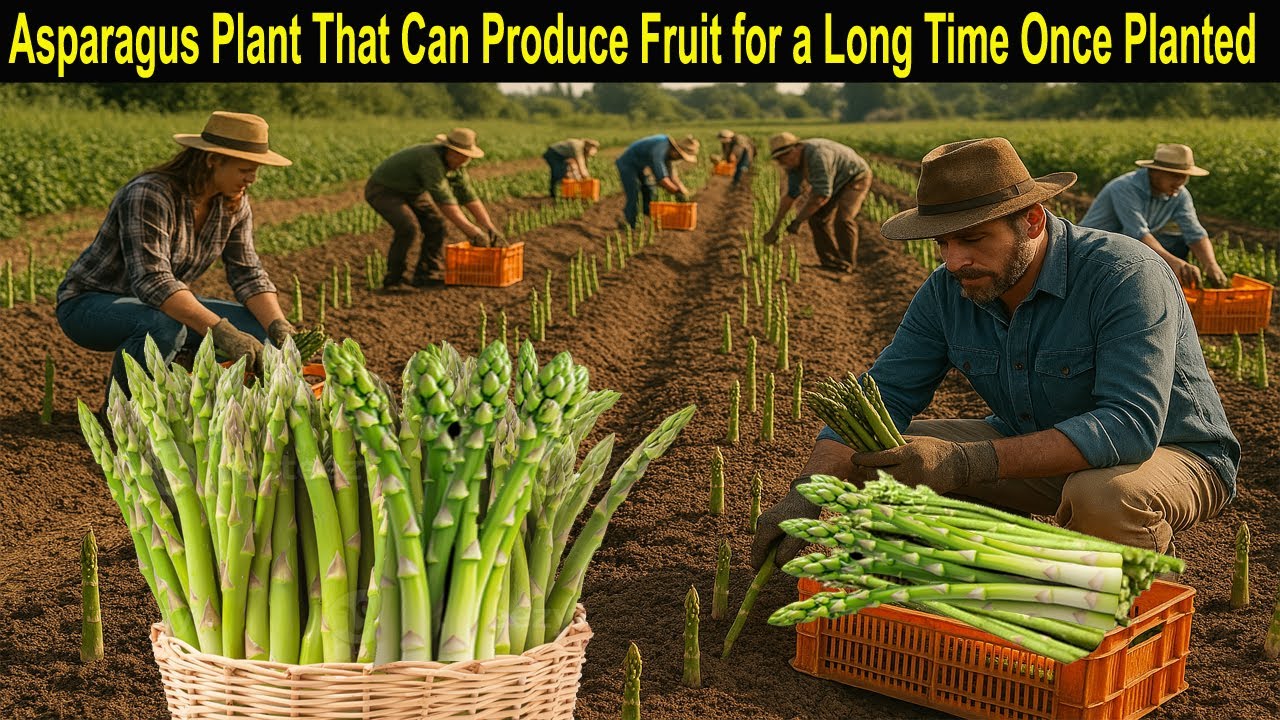
How to Grow Asparagus Easily. Starting a Business Asparagus Farm. Asparagus Farming Step by Step. Asparagus Farming is a profitable and nutritious type of vegetable cultivation. It is a perennial plant that can produce fruits for a long time once planted. Asparagus is a nutritious vegetable rich in vitamins, minerals, and antioxidants. Asparagus cultivation is popular all over the world and is also known for its medicinal properties.
Full sunlight is required for asparagus cultivation. The plants give good yields if they get at least 6 to 8 hours of direct sunlight a day. It grows well in warm and mild climates. The temperature is best at 20 to 30 degrees Celsius. The garden area should be open for air circulation.
Asparagus grows well in well-drained soil. If waterlogging occurs, root rot can occur. Sandy loam or loam soil is best. Heavy soil can hinder asparagus cultivation. The soil’s pH should be between 6.5 and 7.5.
Before cultivating the land, plough it deeply 25 to 30 cm deep. Increase the fertility of the soil by using organic manure or compost and necessary chemical fertilizers. If the soil is sloping, prepare the land in such a way that excess water can drain easily.
Collect asparagus seeds of improved varieties. Asparagus seeds are hard, so before sowing, the seeds should be soaked in water for 24 hours. Then, the seeds should be wrapped in a wet cloth and kept in a warm place for 2 to 3 days for germination.
Work can be started directly in the ground or the seedbed for sowing. Sow the seeds 1.5 to 2 cm deep in the seedbed. Keep the row distance 30 cm and 15 cm between each seed. After sowing the seeds, cover them with soil and water them lightly.
For the first 10 to 15 days, water lightly regularly to keep the soil moist. While watering, make sure that the soil does not become waterlogged. When the seedlings are 8 to 10 cm tall and have 2 to 3 leaves, they can be transferred to the main soil. When the seedlings are 6 to 8 weeks old, apply fertilizer rich in nitrogen, phosphorus, and potash.
Mulch the soil around the plants with organic matter every year. Cut off old or damaged branches to create opportunities for new branches to grow.
Asparagus plants can usually be attacked by pests such as asparagus beetles and diseases such as fusarium wilt. Apply pesticides quickly if pests appear. Keep the soil dry to prevent fungal diseases and plant the plants at the right distance.
After planting asparagus seedlings, the plants take 2 to 3 years to produce a full yield. When the plant is fully mature, the pods or spears can be collected in spring or late winter, in April to May. The spears are ready for collection when they are 15 to 20 cm long.
The fruit spears should be collected by hand by breaking them off near the base of the plant. If a knife is used to harvest the fruit, the spears should be cut 2 to 3 cm above the ground. Collect the fruit for 2 to 3 weeks in the first year.
The second year can be collected for 4 to 6 weeks. From the third year, the fruit can be collected for a full 8 to 10 weeks. Excess fruit should not be collected as this can weaken the plant.
▬▬▬▬▬▬▬▬▬
🔴 COPYRIGHT DISCLAIMER
Business Ideas English doesn’t fully own the material compiled in this video. It belongs to individuals or organizations that deserve respect.
We use under Copyright Disclaimer section 107 of the Copyright Act 1976. “Fair use” is allowed for purposes such as criticism, comment, news reporting, teaching, scholarships, and research.
▬▬▬▬▬▬▬▬▬
If you find any inappropriate use of your copyrighted material in this video, please contact us. We will follow your request immediately.
► For copyright matters, please contact us at: mahmud.satkhira@gmail.com
#HowtoGrowAsparagus
#AsparagusFarming
#GrowAsparagus
#UniqueBusinessIdeas
#HowtoGrow
#StartingaBusiness
#SmartFarming
#BusinessIdeas
#FarmingBusiness
#ModernFarming
#BusinessPlan
#farmingtechnology
#SmartFarming
#SmartAgriculture
#commercialfarming
#agriculturefarming
#viralvideo
Comments are closed.