
When you buy through links on our articles, Future and its syndication partners may earn a commission.

Credit: Kwangmoozaa / Getty Images
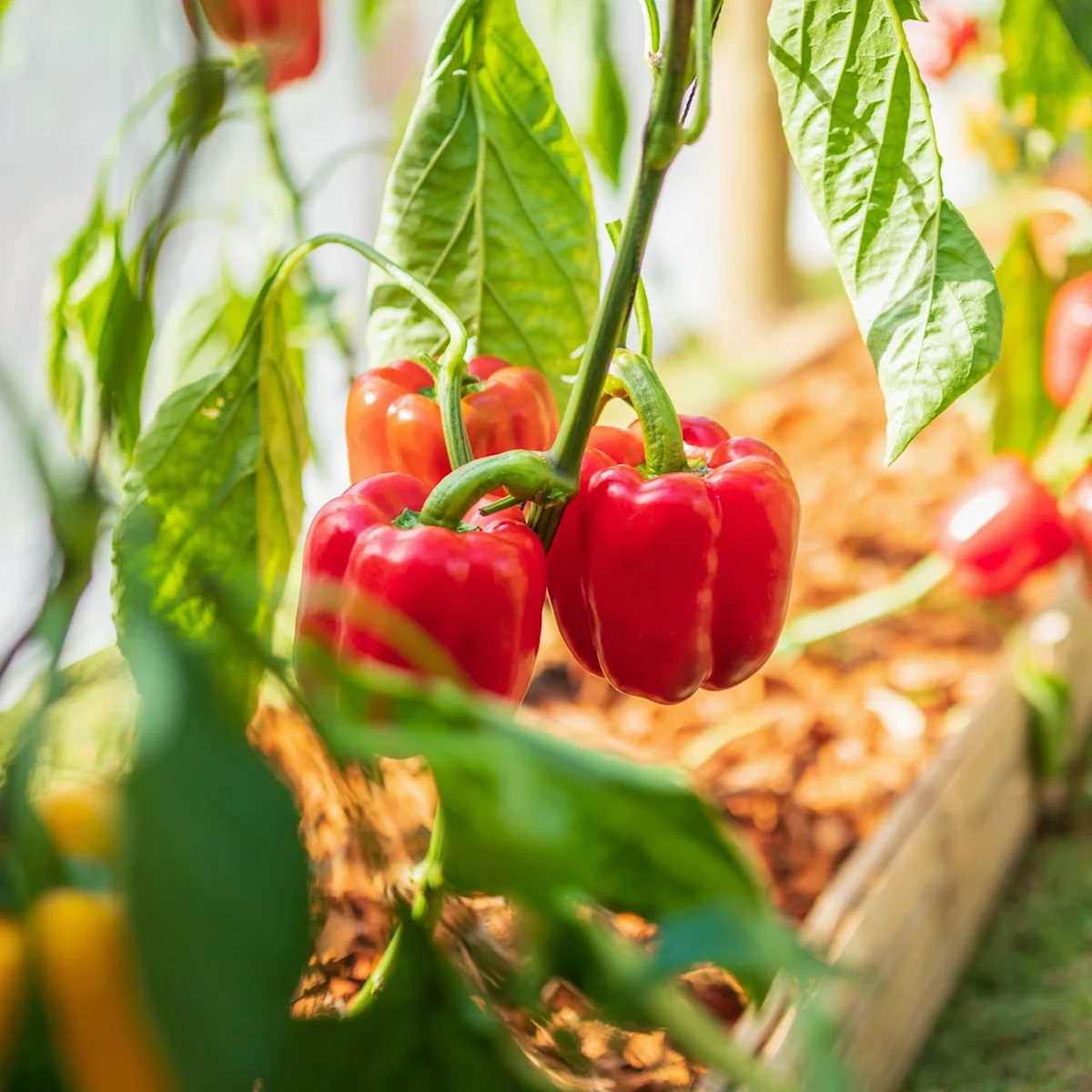
Your pepper plants in June might not look like my pepper plants in June. That’s because the date for planting pepper seeds indoors and the date for transplanting them outdoors will vary quite a bit depending on your climate.
However, anyone who is growing peppers this summer will need to take some of the same basic steps in June. These are not complicated vegetables. If you give them a site with the proper amount of sunlight, the appropriate soil, and sufficient water then you are likely good to go.
Advertisement
Advertisement
So here are five essential tasks that you need to do for pepper plants, at any stage, in June.
What Your Pepper Plants Need in June
Hello, summer! You’re just starting to enjoy being outdoors which is a lucky thing, since June is a big month in the garden. Here’s what to do with your pepper plants now for a huge harvest later in the season.
1. Give Them Plenty of Water
Credit: Getty Images
This is not a shocker. All young vegetable plants need water. No matter where you live in the United States, June weather will be warmer than May, April, or any of the previous months of the year.
June signals the beginning of summer, with more sun and hotter days, which sends peppers’ water requirements to the top of the to-do list for June. This is true whether your plants are recently transplanted seedlings or established plants.
Advertisement
Advertisement
All pepper plants need water, across all of the growth stages of their lives. Young seedlings need soil that is always moist, but they will die in soggy soil. Give transplanted seedlings a deep, slow watering two or three times a week, depending on weather. A drip irrigation kit from Home Depot, like this one Content Editor Laura uses in her own garden, is a great way to give peppers consistent irrigation at the source.
You want to encourage those young pepper plants to send their roots deep into the soil. Deep roots mean greater drought tolerance. Established plants require 1 or 2 inches (2.5-5 cm) of water per week, ideally through drip irrigation.
2. Make Sure They Get Enough Sun
Credit: Irina Shatilova / Shutterstock
Yes, some vegetables are happy to grow with more shade than sun – think lettuce – but peppers are not among this crowd. They grow fast and require many hours of direct sunlight every day to produce those crisp and luscious fruit.
Insufficient sunlight means tall, leggy plants and poor pepper crops. One of your June pepper tasks will be to check on their sun quotient and do what’s necessary – whether that’s clearing branches above them to transplanting, if necessary – to provide enough sunlight.
Advertisement
Advertisement
How much sun do peppers need? As much as possible. That is, peppers require at least 6 hours per day of direct sun and won’t complain if you give them up to 12 hours. The ideal situation for a pepper plant is a site that gets direct morning sun and a bit of afternoon shade rather than no morning sun and full afternoon sun, which can cause sunscald on peppers.
3. Watch for Pests
Credit: DedovStock / Shutterstock
The June weather is so nice that the whole family spends more time outside in the backyard. But you aren’t alone. A variety of common pepper pests also like the early summer weather. They show up in the garden, happy and hungry. The golden rule for dealing with pests in the garden is to catch them early. That makes it easier to get rid of them.
The pests you are likely to see in June may depend on where you live. But almost everywhere there are aphids, European corn borer, corn earworm, and pepper maggot. Aphids form colonies on pepper plant leaves, often on the underside, and such out the sap. The other three insect species will damage the fruit.
Monitoring for pests means inspecting those pepper plants every week or even twice a week. Look on the undersides of the leaves for aphids, use yellow sticky traps like these from Amazon, and search for signs of damage. Neem oil, which you can also get from Amazon, is effective on all of these pests as well.
4. Pinch Out Early Flowers
Credit: christening / Getty Images
This is a hard one for some gardeners, including me! But it’s a proven fact that pinching out early flowers on pepper plants is a good strategy over time. Early flowers suck energy from the plant during a time when they should focus on developing strong roots and foliage.
Advertisement
Advertisement
Pinching out those blossoms will make your plants more vital and healthier. It can also mean that you’ll get more peppers from each plant. It also puts the brakes on premature pepper fruiting and gives the plant a chance to mature before producing peppers.
5. Add a Protective Layer of Mulch
Credit: Mariana Serdynska / Shutterstock
Mulch is kind of magic. It protects the roots of the plants from temperature spikes and drops, putting a buffer between the soil and the elements. Mulch can also hold moisture in the soil, especially in the hot sun, and reduce the risk that soil-borne pathogens that splash up on the lower leaves of the pepper plants when it rains.
What type of mulch should you use? Pick something natural, a product that will disintegrate into the soil over time. This organic wood mulch from Back to the Roots is a good option. I also like leaf mulch, straw, or grass clippings for peppers.
Be sure that the mulch doesn’t actually touch the stems of the plants or else this can cause fungal diseases. While you are laying the mulch, take the time to clip out the lowest-hanging leaves, too. This is another way to reduce soil splashing.
Comments are closed.