
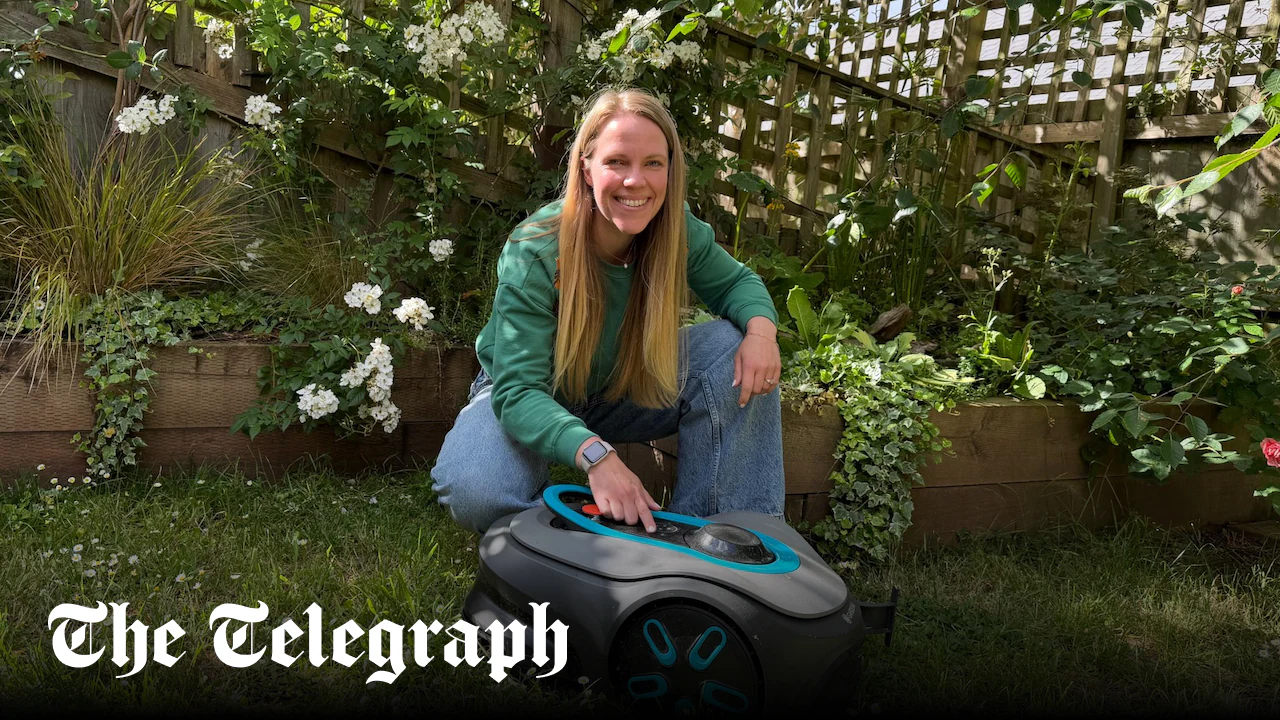
A robot lawnmower promises to cross a job off your to-do list, saving you time and effort in the garden while leaving your lawn in tip-top condition.
I’ve been gardening for around 20 years, and in that time I have witnessed these go from being the latest premium gadget to an increasingly competitive prospect for amateur gardeners. In particular, they are an excellent solution for larger lawns, or for busy people who want to enjoy their garden rather than toil in it. Just set aside an afternoon for the set one, as the initial process can be complicated.
Most robot lawnmowers cost between £300 and £2,000, and you can expect the size of lawn they can mow, the technology they are equipped with and their connectivity to improve, the more you spend. The leading brands include Flymo at the more affordable end of the market, and Mammotion and Segway at the higher end.
The best robot lawnmowers: At a glanceHow to choose the best robot lawnmower
Choosing the best robot lawnmower requires you to carry out a short assessment of your lawn. Calculate its size using a tape measure or online mapping tool, and try to find out the gradient of any incline in the terrain, as some robot mowers are better at traversing slopes than others.
There is also a vast array of functions to look out for. The most universally useful ones include smart navigation, obstacle detection, weather sensors and anti-theft features. Cheaper models mow within a physical boundary system that requires you to run a wire around the perimeter of your lawn, whereas machines with a light detection and ranging (LIDAR) system, will detect the edges of the lawn automatically. You will need good Wi-Fi (or a booster) and GPS signal for one of these, however.
If you’re concerned about obstacles in your garden such as furniture, toys or seasonal plants, choose a robot with an AI-enabled camera that can detect these items and prevent collisions.
Finally, setting up a robot lawnmower is a challenge. Each one I tested presented a unique set of complications. So, I would highly recommend enlisting the help of a local dealer to install it for you if your budget will stretch. You will likely enjoy the machine a lot more if your initial experience isn’t one of frustration and confusion.
How I tested these robot mowers
I’m the author of Grow a New Garden, and normally, my product testing is a solitary affair. This time, however, I had to enlist the help of a few friends, and their gardens. I wanted to test each model in the conditions for which it was designed, so I took the different machines to test sites with appropriate lawn sizes and gradients. This also saved me from waiting for my own lawn grass to grow back between tests.
I judged the mowers on their performance, technical setup, battery life, recharge time and value for money. All the machines tested deposited the grass clippings back on the ground as a mulch, as is standard with robot lawnmowers. However, I was looking to see if they distributed them evenly or left a pronounced trail.
I also wanted to know how well each robot coped with wet conditions, so I employed the help of a hose pipe to simulate this during dry spells. Lastly, I was on the lookout for any smart features such as AI object and plant identification that contributed towards a more user-friendly experience and better results.
The best robot lawnmowers of 2026
Comments are closed.