
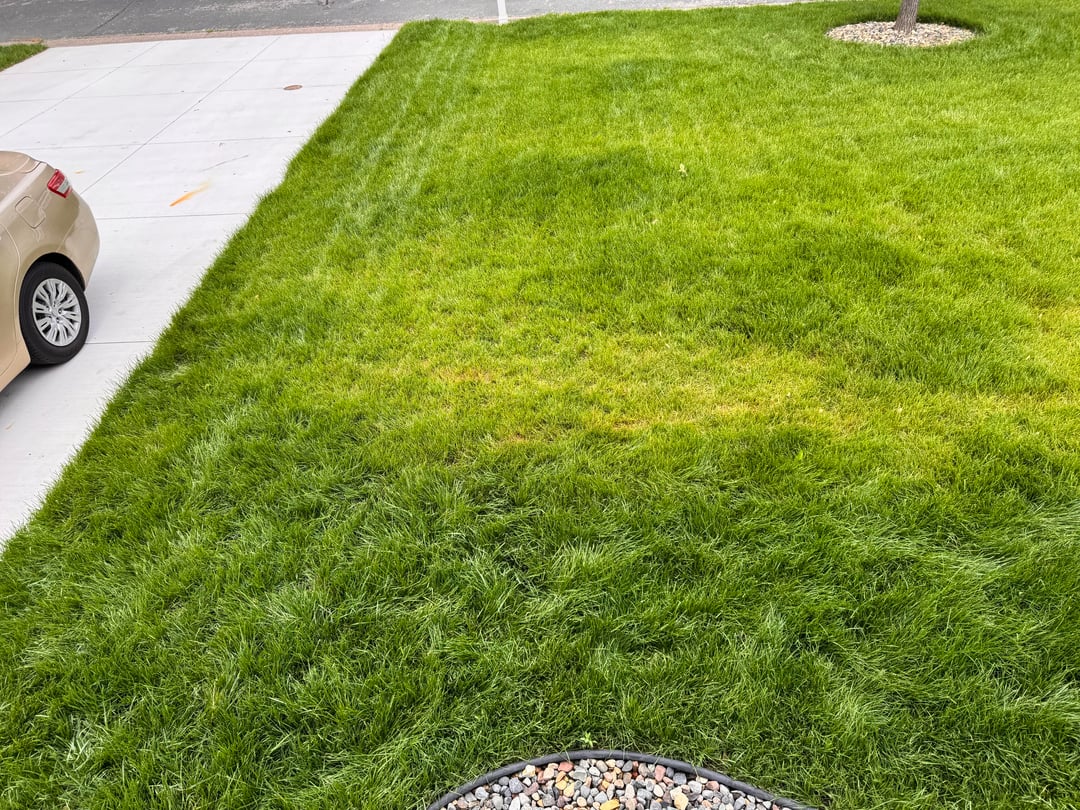


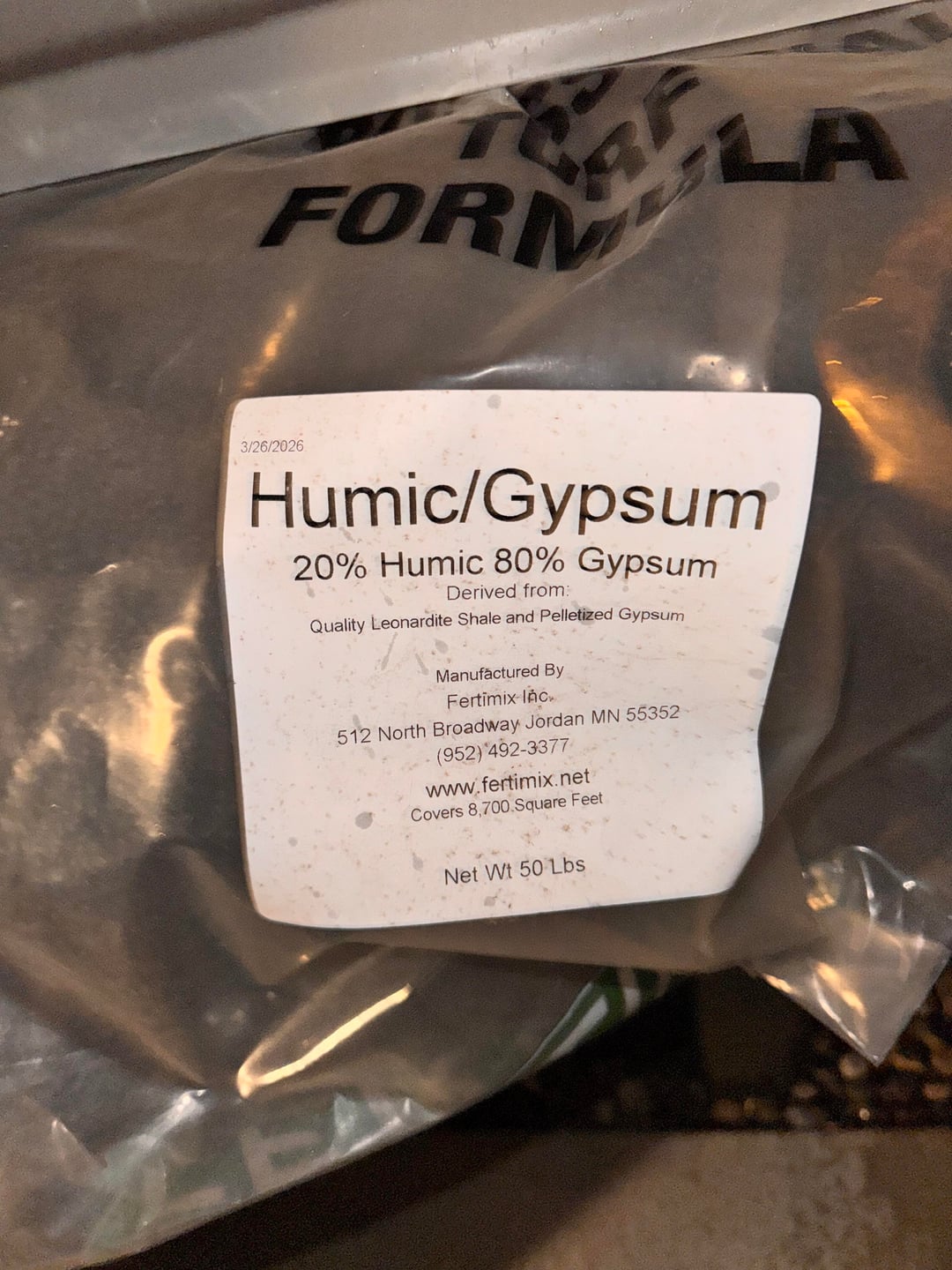
In July of 2025, I leveled my yard and started a completely new lawn with seed. I’m having issues with a 4 foot wide strip that spans the length of my front yard (much more noticeable in person). My lawn is just under a year old, having gone through 1 winter (I’m in zone 5a, Minnesota). I seeded last July, September, and again a month and a half ago with 90%TTTF and 10% Kentucky blue grass. I core aerated and fertilized a month and a half ago with milorganite, 19/19/19 fertilizer, and humic/gypsum (20%/80%). I fertilized again with 19/19/19 and humic/gypsum last week. I have irrigation so this yard gets enough water and this area gets full sunlight. The grass on this area hasn’t grow an inch in the last month. The remained of the lawn looks phenomenal and is growing 1-3inches a week. Not sure why it’s not growing here, could be clay. This is a mixed clay/black dirt yard. Looking for recommendations to fix this issue. Thanks!
by Jovo_VonBank
3 Comments
Have you gotten a soil test? You are putting down a lot of phos which is usually not at all needed and a sign of too much phos is chlorosis, where the phos locks out iron accessibility. In the pictures I see signs of it in more than just the strips.
I would get a soil test ASAP and stop using high phos fert. Most of the time soil doesn’t need any phos at all and a better ratio is something like 24-0-11.
Milo is also terrible, full of PFAS, chemicals, and prescription meds and on avg 5x more expensive per lb of N than regular commercial fert.
It also sounds like you are working on amending the soil, you need a soil test to determine if that’s even necessary, you need one that shows the CEC or EC value of the soil.
Last but not least, you mentioned watering but how many inches/wk are you watering? You need to know the precipitation rate, you could be overwatering which will also cause chlorosis.
Obligatory… there’s nothing wrong with clay soil so that isn’t your problem.
Secondly, you are potentially putting down too much phosphorus between your 19-19-19 and milorganite. You shouldn’t be applying more than 1lb per 1,000 sqft annually and likely that isnt even necessary either. Make sure you’re tracking NPK/1,000 annual usage. I would suggest moving to a phosphorus free fertilizer possibly even nitrogen only. Phosphorus hangs around in the soil longer than nitrogen and potassium as it isn’t used quickly by the plant, especially in clay. Too much will do more harm than good.
First thing is always to probe the soil for rocks or debris. Next look for insect damage under the soil. Grubs are always the likely suspect. Any disease in that area? Check for lesions or discolorstions on the grass blades. Would need fungicides if so. Less common but CEC content could be low. Hitting those areas with liquid humic might help.
If you’ve applied your fertilizer evenly then this isn’t likely but its worth mentioning that too much phosphorus or potassium in the soil could interfere with nitrogen absorbtion leading to chlorotic grass.
Soil ph could be an issue.
If you’ve aerated and can puncture the soil relstively wasy then its not compaction. Gypsum only alleviates compaction is sodic clay soils by the way. This might be useful for soil near roads that deal with salt from de-icing but wont do anything for the rest of your yard.
To add to these other good ideas I’d find a fertilizer without the micronutrients. That’s not necessary really unless you have a deficiency in any of those which 99.9% of lawns don’t. If anything that could be compounding your problems.