

 5 min read
In many regions across the United States, June marks a transition in the garden. Spring blooms are beginning to fade, summer growth is accelerating, and many plants are quietly preparing for next year’s flowers. While it may seem as if pruning season has already passed, gardening experts say there are several trees, shrubs, and perennials that actually benefit from a trim in early summer. In many cases, waiting too long can mean sacrificing next year’s blooms, encouraging leggy growth, or allowing plants to become overgrown and unruly.
“Many spring-blooming plants are best left untouched until late spring or even early summer because they form their flower buds well before blooming begins,” says Katie Schneider, founder and CEO of Ibis Coastal Landscapes. “Pruning too early can remove those developing buds and dramatically reduce the season’s floral display.”
Read on for the 11 plants to prune in June—before it’s too late!

SrdjanPav//Getty Images
Boxwoods
Boxwoods are prized for their tidy appearance, but that means occasional maintenance is needed to help them keep their shape. “June is a great time to give boxwoods that shaping trim so they stay neat going into the summer,” says Jacob Romkee, owner of Vintage Lawn Service and member of Thumbtack’s Advisory Board.
Karen Musgrave, horticulturist at Hicks Nurseries, agrees. Light pruning in June helps maintain the shrub’s dense form while also giving new growth enough time to harden off before winter. When pruning, use hand pruners to lightly trim the outer growth and avoid cutting back into older, leafless wood whenever possible.
Azaleas
If your azaleas have finished flowering, now is the time to prune. Because azaleas bloom on old wood, waiting too long to prune them can remove the flower buds that are already forming for next year’s colorful display. “Pruning should be done right after flowering, typically in May or June,” advises Musgrave.
Schneider frequently sees homeowners make the mistake of shearing azaleas too early in spring. Instead, she recommends waiting until flowering has finished, then removing dead, damaged, or crossing branches while selectively reducing height by cutting back to healthy lateral branches as opposed to shearing the entire shrub.
Forsythia
Forsythia is another spring bloomer that should be pruned soon after flowering. By mid- to late summer, the shrub begins setting buds for next year’s blooms, meaning late-season pruning can significantly reduce flowering.
“The best approach is renewal pruning,” says Musgrave. Rather than trimming the entire plant, remove roughly one third of the oldest stems at ground level each year to encourage vigorous new growth while preserving the shrub’s graceful shape.

Alex Manders//Getty Images
Rhododendrons
June offers a narrow but ideal window for pruning rhododendrons. At this point, flowering has typically finished, but next year’s buds have yet to fully form. To prune, start by removing spent flower heads, then selectively prune any overcrowded or leggy branches to improve airflow and maintain shape. For older plants, Musgrave recommends gradually rejuvenating the shrub by removing a few of the oldest stems each year.
Lilacs
Lilacs should be pruned shortly after flowering, typically in late spring or early June. Waiting until later in the season can reduce the number of blooms you’ll get to enjoy the following year. To prune your lilacs, begin by removing spent flower clusters. Then, thin a few older woody stems at the base of the plant to encourage healthy new growth. According to Musgrave, it’s best to avoid shearing the entire shrub, which can compromise both airflow and the lilac’s naturally attractive form.
Lavender
Lavender may seem low-maintenance, but regular pruning is a must for keeping it healthy and beautiful. “Lavender benefits greatly from regular trimming,” says Romkee. “If you don’t prune it, it starts to look woody and less appealing.”
A light trim after flowering helps maintain the plant’s compact shape and encourages the vibrant flush of purple-blue blooms that gardeners love. Just avoid cutting into old, woody stems, which often struggle to produce new growth.
DE AGOSTINI PICTURE LIBRARY//Getty Images
Climbing Roses
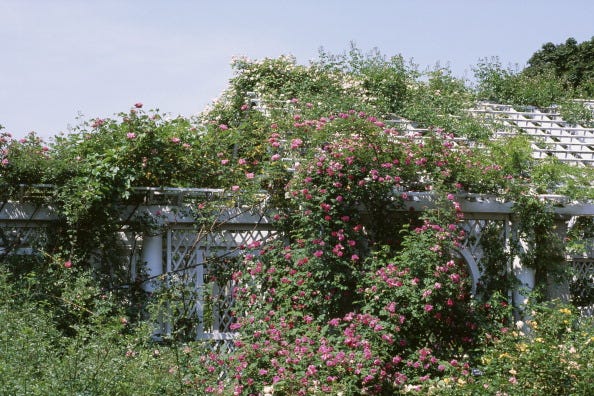
For many climbing roses, June is the perfect time to prune. “With climbing roses, you can deadhead the spent blooms and give them some light shaping to keep them looking good and encourage better flowering,” says Romkee.
Schneider notes that some rose varieties, including the Cherokee rose, bloom only once per year and should not be pruned until flowering has completely finished. After removing dead or damaged growth, thin weak or crossing canes and cut lateral shoots back two to three buds to encourage healthy growth and future blooms.
Wisteria
Wisteria is as well known for its vigorous growth as its eye-catching beauty, which is precisely why regular pruning is nothing short of essential. According to Schneider, wisteria is best pruned twice each year: once in late winter, then again in mid- to late summer after flowering. June is a good time to begin evaluating the vine and removing any spent blooms. Later in the summer, long, whippy shoots can be cut back to approximately five or six leaves to keep growth under control and encourage flowering.
Yews
Not all evergreens are created equal, as evidenced by yews. “Yews are one of the few evergreens that tolerate heavier pruning, making June an ideal time to shape or rejuvenate them,” says Musgrave.
Pruning now encourages dense new growth and helps keep hedges and foundation plantings looking tidy throughout the growing season. Focus on thinning overcrowded branches and selectively reducing size while maintaining good airflow.

Martin Wahlborg//Getty Images
Tall Perennials
June is also the ideal time to practice the “Chelsea Chop,” which is a pruning technique named for the timing of the famed Chelsea Flower Show in England.
“Gardeners cut back taller perennials by one-half to one-third of their size to encourage more compact habits, stronger stems, and stronger blooms,” says Marissa Angell, founder of Angell Landscape Architecture.
She uses the technique on plants like goldenrod, echinacea, and salvia with great success. To do it, simply cut stems back to just above a leaf node. While it may feel drastic, the result is often sturdier plants that flower more abundantly later in the season.
Gardenias
Gardenias are beloved for their fragrant blooms, but pruning too early can remove flower buds before they have a chance to open. In warmer climates, Schneider recommends waiting until flowering has largely finished before making any cuts. Fortunately, gardenias rarely require extensive pruning. If shaping is necessary, remove dead or crossing branches and make light cuts roughly a quarter inch above a leaf node. A little restraint goes a long way when it comes to preserving blooms.

Nina Derwin is a Brooklyn-based writer with a passion for the art of storytelling. In addition to writing articles for various clients and publications, Nina has written several episodes of scripted television for networks including Starz and Fox.
Comments are closed.