

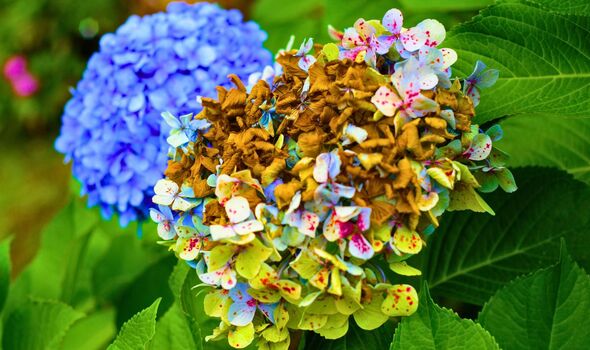
Hydrangeas can be very vunerable in summer and need more care than most other flowers (Image: Getty)
Hydrangeas are known for their large flower heads, which look spectacular in summer, but many gardeners do not realise that their petals are actually quite thin and dry out easily. They are actually the thirstiest flowers in a garden, thanks to their large leaves, which tend to lose moisture quickly when the sun is shining in late spring.
Most gardeners leave hydrangeas alone as they are usually quite easy to take care of, but now, in the lead up to summer, it is incredibly important to keep an eye on them. If hydrangeas do not get enough water, they can quickly wilt and turn brown. More importantly, heat stress can also reduce their growth, preventing them from flowering properly. However, you do not have to keep hoovering over your hydrangeas with a watering can as Julia Marcum, a gardener from Chris Loves Julia, has revealed there is a very easy way to keep these fussy plants hydrated using mulch.
READ MORE: Lawns and plants will thrive during the heat when watered at specific times
READ MORE: Gardener recommends ‘fabulous’ perennial that ‘will grow better each year’

Mulching will help you save time in the garden and keep your hydrangeas happy (Image: Getty)
Julia explained: “Not only does a fresh layer of mulch give the yard that crisp, high-contrast look we love against the green leaves, but it’s also the secret to keeping hydrangeas happy. Mulching helps retain moisture in the soil and regulates the temperature around the roots during those hot summers.”
Mulching is the simple gardening practice of spreading organic material over the soil around plants to help feed the soil and protect them from the weather.
In summer, it is important to mulch hydrangeas to help their soil hold onto moisture, which keeps the plant cool and also makes it less likely they will dry out in the hot weather.
It will help you save time as you will not have to keep watering your hydrangeas constantly and is one of the easiest ways to ensure they stay healthy no matter how hot it gets this summer.
Mulch will eventaully break down and add nutrients to the soil as well which can help give hydrangeas a boost so they grow even better during their flowering season. Once the temperatures have risen, it is recommended to avoid fertilising hydrangeas, as the salts in fertiliser can further dry out the soil and stress the roots.

Hydrangeas will stay healthy and hydrated in summer if you take the time to mulch them now (Image: Getty)How to mulch hydrangeas properly
There are lots of different gardening mulches you can choose from, but hydrangeas tend to do better if you use pine needles, straw or even shredded leaves.
These natural materials are light, which means lots of air can pass through them and stops the soil from becoming waterlogged, which is also not good for hydrangeas.
Some people also like to use grass clippings leftover from mowing the lawn, which will also work and means you will not have to take a trip to the gardening centre or spend any money.
Once you have your mulch, lay it around two to tree inches thick around the plant in a layer, but make sure not to pile it up against the hydrangea foliage.
Mulch tends to retain a lot of water, and if it touches the plant then it can risk rotting it or attracting pests rather than helping the soil. Check up on the hydrangea every few days, water it deeply, and it should now perky throughout the rest of summer.
Comments are closed.