
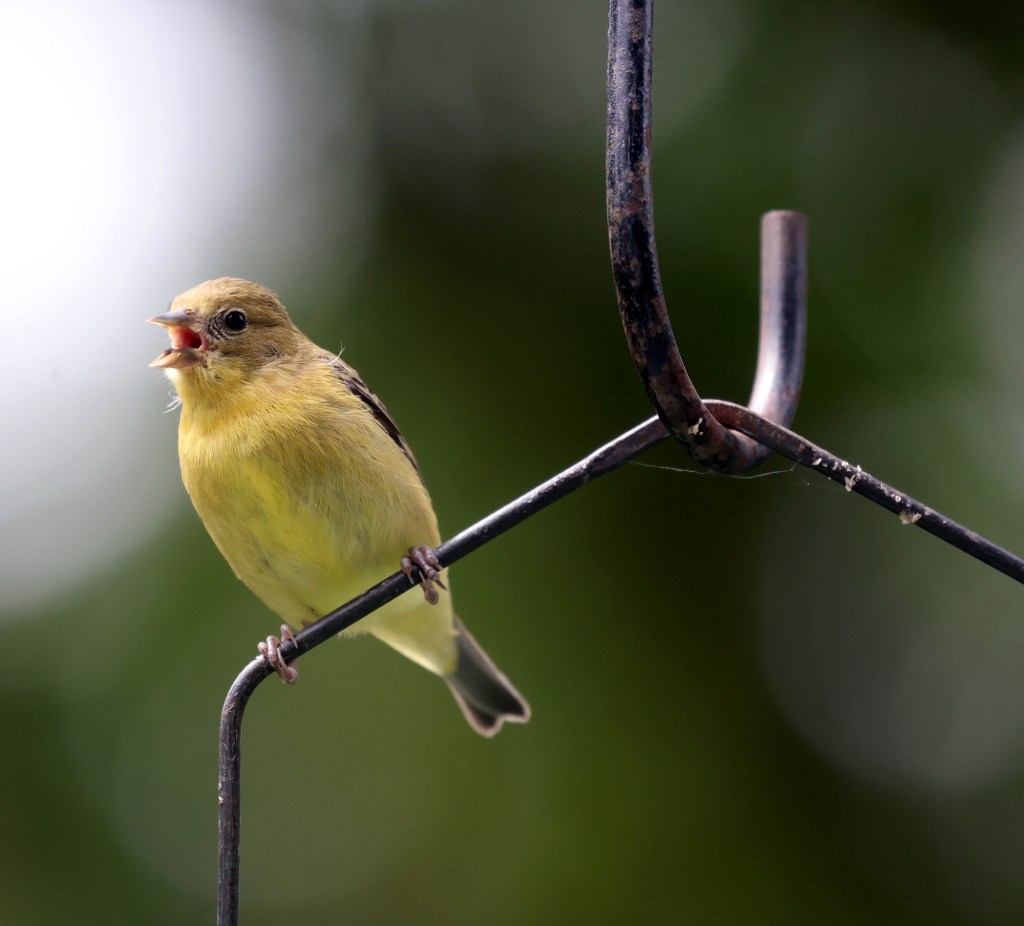
DEAR JOAN: Last year I scratched a patch of mixed wildflower seeds into an area of my yard. A number of varieties sprouted, but one multipetal yellow flower attracted goldfinches in hoards.
The stalk of the flower was relatively stiff, so it stood upright rather than flopping over. They could not get enough, climbing the stalks and eating the leaves (they ate seeds, too, but they loved the leaves). We were looking forward to their return.
This year there are wildflowers growing in that area, but none of the variety that the goldfinch’s relished. We are disappointed and I would like to get more of those seeds. Do you have any idea what they might have been?
I learned that my practice of strewing wildflower seeds to see what grows has a name: chaos gardening!
— Eliot Hudson, Lafayette
DEAR ELIOT: Wildflowers, goldfinches and chaos in general are among my favorite topics. The sturdy yellow flowers were likely a variety of sunflowers, a favorite of gold and other finches.
In addition to sunflowers, goldfinches also love purple cone flowers, thistles, zinnias, Hooker’s evening primrose, milkweed and some weeds, including dandelions and pineapple weed. I like to include the weeds for us lazy gardeners who can say, “But they’re for the goldfinches.” In the late summer and early fall, the birds will also appreciate some asters.
DEAR JOAN: We saw a skeleton at Briones last Saturday. The lower part (pelvis?) was right at the Alhambra Staging area trail start and the upper part (ribs?) were up in a tree on top of a shirt, about a quarter mile up the trail. We imagine someone found the skeleton and brought part to the entrance. Not sure why the shirt is up in the tree with the ribs.
Can you identify what it is? A coyote? It’s so clean. How did that happen? We guessed it’s very old? Who eats coyotes or could it have died of natural causes and just been found now years later?
— Liz Fisher, Pleasant Hill
DEAR LIZ: I turned to my Facebook friends’ group, Animals Don’t Cover Their Tracks, and they identified it as a deer carcass, and I agree. We don’t know for sure, but deer are a preferred prey for mountain lions, of which there is at least one in Briones.
The cougar would have done a good job of stripping off the main parts, then vultures and smaller animals would have cleaned up the leftovers. A human probably thought it was funny to put part of the skeleton up a tree with a T-shirt to freak people out. Mountain lions don’t carry their kill up trees.
DEAR JOAN: I had only ever seen an alligator lizard once in my 50-plus years, but in April and May, I saw three — one in Mendocino County and two in the Los Gatos hills.
What’s going on?
— Sarah, Los Gatos
DEAR SARAH: Maybe they’re following you.
Alligator lizard sightings can be few and far between as they are more elusive and secretive than other lizards. Keeping your eyes open for them can produce surprising results.
The Animal Life column runs on Mondays. Contact Joan Morris at AskJoanMorris@gmail.com.
Comments are closed.