
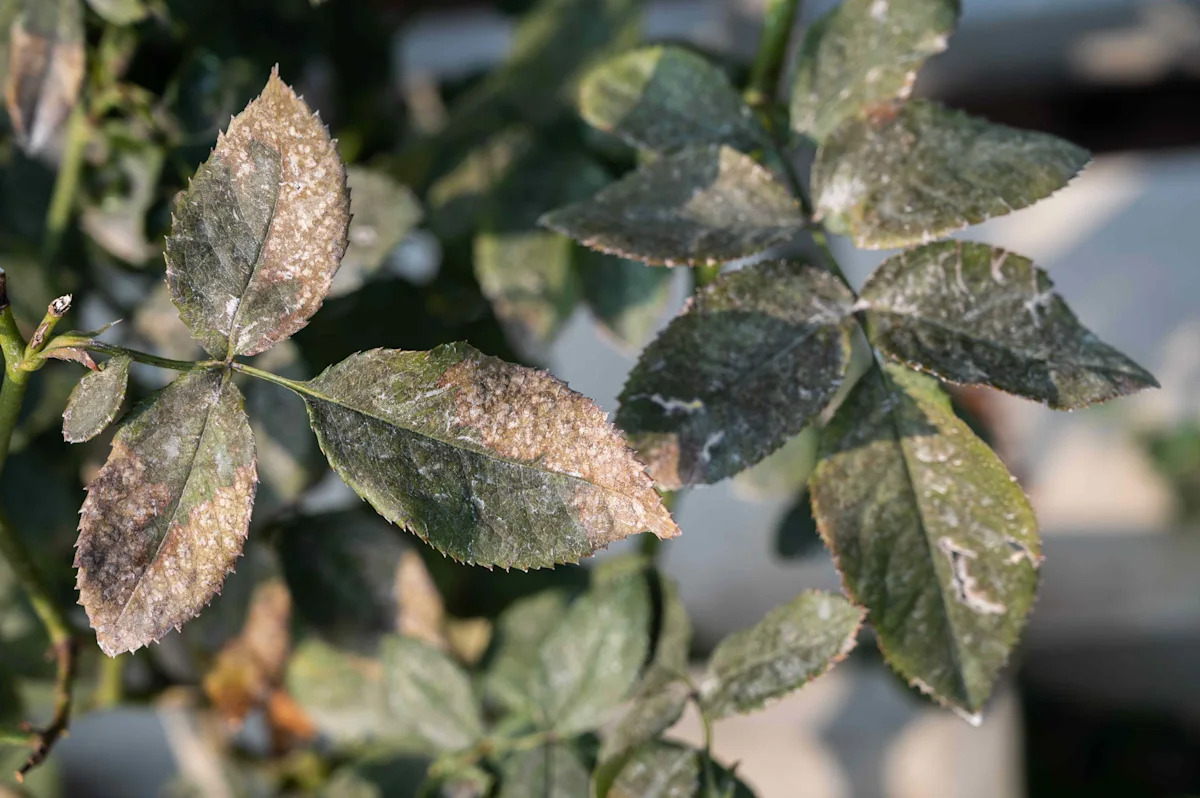
Your garden is looking good, with everything lush and blooming. But now you’ve noticed a weird grayish-white film on some plants. This substance, aptly named powdery mildew, is a common fungus that affects an array of ornamentals, vegetables, and herbs. There are more than 11,000 species of powdery mildew!
This fungus attacks plants for many reasons. “Powdery mildew sometimes affects plants that are stressed from drought, poor nutrition, or with thin leaf tissues,” says Chuck Pavlich, director of new product development for Terra Nova Nurseries. “Certain strains of powdery mildew can affect perfectly healthy, well-grown plants, also. It’s an equal opportunity annoyer.”
Environmental issues contribute to the development of this disease. “Some of the conditions that will promote powdery mildew include an overly dry, then wet watering schedule,” says Pavlich. “As the plant suffers from drought stress, after watering, some of the cells can crack or burst, leaving the leaf much more susceptible to the disease.”
Advertisement
Advertisement
Interestingly, unlike other types of fungi, powdery mildew spores don’t require water from rain, dew or irrigation; they can germinate simply when humidity levels are high. “High humidity areas with poor air flow and shaded areas where the sun can’t dry moist foliage are the ideal conditions for powdery mildew,” says Steven Engel, regional account manager, South and Southwest, for PanAmerican Seed.
Ahead, here’s what else to know about this common plant disease:
What Plants Does Powdery Mildew Affect?
The list of plants is long and diverse: Cucumber, melons, tomatoes, peppers, beans, and basil are some of the vegetables and herbs it affects. It also infects ornamentals such as peonies, roses, delphinium, chrysanthemums, hydrangea, zinnias, dahlia, crape myrtle, African violets, and many more, says Engel.
Should You Treat Powdery Mildew?
It depends on a few factors. “When to treat is a matter of tolerance for each individual gardener,” says Pavlich. “Also, the time of the season. If mildew attacks early in the year, I’d treat it then. If, say, in September, powdery mildew attacks a deciduous plant, I probably would live with it until the foliage dies naturally.”
Advertisement
Advertisement
However, many gardeners will want to treat, simply because it’s ugly. “The discoloration on the leaves can make the plant unattractive, and the disease can spread quickly to other foliage and other plants,” says Engel. “The earlier you treat, the more successful you will be in controlling it.”
The treatment is to apply a fungicide labeled for powdery mildew. Follow the label instructions. You’ll need repeat treatments and must cover both the upper and lower surfaces of leaves and flowers.
Can Powdery Mildew Kill Your Plants?
It depends on the situation. “Powdery mildew can kill plants if the plant doesn’t have the reserves to fight it,” says Pavlich. “Most often, it’s a temporary situation.” While it’s not a pleasant sight, it’s rarely an immediate death sentence.
However, don’t be lulled into a false sense of security. Powdery mildew can kill plants when it is severe. “For vegetable crops, it can also reduce the plant’s yield, or how much fruit you harvest,” says Engel. “It kills plants by reducing the photosynthesis process, reducing nutrient uptake, and causing leaves to yellow and drop off prematurely.”
How To Protect Plants From Powdery Mildew
There’s no foolproof way to eliminate this disease from your garden, but you can try these tips:
Advertisement
Advertisement
Space plants for good air flow. Plants that are crowded are more vulnerable to this disease. Cucumbers, squashes, grapes, and zinnias are some of the most susceptible. “Pay extra attention to spacing for good airflow and scout often for signs if you’re planting these crops,” says Engel.
Water in the morning. This helps plants dry out during the day, which may help reduce risk that the plant will be affected, says Engel.
Clean up perennials at the end of the season. The fungus overwinters on plants and plant debris. Dispose of all infected plant parts, including leaves, vines, stems, flowers and fruits. Don’t place these items in your compost bin.
Read the original article on Southern Living
Comments are closed.