
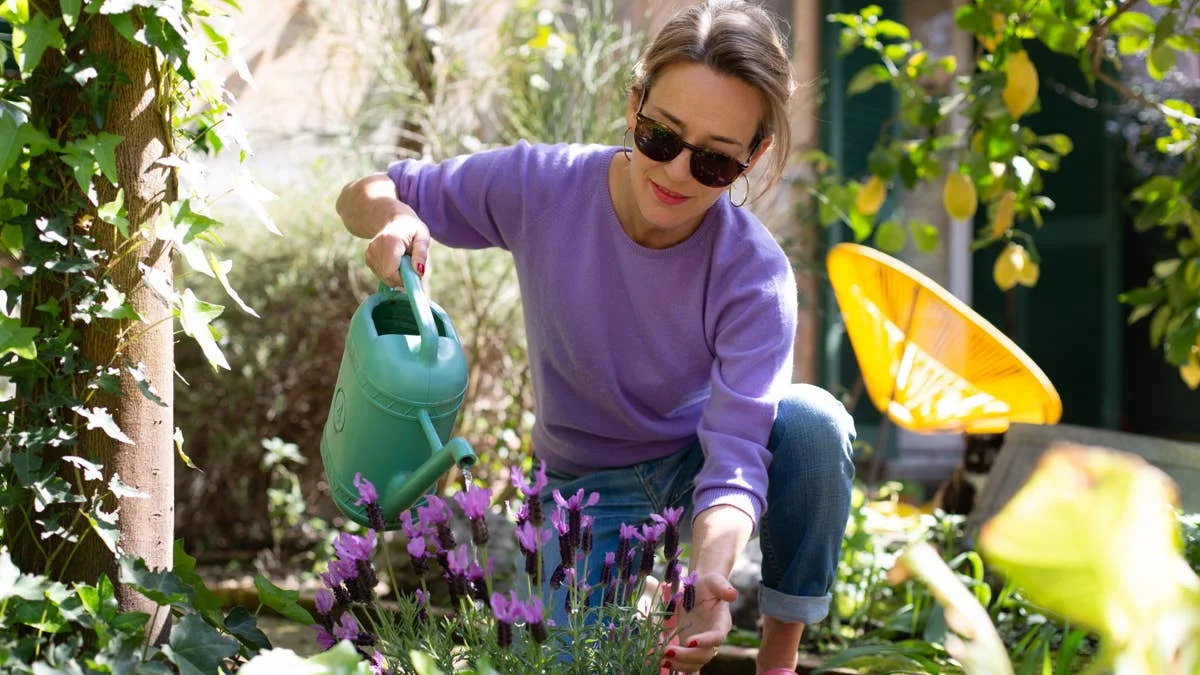
Prioritizing play and/or relaxation can get dunked on in a productivity-obsessed world. If you’re not moving the needle, what are you really doing? But Dr. Gayle MacBride, PhD, LP, a psychologist with Veritas Psychology, is going to dare to say it: Hobbies, such as gardening, let you take a break and put the “be” in “human being.”
“So much of our day-to-day is spent working, caregiving, performing or problem-solving,” Dr. MacBride tells Parade. “These tasks are about being evaluated, needed, interrupted or responsible for outcomes. A hobby offers a place for balance.”
These relaxing pastimes also let us tap into other parts of our brain.
“They allow us to… think creatively in a way our non-hobby selves might not be able to on a regular basis,” she adds. “As much as we are built for problem-solving, we also need curiosity and play.”
When we engage in creative pursuits, including gardening, the psychologist notes that we reap numerous psychological benefits and create an identity beyond caretaking and professional obligations.
“Aside from giving us more room to meet the demands of our day-to-day, hobbies are also important because they reconnect people with intrinsic motivation—’I want to do this for my own internal sense of satisfaction,'” she notes. “Finding internal meaning helps us feel more motivated to do the thing. If we are only focused on external reward, the motivation to do it falls away.”
Gardening, specifically, can help you blossom mentally. Ahead, Dr. MacBride shares seven psychological benefits of gardening. Plus, she discusses why you don’t need to spend hours on this activity to reap what you sow.
Related: 8 Psychological Benefits of Knitting and Crocheting, According to a Psychologist

Natalia Lebedinskaia/Getty Images
What Personality Types Like Gardening?
There are certain personality types more drawn to this activity than others.
1. Nurturers
Dr. MacBride notes that gardening often comes naturally to people who enjoy caring for others because it’s emotionally satisfying to see plants respond visually to the attention they receive.
“There is something really special and rewarding about watching something grow and thrive, and potentially produce fruit or vegetables, because of your care,” she explains. “Often, plants respond almost immediately to your efforts, so you get a quick reward for your time and care.”
Related: 10 Things ‘Naturally Nurturing’ Grandparents Do Differently, According to Child Psychologists
2. Reformed perfectionists
Dr. MacBride says gardening is a great hobby for people who are trying to practice “good-enoughism” after years (or a lifetime) of perfectionism.
“Nature is unpredictable,” she points out. “You can plan, prepare and research, but weather, pests, soil, sunlight and timing all have a say in the outcome. For some people, that becomes a useful lesson in flexibility.”
3. Problem-solvers
Hobbies can take you out of your daily problem-solving responsibilities. But it can also present new opportunities to solve other problems, which is a win for people who like to figure things out.
“Gardening appeals to people who like puzzles,” Dr. MacBride reveals. “‘Why is this plant yellowing? Why did one bed thrive and another fail?’ It gives the analytical mind something concrete and low-stakes to work on.”
4. Sensory-oriented people
Gardening is a multi-sensory experience.
“Some people are soothed by sensory experience: the smell of soil, the texture of leaves, the sound of birds, the warmth of the sun, the rhythm of watering,” Dr. MacBride says. “For these people, gardening can be especially grounding.”
5. Creatives
Dr. MacBride points out that gardening is a “living design project.”
“Color, shape, texture, height, seasonality and movement all come into play,” she says. “Creative people may enjoy gardening because it allows them to make beauty in a way that keeps changing.”
6. The internally-validated
Gardening can be a social hobby. But for some, it is a gateway to quiet, solitude and private space.
“Gardening can offer visible progress—whether you are planting, weeding or deadheading,” Dr. MacBride notes. “You can see what you did, but you do not have to explain yourself to anyone.”
7. Nature-loving people
Some people feel intuitively calmer outdoors, and Dr. MacBride says gardening can deepen the soothing benefits.
“It adds participation,” Dr. MacBride says. “You are not only observing nature. You are in a relationship with it. That relationship is boosted by physical movement, circadian rhythm regulation and opportunities for quiet reflection.”
Related: 9 Habits To Help You Stay Youthful in Your 70s, According to a Psychologist
7 Psychological Benefits of Gardening, According to a Psychologist1. Gardening can lower stress
Dr. MacBride reports that gardening gives the nervous system “something concrete, rhythmic and sensory to focus on.”
“That can help shift a person out of anxious mental loops and back into the present moment,” she notes. “Studies have found that gardening can reduce cortisol and improve mood, including one study comparing gardening with indoor reading after a stressful task.”
2. It can improve mood
You may start to notice signs of a better mood when you garden regularly.
“Gardening combines several mood-supportive ingredients: movement, sunlight, fresh air, sensory stimulation and visible progress,” Dr. MacBride shares. “Even small tasks like watering seedlings or cutting herbs can create a sense of pleasure and accomplishment.”
She shares that these benefits from the “small tasks” are significant, especially if you have a mental health condition, such as depression, which can narrow your sense of agency.
3. Gardening can give a balance of both immediate and delayed gratification
Gardening can be equal parts quick dopamine hit and exercise in patience, making it a unicorn in the hobby world.
“Gardening is rare because it gives us both immediate and delayed gratification,” Dr. MacBride reports. “You can feel better after 10 minutes of watering or weeding, but you’re also investing in something that unfolds over weeks or months. That combination of quick reward and long-term hope is powerful for mental health.”
4. It can support mindfulness
Dr. MacBride loves that gardening naturally pulls your attention into the present by giving your mind something sensory and specific to notice.
“It can work almost like the 5-4-3-2-1 grounding exercise: you see the color of the leaves, the shape of a new bud or the way the light has shifted,” she explains. “You feel the soil, the texture of a stem or the weight of a watering can. You hear birds, wind, insects or water moving through the soil. You smell herbs, flowers, mulch or rain, and sometimes, you even taste what you have grown.”
She is taking us through more than a visual meditation. Dr. MacBride’s noting how that kind of sensory attention can be calming to people with racing minds (heck, you may have felt calmer just reading all of the above).
“Instead of trying to force the mind to be quiet, gardening gives your attention a place to focus and the nervous system often follows,” she says.
Related: The Benefits of Mindfulness—Here’s How To Live in the Here and Now (And Why You Should)
5. Gardening can reduce rumination
Gardening can be a quiet hobby, but it doesn’t have to be. In fact, Dr. MacBride shares that it gives your mind a task that can interrupt the stillness and quiet that rumination feeds on.
“It is hard to spiral quite as intensely when you are setting your mind and intention on repotting basil, pulling weeds or deciding where a tomato cage should go,” she says.
Related: 7 Common Plants That Can Ruin Your Yard, According to Experts
6. It can increase social connection
For some, turning gardening into a bonding activity with someone else (or a group of people) can be psychologically beneficial.
“Gardening connects people to seasons, weather, food, place and often to other people,” Dr. MacBride states. “Community gardens, plant swaps, neighborhood conversations and sharing vegetables can all reduce isolation. That social piece is important because loneliness is a significant mental health risk factor.”
Related: How To Nurture Friendships Over Age 50, According to Psychologists
7. Gardening can create hope
Gardening can plant the seeds for hope. After all, you’re likely not putting a seed or plant in the ground and walking away from it without expectation.
“You put something in the ground because you believe something might grow,” Dr. MacBride says. “For people dealing with stress, grief, burnout or depression, that small practice of hope can be psychologically meaningful.”
Related: How to Stop Crabgrass Before It Takes Over Your Lawn, According to Experts
What Does 30 Minutes of Gardening Do to Your Mental Health?
Half an hour of gardening can offer significant mental health benefits.
“30 minutes of gardening can be enough to provide a nervous-system rest,” Dr. MacBride tells Parade. “It gets a person outside, moves the body, engages the senses and gives the mind something specific to do.”
She shares that research indicates that even brief periods of gardening (and nature exposure, more generally) lasting 20 to 30 minutes can lower stress and boost emotional well-being.
“Psychologically, 30 minutes is also a useful amount of time because it is long enough to feel absorbed but short enough to avoid turning the activity into a major project,” she explains. “Someone might weed one small area, water plants, harvest herbs, repot a flower, or take the time to notice the growth or change.”
She reports that you’ll notice benefits more from the shift in your body state, attention and emotional pace than from how much you “checked off” your to-do list.
Related: This Is the Best ‘Slow Living’ Hobby for Women Over 50, Psychologists Say
Limits of Gardening for Mental Health
Gardening can support your mental health by helping with stress, mood grounding and routine. But Dr. MacBride shares it’s not a substitute for therapy, medication when indicated, crisis support or medical care.
“It will not resolve serious depression, trauma, panic disorder, suicidal thoughts or severe anxiety on its own,” she states.
Additionally, the psychologist notes that not everyone will notice psychological benefits from gardening.
“Gardening can also become inaccessible or stressful for some people,” she concedes. “Physical limitations, chronic pain, allergies, finances, lack of outdoor space, extreme weather or perfectionism can all interfere. For some, even keeping plants alive can become another source of shame, comparison, or competition.”
Other resources for your psychological well-being include:
Warm line and crisis services (911 and 988) when needed
“Gardening is best understood as one tool in a broader mental health toolkit,” Dr. MacBride says.
Related: Which Houseplant Matches Your Birth Month
3 Tips on Gardening for Mental Health
Here are a few important things to keep in mind.
1. Choose plants that match your actual life
Aspiration has its place, but Dr. MacBride suggests a practical approach to plant picking.
“Do not choose plants for the fantasy version of yourself who has unlimited time, energy, and patience,” she says. “Choose plants that fit your schedule, climate, light, mobility and tolerance for maintenance.”
She also suggests choosing plants that fit your budget, factoring in pot, soil, watering and sitter needs for extended vacations.
“This step is an act of self-awareness,” she notes. “Good mental health often starts with honest expectations. When your garden fits your real life, it becomes supportive rather than demanding.”
Related: 7 Psychological Benefits of Doing Puzzles, According to a Psychologist
2. Use gardening as a sensory grounding practice
Gardening gets you to intentionally notice what you can see, smell, hear and feel.
“Pay attention to the smell of soil, the texture of leaves, the sound of water or the temperature of the air,” Dr. MacBride suggests. “This turns gardening into a grounding exercise, not just a chore. Grounding helps bring the brain back to the present moment.”
She shares that this exercise can be especially helpful for people who struggle with anxiety, rumination or mental overload.
3. Let the garden be imperfect on purpose
“A mentally healthy garden does not have to be pristine,” Dr. MacBride shares.
Louder, for the eldest daughters and recovering perfectionists in the back,
Dr. MacBride “hates” to break it to you, but “leaves will yellow. Weeds will appear. Something will get eaten by bugs, rabbits, deer or mysterious forces you never fully identify.”
“Letting the garden be imperfect can be therapeutic, especially for perfectionists,” she says. “It gives you practice tolerating mess, uncertainty and partial success. The point is not to control nature perfectly. The point is to participate in something living.”
Up Next:
Related: The 16 Best ‘Analog Hobbies’ to Pick Up in 2026
Sources:
Urban Nature Experiences Reduce Stress in the Context of Daily Life Based on Salivary Biomarkers. Environmental Psychology.
This story was originally published by Parade on May 31, 2026, where it first appeared in the Life section. Add Parade as a Preferred Source by clicking here.
Comments are closed.