


Gardeners need to carry out this essential task (Image: SolStock via Getty Images)
During the warmer months, attention frequently turns to what can be cultivated in gardens, greenhouses, pots and, naturally, hanging baskets. Gardening containers come in a vast array of shapes and sizes, each with their own distinct positioning and growing conditions for plants.
Hanging baskets are typically shallow and purpose-built to hang, while pots are generally deeper and intended to sit on a surface. Many keen gardeners will have already filled their hanging baskets with colourful blooms such as petunias, fuchsia, verbena and bacopa. Yet, according to gardening specialists Jim and Mary Competti at This Is My Garden, the work isn’t done just yet, reports Nottingham Post.
Read more: Keep roses pest-free this summer with simple 2-ingredient DIY spray
Read more: Stop wasps lingering near food by spraying two-ingredient solution they hate
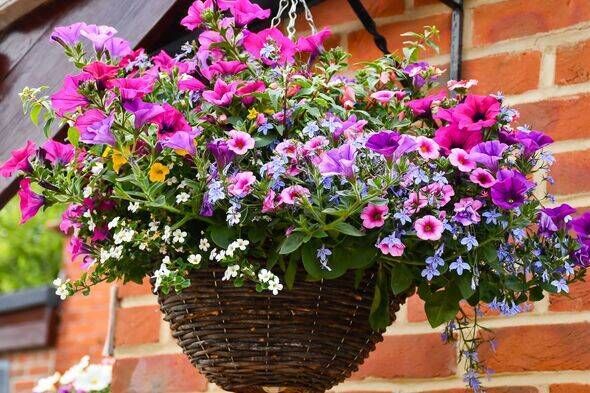
Hanging baskets add some some brightness to any garden (Image: Getty)
They cautioned: “Unfortunately, most baskets that are purchased or planted in the early spring don’t make it past mid-summer. In fact, sadly, some don’t even make it to late spring without their foliage fading, and their once plentiful blooms becoming more scarce with each passing day.”
Keeping hanging baskets in full bloom can prove a demanding undertaking without the right guidance and equipment.
The gardening experts recommend that regular fertilisation is essential to keep newly planted baskets flowering throughout the season. Rather than being a one-off task, this needs to be carried out on a consistent basis.

Gardeners should add some fertiliser to the soil (Image: undefined via Getty Images)
Hanging basket plants have restricted amounts of soil available for absorbing energy and are unable to spread their roots in search of additional nutrients, making fertilisation absolutely vital.
Jim and Mary have warned that without fertiliser, hanging baskets “simply will not be able to survive the entire summer”. Gardeners must ensure their feeding schedule is precisely timed and appreciate that liquid fertilisers are the superior choice.
Gardeners ought to avoid applying excessive amounts of fertiliser in one go, as this can cause roots and foliage to expand too rapidly. The duo pointed out: “The result will be a plant that outgrows its basket and stops blooming because of it.”
The recommendation is to choose a liquid fertiliser with higher levels of phosphorus and potassium than nitrogen, as while nitrogen encourages growth, flowering relies upon phosphorus and potassium.
A modest application of fertiliser every 10 to 14 days is advised for the best results with hanging baskets.
West Coast Gardeners recommend using a 15-30-15 water-soluble fertiliser containing micro-nutrients. Their guidance provides two approaches: “You can either use it every second watering at full strength, or use it every time you water, but at half strength.”
For a more diluted dose, combine the fertiliser with water prior to application.
Given that container-grown plants such as hanging baskets lose moisture more quickly than those planted in the ground, particular care must be taken should they dry out entirely and begin to wilt. It is advisable not to apply fertiliser in this condition; rather, water them regularly and allow the soil to become sufficiently moist and the plants to recuperate before returning to your usual fertilising routine.
Comments are closed.