
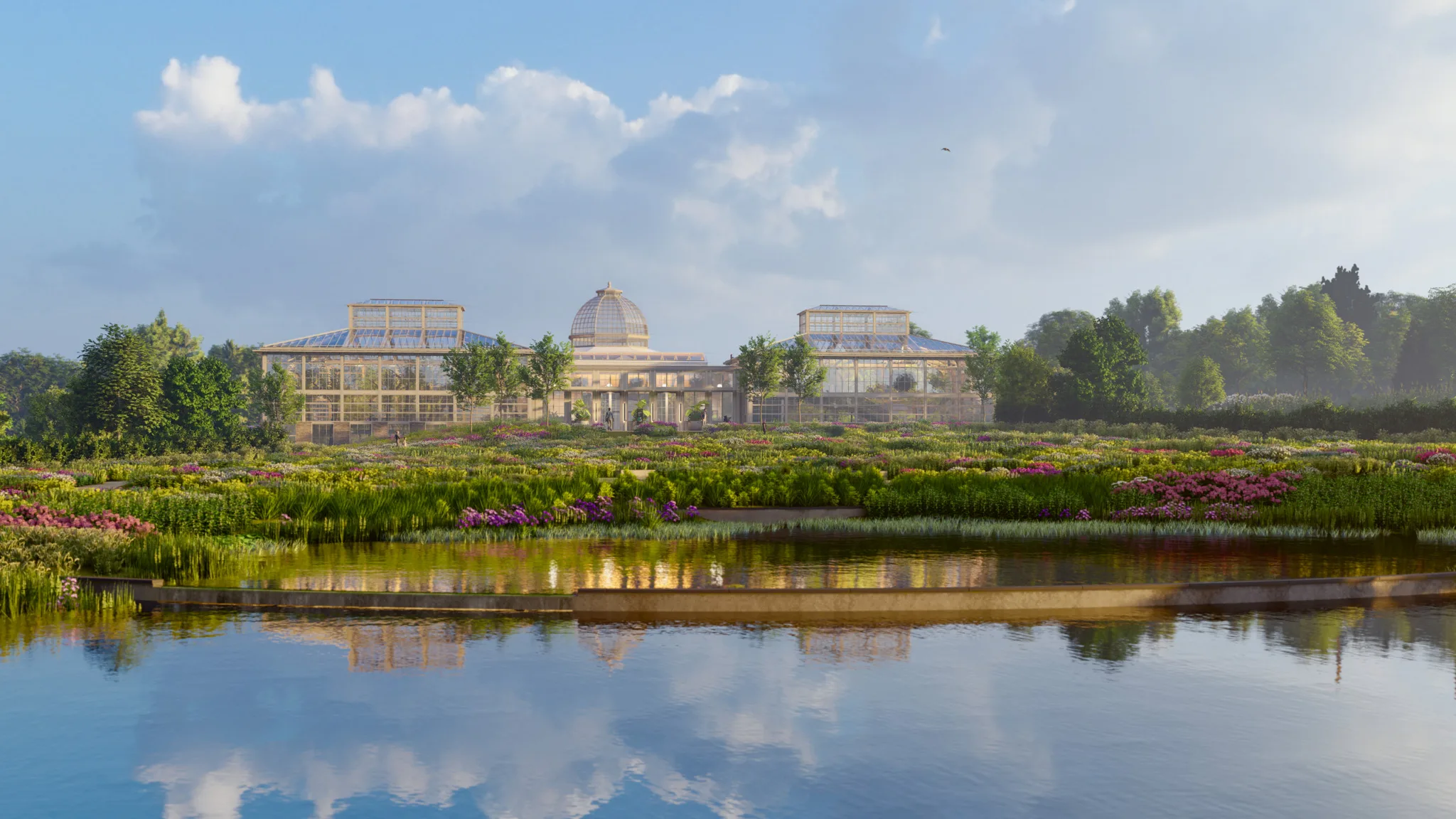
Nestled in the heart of Richmond, Lewis Ginter Botanical Garden has long been a sanctuary where seasons are celebrated, curiosity is cultivated, and the natural world is honored. Founded on the estate of 19th-century businessman and philanthropist Lewis Ginter, the garden officially opened to the public in 1984. Over the decades, it has grown into one of the premier botanical gardens in the Southeast—a living museum of more than 80 acres where education, conservation, and community intersect. And now, thanks to an ambitious capital campaign called THRIVE, it is poised to enter its most transformative chapter yet.
Mark your calendars: Saturday, May 23, is the date Richmond has been waiting for. That morning, the gates will open on a dramatically expanded Lewis Ginter—one that is larger, more immersive, and more connected to the natural world than at any point in its history.

Aerial rendering of the Conservatory at Lewis Ginter Botanical Garden. Image courtesy of Lewis Ginter.
The THRIVE campaign has been years in the making, driven by the generosity of donors across the community who believed in the garden’s potential to grow not just in size, but in purpose. Construction began in spring 2024, and when the transformation is complete, the total public space will have grown by 20 percent—a significant leap forward for a garden already beloved by hundreds of thousands of visitors each year.
At the heart of the expansion is the Conservatory, which was originally constructed in 2003. The building will more than double in size, increasing to over 24,000 square feet of enclosed growing space. Inside, visitors will discover four distinct climate zones: Desert, Mediterranean, Tropical, and Subtropical. Each zone represents a different corner of the globe, offering visitors an immersive journey through the world’s diverse plant ecosystems without ever leaving Richmond. These climate-controlled environments will also serve a vital scientific purpose, providing expanded habitat for rare and endangered plant species that the garden is actively working to protect through its conservation programs.
One of the most anticipated highlights of the new conservatory is the Subtropical House, which will host Butterflies Bloom—a live butterfly exhibit that, for the first time, will be open to the public year-round. It’s the kind of wonder that turns a Tuesday afternoon into an unforgettable family memory.
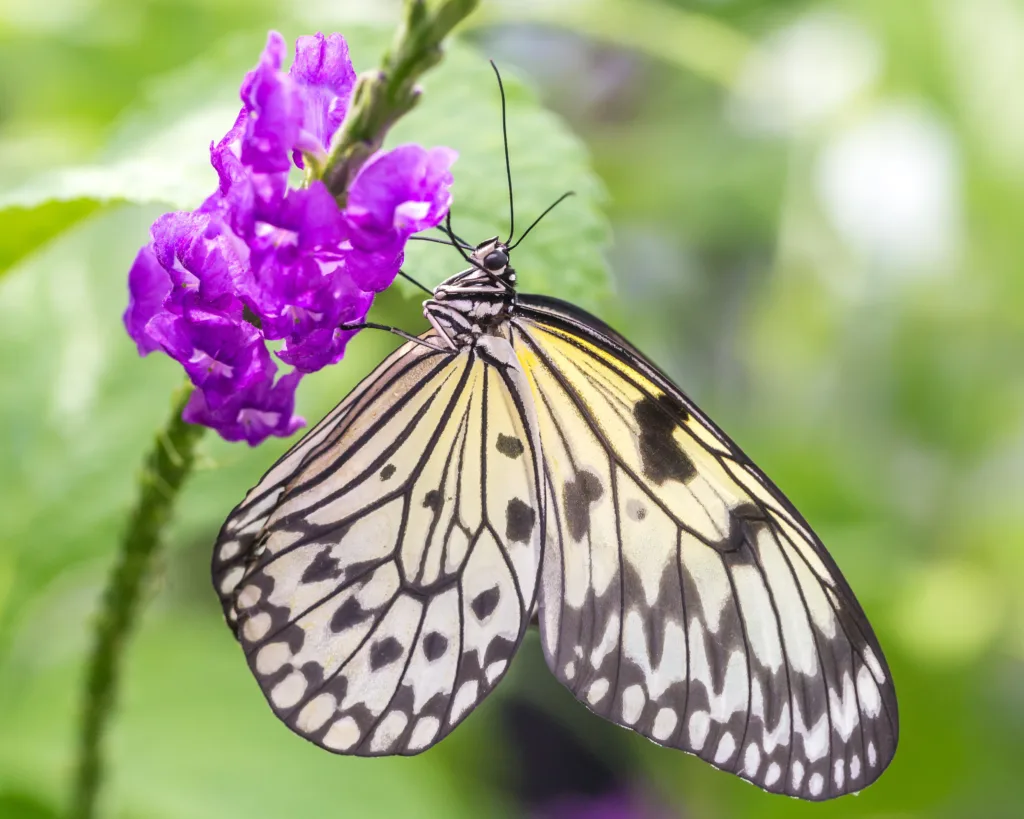
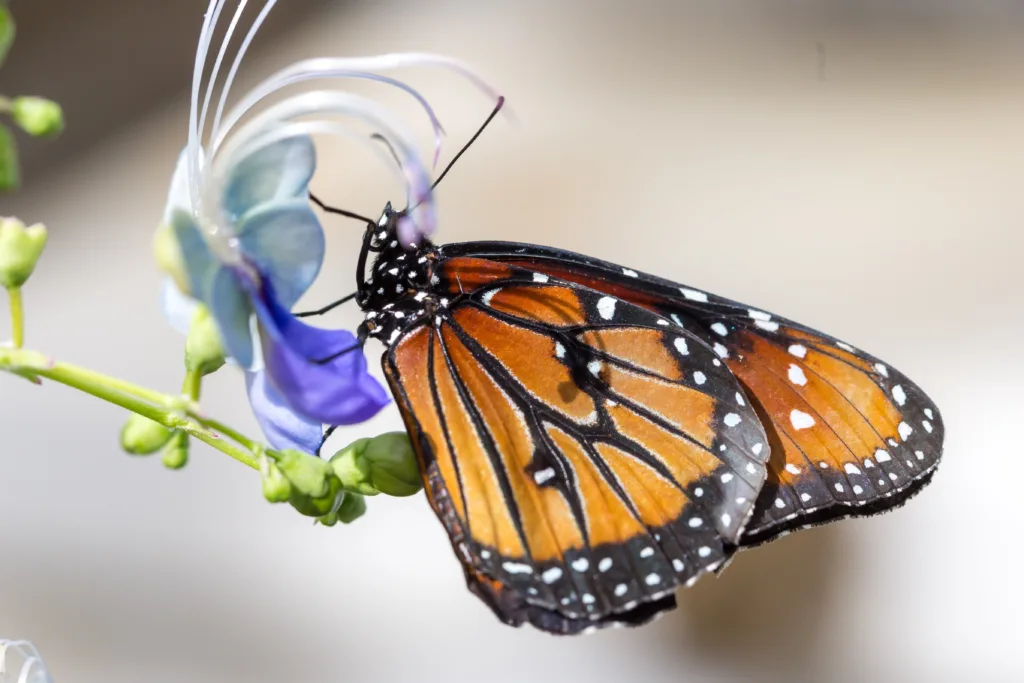
Lewis Ginter’s butterfly exhibit. Photos courtesy of Tom Hennessy.
Beyond the conservatory walls, the outdoor landscape is also being reimagined. An expanded Wick Lake provides a revitalized habitat for the garden. Designed for stormwater management, it serves as a water source needed for the care of plants throughout the garden. A series of newly designed gardens will add 7.5 acres of publicly accessible green space, bringing fresh beauty to every corner of the property.
 Rendering of Ann Lee’s Meadow and Gathering Circle. Image courtesy of Lewis Ginter.
The vision behind these spaces reflects a commitment to thoughtful, diverse design. Ann Lee’s Meadow was conceived by Arlington-based Claudia West at Phyto Studios; the Mary Morton Parsons Foundation Courtyard design is by Wambuii Ippolito, whose work is informed by a childhood spent in East Africa’s Great Rift Valley. Cataline LaFrance from éStudio, who focuses on socially and environmentally integrated spaces, brought her Sonoran perspective to The Desert House. And the Hillside Meadow was designed by Austin Eischeid, the Chicago-based garden designer known for dynamic naturalistic plantings and use of strong perennials and grasses with all-season interest. Together, these collaborators bring a range of perspectives to a project that values both horticultural excellence and inspirational design.
“Our first expansion in decades will bring about transformative change for our Garden,” says Lewis Ginter president and CEO Brian Trader. “Our guests will enjoy new vistas, students will be immersed in new gardens, and plant lovers will be delighted with inspirational designs from talented artists from around the country. We are beyond excited to welcome our community back to their Garden to explore butterflies, nature, and beauty.”
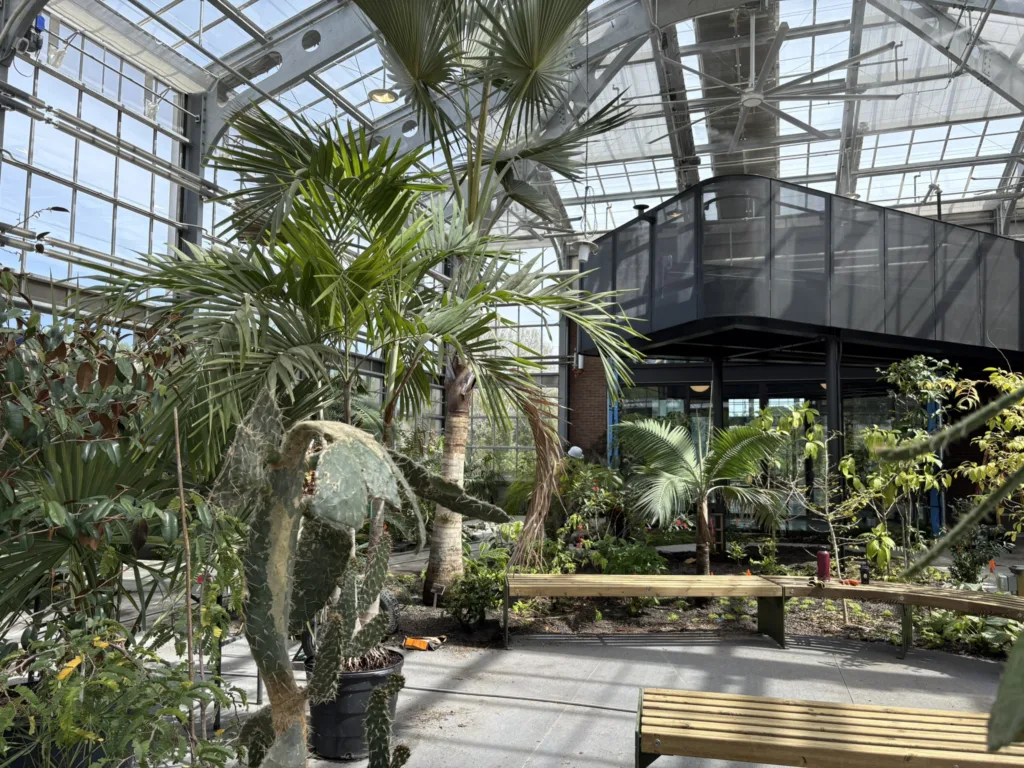 The Subtropical House, where Butterflies Bloom lives year-round. Photo courtesy of Mary Heather Parch.
The expansion also deepens the garden’s roots in community service. The Kroger Community Kitchen Garden—which has donated more than 75,000 pounds of fresh produce to Feed More since 2009, equivalent to nearly 60,000 healthy meals—will grow alongside the LGBG campus, adding an orchard to provide fresh fruit to those in need. Students in the Reynolds Community College Horticulture program, which is uniquely based at Lewis Ginter, will benefit from expanded facilities and exposure to new plant collections. Youth education programming will also expand into the new spaces, offering enriched experiences for school groups, summer camps, and youth interns.
What’s taking shape at Lewis Ginter is a garden growing into its full potential—a place where science, beauty, food access, and education converge in the open air. This spring, Richmond gets to step inside that vision for the first time.
Featured image courtesy of Lewis Ginter Botanical Garden. This article originally appeared in the June 2026 issue.
Comments are closed.