
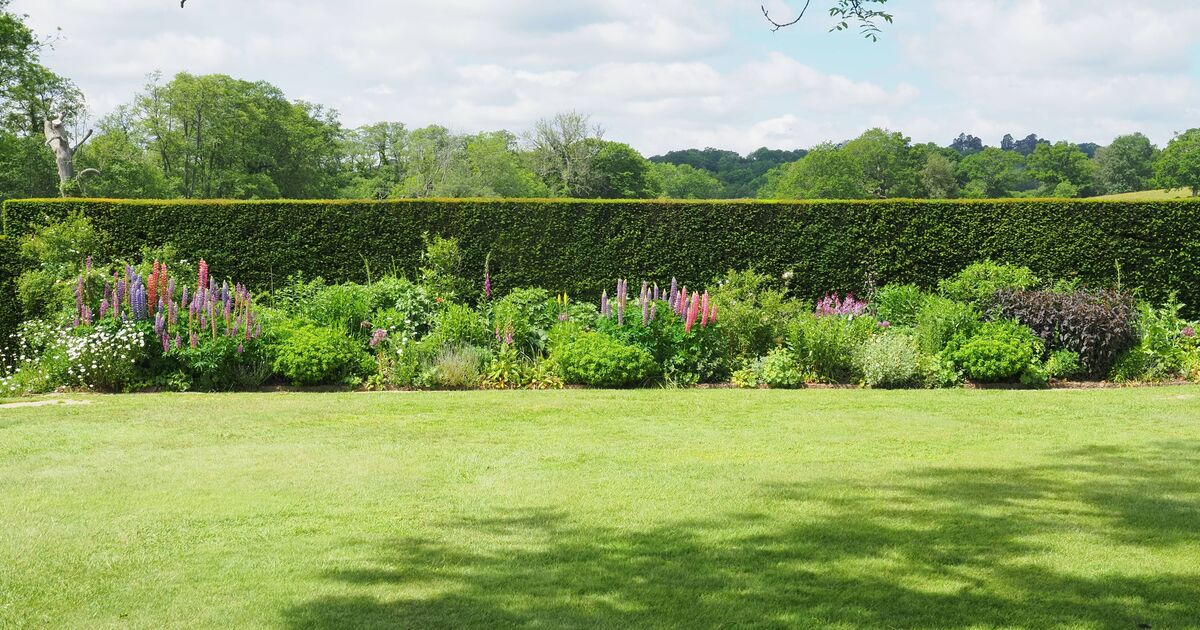
Spring marks a crucial time for lawn maintenance, as grass remains in recovery from winter’s harsh conditions and possesses only a limited opportunity to thrive adequately before higher temperatures begin to dry it out. Gardeners have just a few weeks to encourage denser grass development, which allows roots to grow deeper into the earth, holding more moisture and improving drought tolerance throughout summer.
It’s recommended to avoid synthetic fertilisers, as these can harm wildlife and, with their quick-release nutrients, make grass reliant on frequent feeding, potentially compromising the root structure in the long term. Instead, Pleasant Green Grass, an organic landscaping company, has shared the secret to “thicker, greener, [and] stronger] is Epsom salt, an ingredient that a lot of people already have in their bathrooms. They said: “If you care about your lawn and are an adept of organic lawn care and landscaping, then Epsom Salt is right for you.
“Make a mixture of the salt with water and spray your turf and lawn with the dilution once or twice a month.”
Why feed lawns Epsom salt in spring?
Epsom salt is also sold as a bath soak for easing muscles or calming irritated skin, but it’s equally a natural compound containing magnesium, which helps plants absorb extra nutrients and moisture, reports The Mirror.
Magnesium is also vital for plants to produce chlorophyll, a green pigment that aids plants with photosynthesis. It will give lawns a vital energy boost in spring when they need it most, allowing them to produce considerably thicker grass and stronger root systems.
Epsom salt has nonetheless become a firm favourite amongst gardeners thanks to its capacity to enhance lawn colour and deliver noticeably greener grass with very little effort.
The expert added: “The magnesium boost will help your grasses germinate faster and burst into sparkling green, robust, upright, thick and healthy turf blades.”
How to use Epsom salt on your lawn
Prior to applying Epsom salt to your lawn, it must be diluted, as organic materials are considerably more concentrated, and applying it neat risks over-fertilising the grass.
A monthly application is plenty, as overuse will introduce too much magnesium into the soil and trigger a nutrient imbalance.
Simply combine approximately one to two tablespoons with a litre of water, pour it into a sprayer, and distribute it evenly across the lawn to avoid patchiness.
The optimum time to apply Epsom salt is after rainfall, which assists the nutrients in penetrating the soil rather than sitting on the surface of the grass.
Maintain your usual lawn care routine, including mowing, watering, and moss removal in spring, and you should soon notice the grass looking considerably thicker and greener within just a week or two.
Comments are closed.