
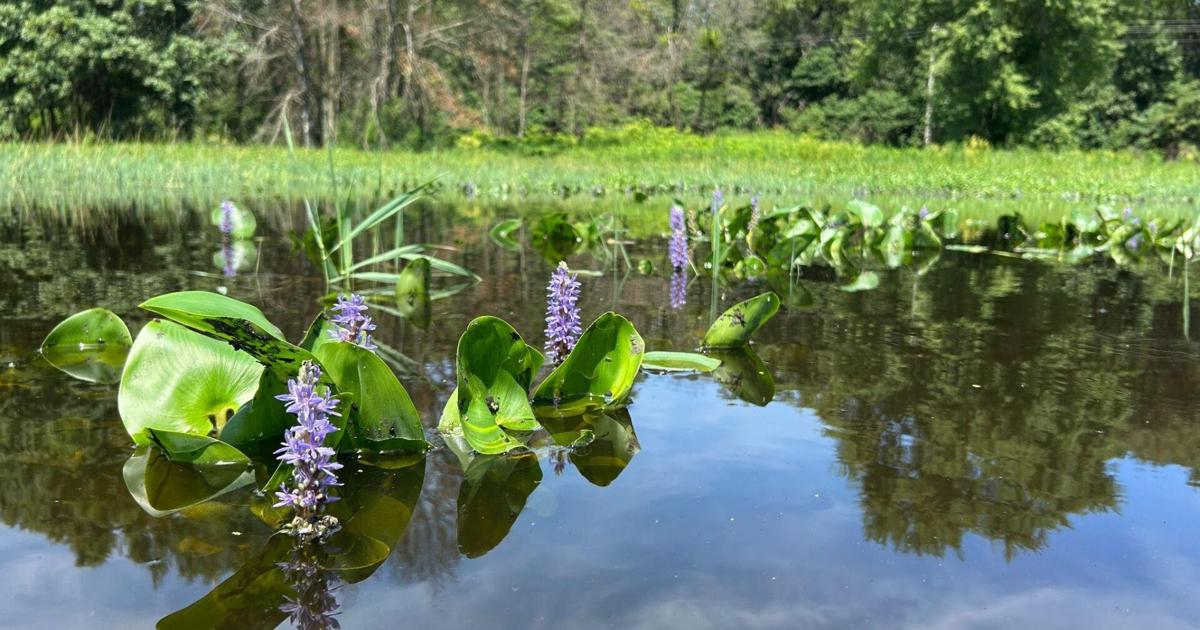
Pickerelweed (Pontederia cordata) is a native wetland plant that sports a beautiful spike of blue to purple flowers with large, heart-shaped leaves. They can grow in wet soil or up to a foot under water in sunny or partly shaded conditions. These plants provide essential habitat and food for the Illinois-endangered pickerelweed long-horned bee (Melissodes apicatus) while also supporting a wide range of other native pollinators across the state.
Pickerelweed is an emergent aquatic plant commonly found in shallow wetlands, pond edges and slow-moving waterways. Its dense stands and long bloom period make it a key species for wetland biodiversity. For the pickerelweed long-horned bee — a rare, solitary longhorn bee native to the eastern United States — this plant is more than just a nectar source. It is its primary pollen host. Research indicates the pickerelweed long-horned bee is likely oligolectic, meaning it specializes on pollen from very few species. In this case, pickerelweed. Females have been documented foraging almost exclusively on Pontederia, reinforcing the plant’s critical role in bees’ life cycle.
This bee, recently recognized as endangered in Illinois in 2025 due to its limited distribution and dependence on specific wetland habitats, thrives in areas with abundant pickerelweed. Although the species occurs across several eastern states, Illinois represents the western edge of its known range, making conservation efforts here especially important. Healthy wetlands with robust pickerelweed populations provide reliable foraging opportunities and nesting habitat near the water’s edge, where these ground-nesting bees establish their solitary burrows.
Pickerelweed is also great for wetland or pond structure and ecosystem function. Dense stands stabilize shorelines and reduce erosion from waves and weather events. Native wetland vegetation, like pickerelweed, improves water quality by absorbing excess nutrients from the soil before they enter larger waterways and produce harmful algal blooms.
Pickerelweed supports other wildlife as well by creating a microhabitat for a wide range of animals. Waterfowl will eat the seeds and use the dense cover for protecting young. Dragonflies use them for hunting perches, mating and laying eggs. Frogs will hide, hunt and breed in the plant’s protective vegetation. Their leaves are a tasty snack for mammals, turtles and some fish species.
Pickerelweed can be purchased as seeds or plugs from native plant distributors. Once established, it spreads via rhizomes and is low-maintenance. This year, the East Central Illinois Master Naturalists received some grant funding from the Burt Family Foundation for a project to increase the availability of native plants. Illinois Extension Master Naturalists and Master Gardeners are working together to grow pickerelweed in a greenhouse for distribution to local partners. Master Naturalists will help transplant plugs into ponds and wetlands to support this newly endangered bee. In future years, we will continue to collect seed from these sites to grow plants and provide them to a wider range of recipients. We hope these efforts will help secure a future for the charismatic pickerelweed long-nosed bee.
Everyone can help safeguard this rare bee while enriching local ecosystems by restoring pickerelweed in natural areas and embracing native plants at home. Every wetland restoration project, every backyard planting, and every effort to support native biodiversity contribute to a healthier, more resilient environment for pollinators and people alike.
Late spring is the best time to transplant pickerelweed for the best establishment. Master Naturalists will be planting plugs with partners May 30-June 2. If you are interested in learning more about the Pickerelweed Project and plant distribution, contact Karla Griesbaum at kherzma2@illinois.edu.
Illinois Extension is offering a program on May 29 to learn about specialist bees, native habitat and watch a pickerelweed planting demonstration. Register at go.illinois.
edu/pickerelweed.
June 22-28 is National Pollinator Week, and a variety of events have been planned locally and around the state by the University of Illinois and partner organizations. For more information about everything going on during National Pollinator Week, check out publish.illinois.edu/pollinatorweek.
Karla Griesbaum is a natural resources, energy and environment educator with Illinois Extension, serving Champaign, Ford, Iroquois and Vermilion counties.
Comments are closed.