

Dear Master Gardener: I was visiting my sister in the Twin Cities and we went to the Minnesota Landscape Arboretum to see the tulip displays. They were amazing and now I want to add a lot of them to my gardens. Are they easy to grow and hardy in zone 3?
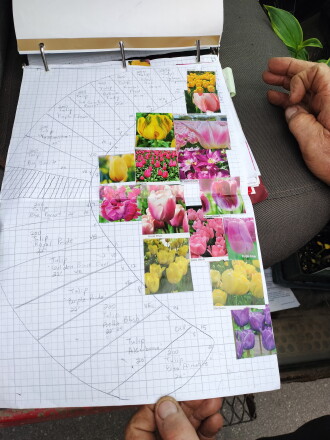
Horticulturist Duane Otto’s design for a tulip display Minnesota Landscape Arboretum in Chaska.
Contributed / Jennifer Knutson
Answer: The tulip displays at the Minnesota Landscape Arboretum are indeed amazing! I was at the Arboretum this week and was fortunate to meet and chat with the horticulturist, Duane Otto, who has been designing the tulip display and annual gardens there since April 11, 1988. This year they planted over 40,000 tulips with a color scheme of purple, pink, and yellow. Each year he designs the gardens and decides on a color scheme. He uses that same color scheme for the containers and annual display gardens. Volunteers help pull out all the annuals and plant the bulbs in the fall, totaling 520 people-hours. Then volunteers pull out all the spent tulips for all the annuals to be planted. Volunteers used to be able to take as many tulip bulbs as they wanted after pulling them out, but unfortunately the Arboretum has jumping worms, so now all the bulbs are composted. I asked Duane where he gets the tulip bulbs and he said he orders them from all the major Dutch wholesalers online where most home gardeners order them.
Yes, tulips are hardy to zone 3 and easy to grow, but just so you know: deer, rabbits and woodchucks love to eat the new growth. And mice, moles, voles, chipmunks and squirrels often munch on the bulbs after you have gone to all the work of planting them. It’s a wonder we ever get to see them bloom!
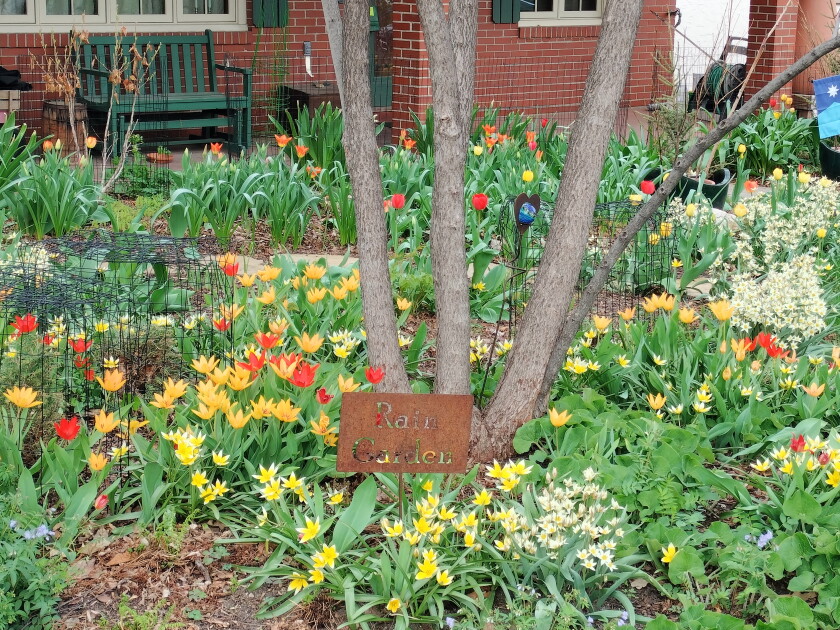
A tulip garden in the Brainerd lakes area.
Contributed / Jennifer Knutson
Tulipa is a genus of about 100 species of perennial bulbs, with some being more perennial than others. As a general rule, species tulips perform better than hybrids as perennials. There are many varieties of species tulips hardy to 40 degrees below zero. They are long-lived and spread rapidly. They make great additions to a rock garden. Most modern tulip varieties bloom well for only three or four years. However, there are some tulip types that bloom well over a longer time period. Darwin hybrid tulips are generally the longest blooming hybrid tulip. Many gardeners grow hybrid tulips as annuals. If you are growing tulips as perennials, promptly remove spent flowers after bloom to prevent seeding, but do not remove foliage until it turns yellow. The best time to plant tulip bulbs is mid-September through mid-October.
Dear Master Gardener: What annuals can I put in my containers that will attract hummingbirds?
Answer: Hummingbirds are attracted to flowers that are red, red and yellow, or have a red component (orange-red, orange or pink) and have a tubular shape. Red is by far their favorite color, but they will also feed on blue, yellow, and purple flowers. Iowa State University recommends the following annuals for attracting hummingbirds: Four-O-Clocks, Fuchsia, Impatiens, Morning Glory, Nicotiana, Petunia, Pineapple Sage (Salvia elegans), Salvia, Scarlet Runner Bean, Shrimp Plant, and Zinnia. In my experience Black and Blue Salvia, Pentas, and Lantana also attracted them. I’m sure there are others, but the key is to find annuals with long tubular flowers, those with projecting stamens and pistils, or open inflorescences (a cluster of flowers on a branch or system of branches).
Dear Master Gardener: My husband likes very hot peppers and would like us to grow some this year in our vegetable garden. Please tell us about growing hot peppers.
Answer: All peppers, whether bell, hot or specialty, need warm weather, plenty of sunshine and water, and ample soil fertility. For the best success, wait until June to plant them in your garden. Choosing which hot peppers to grow can be fun — there is a pepper so hot that popping one in your mouth could send you to a hospital! Some of the more commonly grown hot peppers include ancho, chili, poblano, habanero, jalapeño and hot banana. Hot peppers get their heat from a compound called capsaicin. Capsaicin is in the seeds and the whitish membrane inside the fruit, so removing them before cooking or eating raw reduces the heat of the pepper.
The spiciness of hot peppers is measured in Scoville Heat Units (SHU), which indicates the amount of capsaicin present. Keep in mind that hot pepper flavor and Scoville heat units can vary by variety and growing conditions. The Scoville scale begins at zero with the bell pepper. Here are some SHU ratings for some of the more commonly grown hot peppers (the higher the number, the hotter the pepper): ancho and poblano 1,500-2,500; jalapeño, 5,000; habanero range from 100,000 to 350,000; and a ghost pepper is about 1 million. The ghost pepper is the hottest pepper transplant you will probably find around here, but there is a hotter one — the Carolina Reaper reportedly has about a 2.2 million SHU rating! Capsaicin doesn’t dissolve in water so grabbing water to put out the fire in your mouth is useless. It will bind to the fat in milk, cheese or sour cream. Capsaicin dissolves in alcohol — beer doesn’t have a high enough alcohol content, but a straight shot of liquor might work!
Hot peppers can be picked at any color stage, but they are hottest when they are fully ripe. Mature color varies tremendously between varieties. Most hot peppers are firmly attached and should be removed with a knife or clippers to avoid damaging the plant. Take special care with hot peppers as some may burn bare skin when handled. And above all, don’t touch your eyes or sensitive body parts! Wear gloves when harvesting and handling, followed by a thorough hand-washing with soap and water to remove the capsaicin.
Dear Master Gardener: Do plains prickly pear cacti grow in Minnesota? Are they edible?
Answer: There are two species of prickly pear cactus native to Minnesota — brittle prickly pear and plains prickly pear. The flowers of both look very similar. Plains prickly pear cactus (Opuntia macrorhiza) is a native Minnesota wildflower that is a species of special concern. Although it is not endangered or threatened, it is rare in Minnesota, as this is the eastern edge of its native range. Plains prickly pear would be a very interesting and unusual addition to a garden! It thrives in a hot, sunny location in well-drained soil. It would make quite a statement in a rock garden. The plant has dark green, paddle-shaped stems covered with sharp thorns and striking, lemon yellow flowers that bloom in early summer. Red, fleshy, juicy fruits follow. Prickly pear fruits and young flower petals are edible. Cut the fruits, called tunas, in half and remove the seeds. The tunas can be eaten raw or used to make jams and jellies.
You may get your garden questions answered by calling the new Master Gardener Help Line at 218-824-1068 and leaving a message. A Master Gardener will return your call. Or, email me at
umnmastergardener@gmail.com
and I will answer you in the column if space allows.
University of Minnesota Extension Master Gardeners are trained and certified volunteers for the University of Minnesota Extension. Information given in this column is based on university research.
Comments are closed.