
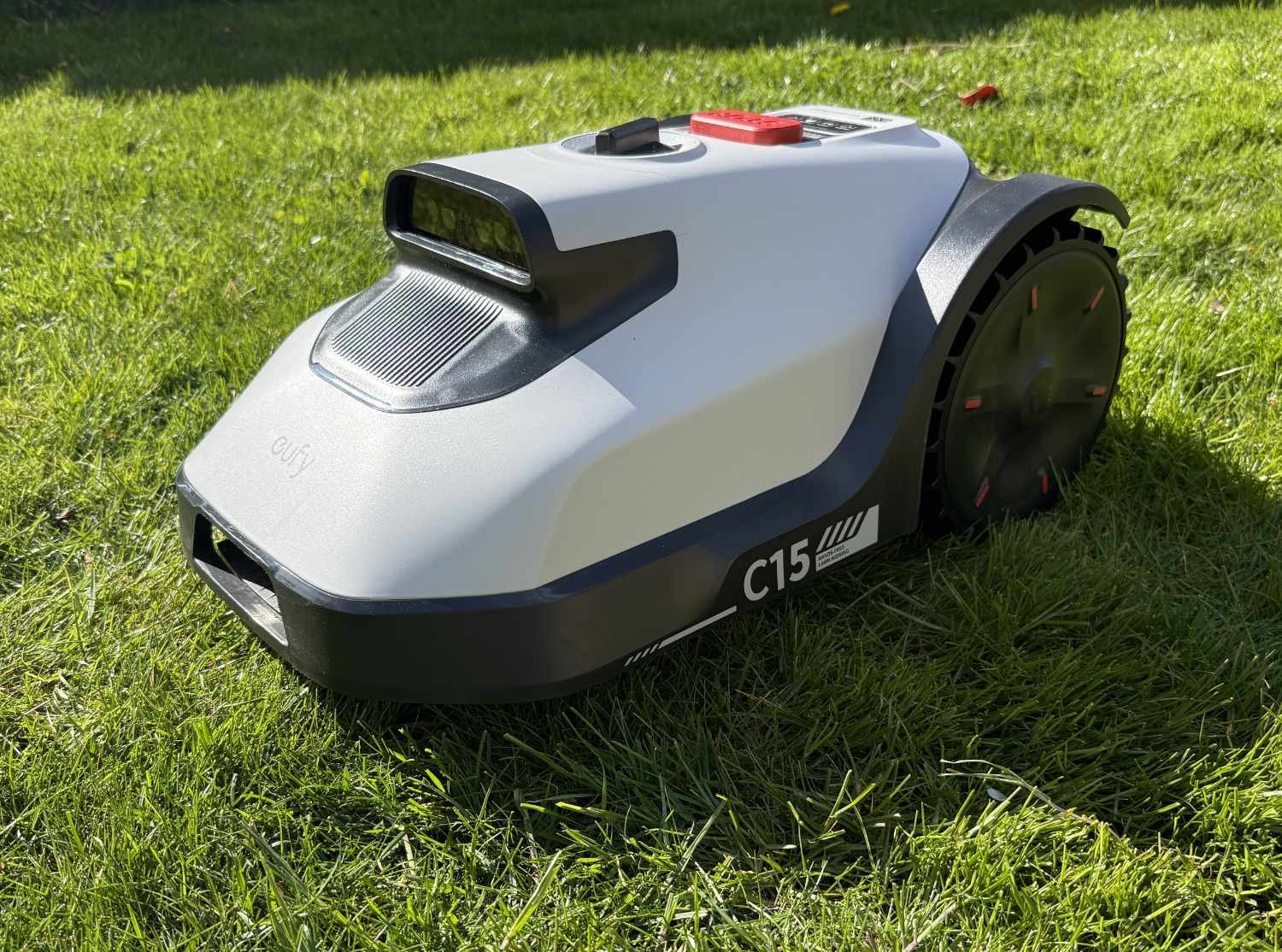
Which indirectly brings us to a problem which had already been noticed in the two sister models the previous year. If the lawn is enclosed on all sides, the Eufy C15 has no problems at all according to our test impressions. The situation is different if, for example, there is no separate transition to the neighbors’ gardens or if lawn areas are to be left out for other reasons (e.g. flowering island in the lawn).
If only a certain part of a large lawn area is to be mapped and a no-go zone is not to be created afterwards, a little trick is required. Once the robotic lawn mower has reached the boundary, the mapping process can be paused. A restricted zone or virtual boundary can then be drawn by editing the partial map created up to that point. Without the final map, however, positioning is sometimes not so easy. If necessary, the restricted area can also be adjusted later in the map management. If mapping could be handled manually in sections when needed, such scenarios would be easier to handle.
In our slightly irregularly shaped test garden of around 250 square meters in size, mapping took a good 50 minutes – roughly the same amount of time as with E15 and E18. Depending on the size of the plot, you may have to wait a while after unpacking before the Eufy C15 can mow for the first time. That is certainly not a record-breaking start, but thanks to the absence of RTK and perimeter wire, it is definitely extremely beginner-friendly – especially for closed and simply designed lawns, for which the Eufy C15 is primarily made.
Comments are closed.