
According to the National Weather Service, Manistee’s year-to-date rain total is 12.2 inches, much higher than the normal of 7.2 inches. Many Manistee residents have had to deal with the destruction and expense of flooding.
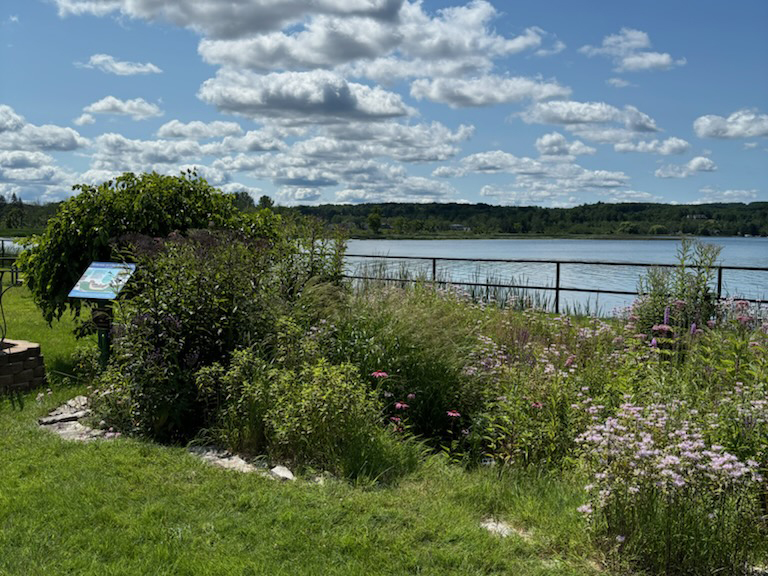
For over 10 years, a rain garden at Onekama’s Farr Center has reduced flooding by containing the run-off from the Center’s roof, thus easing the burden on the Village’s sewer system and preventing Portage Lake from receiving polluted stormwater. The rain garden is a collaborative project of the Portage Lake Garden Club, the Portage Lake Watershed Forever and the Manistee Conservation District.
Rain gardens serve two important purposes. First, they help prevent flooding by serving as gathering points for stormwater. This is particularly important in areas with a high proportion of hard surfaces such a roads, parking lots and roofs. A rain garden is about 30% more effective in absorbing water than a typical household lawn. After April’s big rain event, the Farr Center’s 26 foot rain garden was completely full of water. Within a day or so, the stormwater was absorbed. Rain gardens are dry most of the year and are not a breeding ground for mosquitos.
Second, stormwater runoff contains pollutants such as oil, fertilizers, pesticides, sediment, trash and bacteria. These contaminants are picked up as rainwater flows over roads, parking lots and rooftops before entering storm drains, creeks and lakes. Rain gardens absorb the contaminated runoff, allowing it to be filtered into the ground water. The plants in a rain garden are nourished by the nitrogen and phosphorus in the runoff. The plants provide food and shelter for butterflies, pollinators and song birds. The Farr Center’s rain garden is planted with native perennials, so it is beautiful and functional.
As part of water management plans, many communities partner with residents and businesses to add rain gardens to their properties. Recently, the Onekama Village Council invited Lara Treemore-Spears of Great Lakes Conservation Advisors to speak about water management. The focus of her presentation was how rain garden partnerships with Village property owners could reduce flooding risk and mitigate stormwater run off in to Portage Lake and area creeks.
To learn about the rain gardens at the Farr Center, or how to create one of your own, send an email to info@portagelakegardenclub.org.
Comments are closed.