

Perennials are plants that come back year after year without needing to be replanted, making them the ideal picks for a low-maintenance garden.
Whether you live in a warmer area or are trying to select flowers for your first yard, drought-tolerant perennials can make gardening a breeze—and these expert-approved varieties are both visually appealing and easy to take care of.
Meet the Expert
Marina Prokaten is a plant expert at Plantum, a plant care and identification app.
Laura Janney is an expert gardener, and the creator of Designing Luxurious Gardens and Containers: The Inspired Garden Masterclass.
Purple Coneflower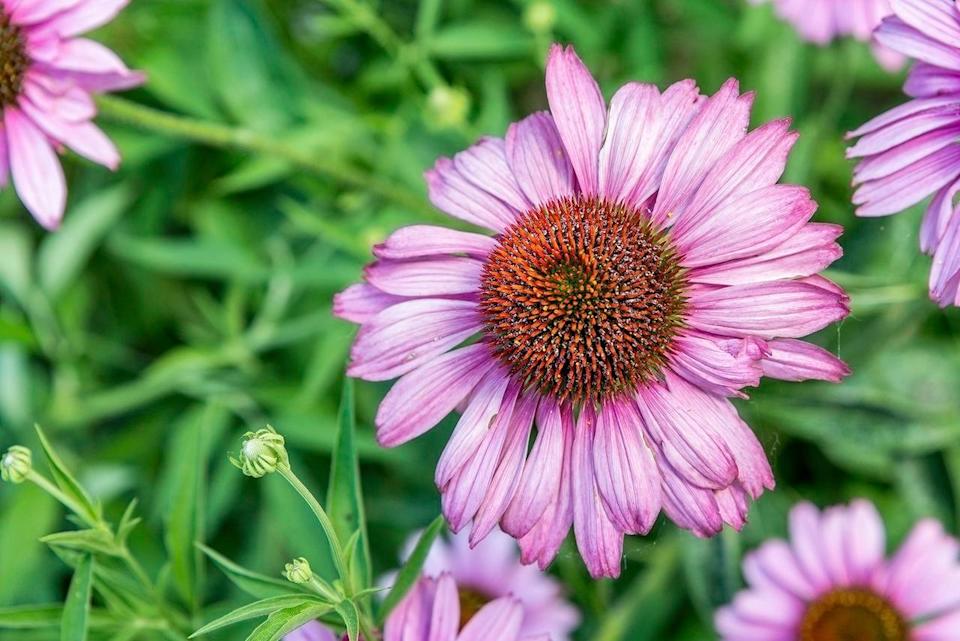
Credit: The Spruce / Adrienne Legault
The purple coneflower (Echinacea purpurea) is native to North America, a member of the sunflower family, and beloved by our gardening pros for its striking hue and low-maintenance nature.
Advertisement
Advertisement
Although most hybrid varieties of coneflowers are drought-tolerant, the original wildflower remains a firm favorite for gardens in USDA zones 3-8.
Purple coneflowers need at least six hours of sun per day and neutral, well-draining soil, but can tolerate clay in drier climates.
They need to be watered daily while being established, then weekly until they reach maturity at two years old. After that, rainwater will do the trick outside of extended periods of drought.
Yarrow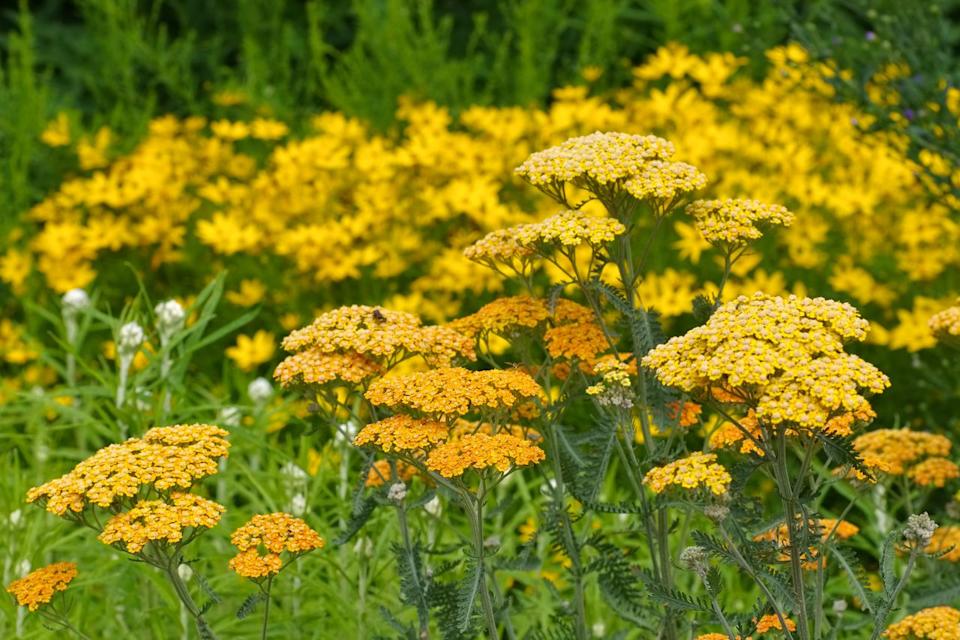
Credit: LianeM / Getty Images
Yarrow plants (Achillea millefolium) can thrive in USDA zones 3-9 and are known for their hardiness, fast growth, and feathery clusters of small, bright blooms.
Advertisement
Advertisement
“Yarrow is available in a variety of colors, and introduces a gorgeous texture in a garden,” expert gardener Laura Janney shares. “Its airiness will bring that cottage or meadow vibe. Not only is it a long bloomer, but it will spread and give you even more plants.”
All yarrow plants need full sunlight and and prefer sandy-well drained soil. It is an aggressive grower that spreads through underground rhizomes, so if you notice it getting out of hand, deadhead the flower before they go to seed.
Warning
Before you introduce them to your garden, keep in mind that yarrow plants are toxic to pets.
Liatris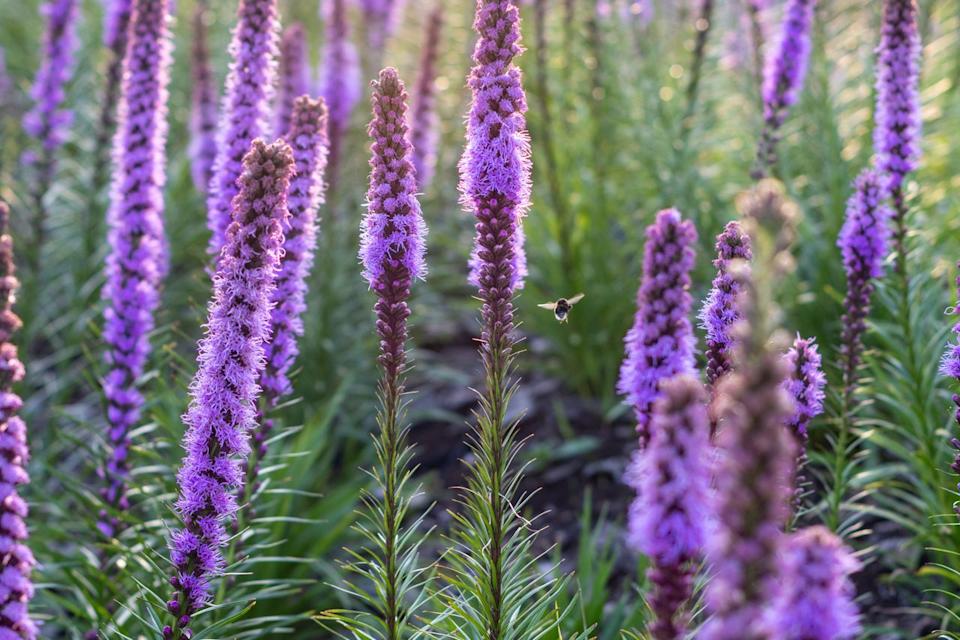
Credit: Natalya Mamaeva / Getty Images
If you’re after a unique flower, look no further than liatris (Liatris spicata). This plant can be grown in USDA zones 3-9, and has long bottlebrush-like clusters of feathery bright purple flowers which turn a dazzling bronze shade in the fall.
Advertisement
Advertisement
Plant liatris in slightly acidic, well-draining soil. After its first year liatris will become more drought-resistant, but our experts advise giving one inch of water per week through a drip irrigation system while roots are being established.
Black-Eyed Susan
Credit: Nikki O’Keefe Images / Getty Images
Advertisement
Advertisement
Although they look more like daisies, black-eyed Susans (Rudbeckia hirta) are actually members of the sunflower family.
This native wildflower takes a couple of years to reach its full height, but becomes drought-resistant after its first year. It can grow up to 3 feet tall in sunny spots and moist, well-drained soil.
You can plant these flowers directly into the ground in USDA zones 4-9 once temperatures consistently reach 60°F. Water at an inch per week during their first season.
Russian Sage
Credit: The Spruce / Evgeniya Vlasova
Russian sage (Perovskia atriplicifolia) is a beautiful border or filler plant to landscape with, and has standout silvery-green leaves and lavender-blue blooms.
Advertisement
Advertisement
Its adaptability and tolerance for a range of temperatures and water levels mean it’s capable of thriving through hot and dry summers.
“Russian sage feels most comfortable in well-draining, alkaline soils, but will do quite well in clay mediums with a wide range of pH levels,” plant expert Marina Prokaten says. “It can survive in USDA zones 5 to 9 and—with proper frost protection—even in zone 4.”
Butterfly Stonecrop
Credit: Neil Holmes / Getty Images
Butterfly stonecrop (hylotelephium spectabile) is a type of sedum. It’s a resilient and drought-tolerant flowering succulent.
It’s a great choice for attracting pollinators in USDA zones 3-10, and grows best in sunny conditions with well-drained sandy or gravelly soil. Just make sure you plant it in areas with partial shade if you live in a warmer part of the country.
Advertisement
Advertisement
“Once established, the butterfly stonecrop doesn’t require a lot of attention,” Prokaten says. “The best watering technique for this plant is the soak-and-dry method, which involves soaking the soil and allowing it to completely dry out before watering again.”
Catmint
Credit: AlpamayoPhoto / Getty Images
As its name suggests, catmint (Nepeta) is a member of the mint family, and gives off a delicate herbal, citrusy scent that draws in bees and butterflies while also repelling other insects and deterring deer.
It can be planted in USDA zones 4-8, and is both fast-spreading and drought-tolerant after its first few months.
“Catmint needs full sun and well-draining soil,” Janney says. “Once it’s established, you don’t need to water much except during extreme periods of drought. After the first blooms have faded, simply cut back to encourage it to bloom throughout the summer.”
Advertisement
Advertisement
Read the original article on The Spruce
Comments are closed.