

If you live somewhere hot and humid like I do in Florida, chances are your garden hose gets a lot of use this time of year. And nothing slows down watering plants or rinsing off patio furniture faster than stopping to fix another twist in your garden hose. But with the right storage habits and, in some cases, a better-quality hose, you can usually keep kinks to a minimum. (If your current hose is beyond saving, our guide to the best garden hoses can help you find a more durable replacement.)
We spoke with a landscaping professional and a registered landscape architect about what causes garden hoses to kink and how to prevent it.
Why your garden hose keeps kinking
One of the most annoying parts of yard work is dealing with a hose that keeps kinking. The problem usually comes down to the hose’s material, how it’s stored and how much time it spends baking in the sun. Gene Caballero, cofounder at GreenPal, a landscaping services platform, says, “Most hoses kink because they are low-quality material. They tend to have thin walls and when they are stored too tight, they get worse over time. The worst offenders are the cheaper vinyl ones.”
Advertisement
Advertisement
In general, thinner hoses are more prone to kinking, especially when they’re tightly coiled or twisted during use.
Bill Hester, a registered landscape architect and owner of Conserva Irrigation Myrtle Beach, a landscaping and irrigation services company, says thinner hoses are more likely to kink than thicker ones.
“Another factor related to age is whether the hose is left out in the sun, which will speed up the degradation of the compounds that maintain the structural integrity of the garden hose,” Hester says.
The biggest mistakes homeowners make
Storing your garden hose properly can help it avoid kinks (Catherine McQueen via Getty Images)
Caballero says, “The biggest mistake I have seen homeowners make is twisting the hose while dragging it around corners or leaving it wound too tightly on a reel when storing it.”
Advertisement
Advertisement
When a hose is pulled while twisted or wrapped into tight coils, those twists can become permanent over time.
Hester says problems can also start with choosing the wrong hose in the first place, such as buying one that is too small for the job. That makes kinks more likely during regular use.
How to keep your hose from kinking
“One thing that I have noticed is to fully stretch out your hose before using it and to make sure to store it in larger loops instead of small, tight coils,” Caballero says.
This helps keep the hose from twisting once the water starts flowing.
Hester also recommends using proper outdoor storage, such as a hose reel or wall-mounted holder: “The quickest way to prevent kinks with a hose you already own is to keep it on a hose reel,” Hester suggests.
Advertisement
Advertisement
Storing your hose on a reel, wall mount or free-standing storage box can help prevent sharp bends and tangled loops. Additionally, keeping it out of direct sunlight when it’s not in use may also help it last longer.
What to look for in a kink-resistant hose
An expandable garden hose is easier to move around and less likely to kink than a rubber or vinyl option. (Caroline Munsterman via Getty Images)
If you’re shopping for a replacement, the hose material makes a big difference. Vinyl hoses are lightweight and affordable, but they tend to twist and kink more easily. Rubber and hybrid hoses are usually thicker, sturdier and better at holding their shape. Expandable hoses can also help reduce tangles because they stretch when filled with water and shrink back down when empty, though they may not hold up as well for heavy-duty yard work.
“I would recommend looking for a rubber or reinforced hose with several layers and thicker walls for more kink resistance,” Caballero says.
Beyond material, it also helps to check the hose’s product label. Hester suggests checking the label for phrases like “kink-free,” “no kinks” or “resists kinks.” He also notes that “a hose with a good warranty often signals better quality.”
Advertisement
Advertisement
Some hoses have short warranties, while thicker, reinforced ones may be covered for years or even for life. Checking the warranty can give you a better sense of how durable the hose may be over time. No hose is completely kink-proof, but these features can help you find one that holds up better over time.
Garden hoses designed to resist kinks
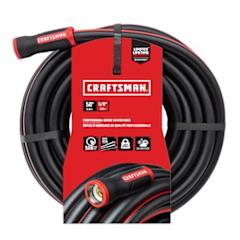
The right garden hose for you depends on the size of your lawn and how you plan to use it. You may need a heavy-duty hose that can handle regular use or prefer a lighter hose that’s easier to move and store. Here are three to consider.


 More Yahoo gardening
See all Yahoo gardening articles
Comments are closed.