
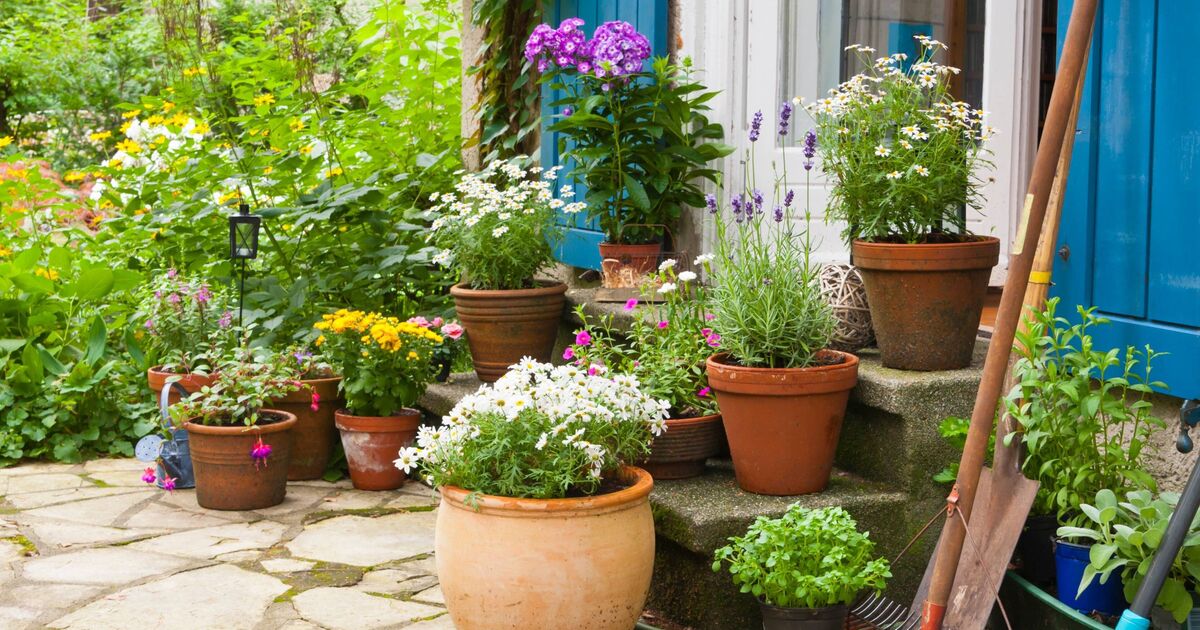

A gardening expert urged people to ‘tap plant containers’ (Image: Copit via Getty Images)
Forecasters are predicting Britain will bask in a 28C nine-day heatwave with Friday (May 22) expected to be the hottest day of the year so far. In light of this it’s crucial that gardeners make sure that their pot plants are well-watered.
Even during rainy spells, surprisingly little moisture actually reaches the roots of plants housed in pots and containers on your patio. This is due to the leaves forming a natural “canopy” that channels rainfall out onto the surrounding ground, even during the most dramatic thunderstorms.
However, horticulture expert Simon, from leading gardening channel Walking Talking Gardeners, has a “genius” tip for ensuring your cherished pot plants haven’t dried out.
He advises that container-grown plants should always be watered regardless of the weather. But this becomes doubly important during a heatwave.
“Plants regulate their temperature, as we do, by releasing moisture,” Simon says. “They do that through a specialist pore called a stomatal pore, which you can find using a microscope underneath the leaf – with a few on top of the leaf,” reports Nottinghamshire Live.
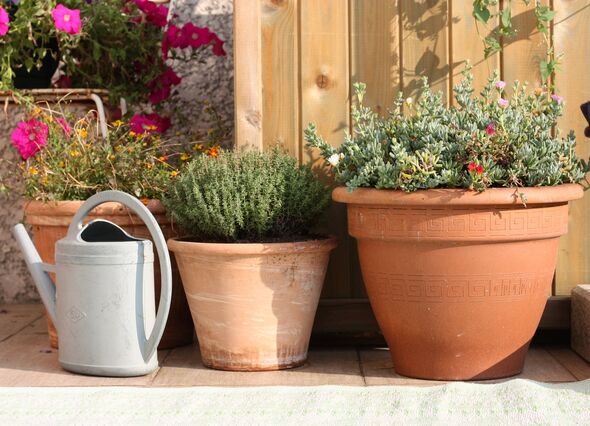
A gardening expert has a ‘genius’ tip (Image: © Fanny ROSTAN BETEMPS via Getty Images)
Should a plant be subjected to hot, dry conditions, it will “sweat” through these pores in order to cool itself down. For the majority of plants, a temperature of around 40C can prove fatal, prompting them to respond instinctively to protect themselves. Simon explains: “The plant will release moisture through the stomatal pores, as we would do in our sweat pores, to cool themselves down so that the the temperature of the plant doesn’t go above 40 or 42C – because if that happens, you get denaturation of the enzymes, and the plant will die.”
For this reason, he emphasises that on particularly warm days, even when it’s breezy, container plants should be watered at least once daily, and even twice if temperatures are especially high.

Vegetable Garden On Balcony Of Apartment With Plants Growing On Ceramic Pots (Image: EyeEm Mobile GmbH via Getty Images)
But the burning question remains – how can you tell when a plant actually needs watering?
Overwatering can prove equally damaging, potentially leading to root rot, leaf discolouration and stunted growth. Excessively saturated soil can also foster conditions for mould and fungal growth, causing further harm to the plant.
The most straightforward method of checking the soil is simply to push your finger into it and gauge whether it feels dry. However, this may not provide a reliable indication of moisture levels deeper down amongst the plant’s roots.

Temperatures could peak at 28C this week (Image: Paul Bradbury via Getty Images)
An alternative technique, Simon suggests, is “to do as the old-school gardeners did in the 19th and 20th centuries, when stone pots or terracotta pots were at their most prevalent.
“You would be familiar with terracotta pots and the sound it makes If it is dry. If you tap it with an appropriate stick, the pot will make a ringing sound.
“If it is fully-watered, it would have a dull kind of thud to it. So just by tapping a pot you’ll be able to tell if that pot requires watering or does not require watering.” That, he proudly declared, is a matter of “old-school skill.”
Comments are closed.