

Dear Master Gardener: We have a sunny perennial garden that has mostly purple flowers and would like to add a pop of color with some yellow blooming perennials. What do you suggest?
Answer: Purple and yellow are complementary colors (opposite each other on the color wheel) and look great together in a garden. Achillea (yarrow) is drought tolerant and deer resistant and has several cultivars that are yellow. Anthea is pale yellow and gets 36 inches high, Moonshine is lemon yellow and gets 24 inches high, Schwellenburg is gold and gets 24 inches high, and Coronation Gold has bright yellow gold flowers and gets 36 inches high.
Heliopsis (oxeye) is one of the earliest blooming of the summer-flowering yellow daisies. It offers bright color, a long bloom season, and good pest resistance. The cultivars that are highly rated are Ballerina (orange-yellow, semi-double flowers, 48 inches tall), Summer Nights (yellow- gold, single flowers, 48 inches tall), and Venus (yellow, very large, semi-double flowers, 36 inches tall.)
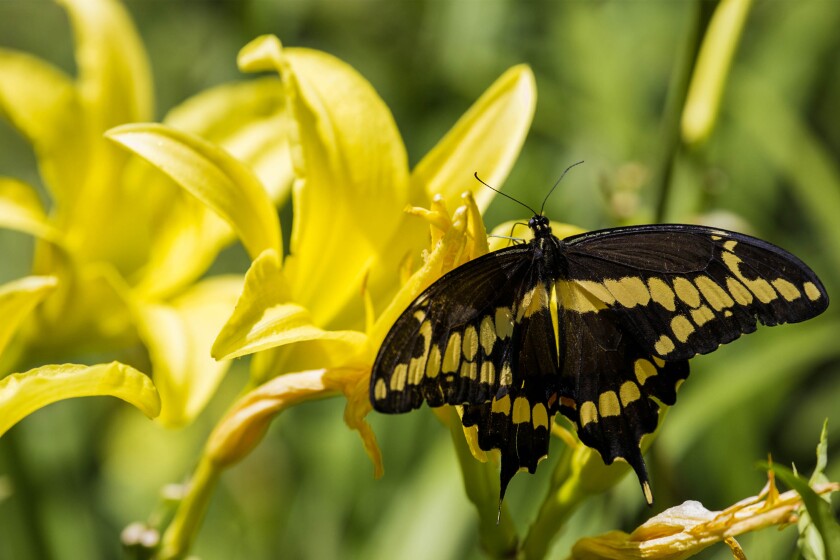
Yellow and purple are colors that look great in a garden together. There are numerous Hemerocallis (daylily) plants that have yellow flowers.
Contributed / Metro Newspaper Service
There are numerous Hemerocallis (daylily) that have yellow flowers. Oenothera fruticose (common sundrops) are yellow — Fireworks and Summer Solstice are great cultivars — keep in mind that sundrops spread quickly!
There are some highly recommended cultivars of Rudbeckia (coneflower): Viette’s Little Suzy gets 18 inches tall and has golden yellow single flowers; Autumn Sun gets 60 inches tall and has bright yellow, single flowers; Gold Drop gets 36 inches tall and has bright yellow, double flowers.
Thermopsis (false lupine) is a long-lived, lovely vertical accent plant with showy spires of yellow, pea-like flowers. It has excellent pest resistance. In addition, the mature seedpods are an interesting addition to dried floral arrangements. An excellent variety is the Carolina False Lupine (Thermopsis caroliniana) which gets 48 inches tall and has a rich yellow color.
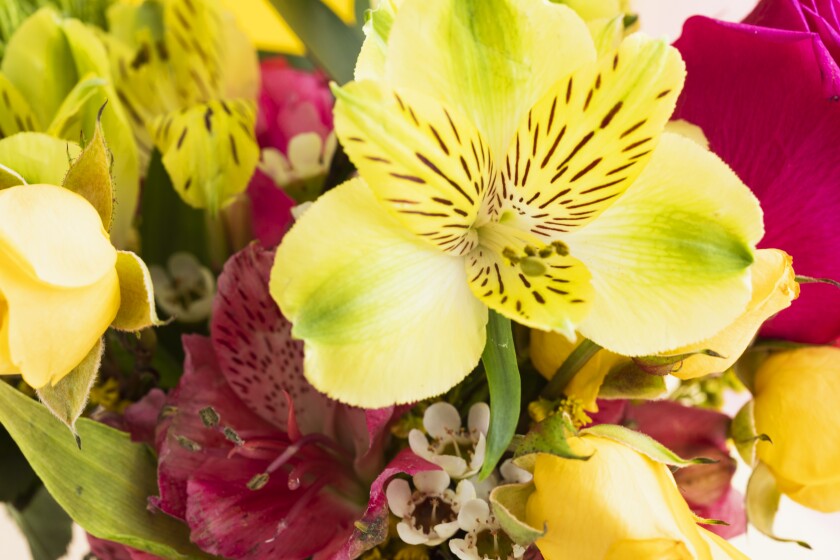
Minnesota gardeners have several types of Irises that grow well in our cold climate — they are either bearded or beardless.
Contributed / Metro Newspaper Service
Dear Master Gardener: What are the different types of Irises that we can grow in Minnesota?
Answer: Minnesota gardeners have several types of Irises that grow well in our cold climate — they are either bearded or beardless. There are tens of thousands of named varieties of Bearded Iris that come in a vast array of colors and color combinations. According to the Iris Society of Minnesota, there are six Bearded Iris and all can be successfully grown in Minnesota gardens: Miniature Dwarf Bearded, Standard Dwarf Bearded, Intermediate Bearded, Border Bearded, Miniature Tall Bearded, and Tall Bearded. The tall Bearded Irises are the most well-known to gardeners.
Siberian Iris is one of the beardless types and is extremely hardy, easy to grow, and trouble-free. They have grass-like foliage with smaller, delicate flowers. Unlike Bearded Iris, which are susceptible to disease and insects, the Siberian Iris is rarely bothered by disease or insects. Siberian Irises also come in a vast array of colors and color combinations. The Blue Flag Iris, another beardless Iris, is native to Minnesota wetlands and features striking purple-blue flowers with yellow-green throats. It is a perfect addition to a rain garden or along the edges of a pond or waterfall, as it tolerates saturated, boggy soils. Another beardless Iris is the Japanese Iris, which needs very acidic, organically rich, moist soil and also does best growing in a wet, boggy area or along a water feature. Crested Irises (Iris cristata) are small, woodland irises that grow best in a shade garden. Their flowers are white, blue, or purple and bloom in mid-spring.
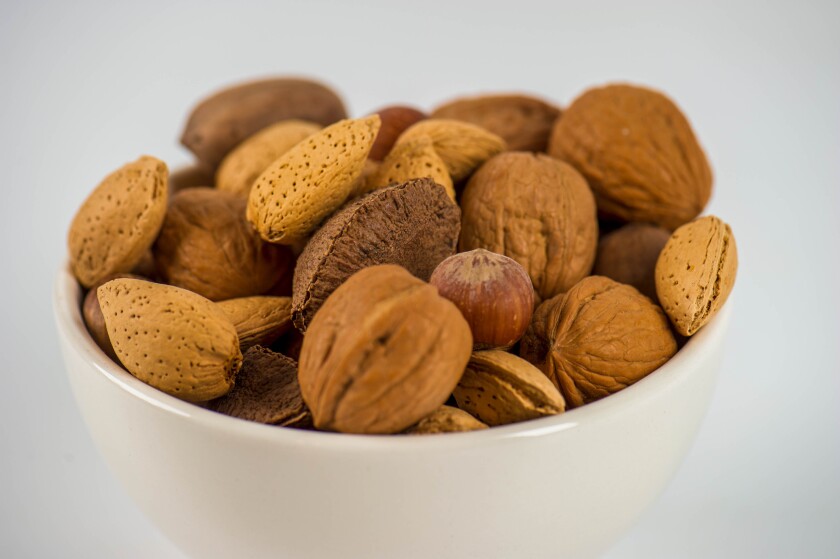
Hazelnuts, also called filberts, and black walnuts, Juglans nigra, are native to Minnesota. The walnuts commonly found in grocery stores are English walnuts, which are not hardy in Minnesota.
Contributed / Metro Newspaper Service Ron Wingard Photography
Dear Master Gardener: I would like to grow edible hazelnuts, walnuts, and butternuts. Do they grow in Minnesota?
Answer: Yes, but rewards do not come quickly and stock may be difficult to find. Let’s look at each kind separately. Hazelnuts (Corylus cornuta) are also called filberts and are native to Minnesota. They are frequently found along railroad tracks and forest edges. They are considered to be shrubs and the nuts are high in vitamins E and B6 as well as being 19% protein.
They like sandy soil and can tolerate some shade. They make an attractive hedge as a transition between yard and woodland. Squirrels love them and can quickly decimate a crop.
Black walnuts (Juglans nigra) are also Minnesota natives, prized as tasty additions to cookies, breads, and other baked goods. The wood of black walnuts is highly sought-after. The walnuts commonly found in grocery stores are English walnuts, which are not hardy in Minnesota. Like all walnuts, black walnuts form three layers: a green pulpy husk, the shell, and the nutmeat. The husk is very messy and stains everything, necessitating the use of gloves in separating the husk from the shell. The nuts require curing, either shelled or unshelled.
Squirrels, as with hazelnuts, may get to the nuts before people do.
Butternuts (Juglans cinerea) were at one time common in Minnesota but are now an endangered species because of their decimation by the fungal butternut canker. These large trees are in the walnut family; their wood is used in furniture-making and their nuts in baking. The nut is enclosed in a thin, ellipsoidal husk covered with sticky hair. Like walnuts, they contain juglone and are favorites of squirrels.
All three of these nut-bearing plants need several years to establish themselves before they begin bearing fruit. Nonetheless, those who love the nuts or the wood might be willing to wait.
You may get your garden questions answered by calling the new Master Gardener Help Line at 218-824-1068 and leaving a message. A Master Gardener will return your call. Or, email me at
umnmastergardener@gmail.com
and I will answer you in the column if space allows.
University of Minnesota Extension Master Gardeners are trained and certified volunteers for the University of Minnesota Extension. Information given in this column is based on university research.
Comments are closed.