
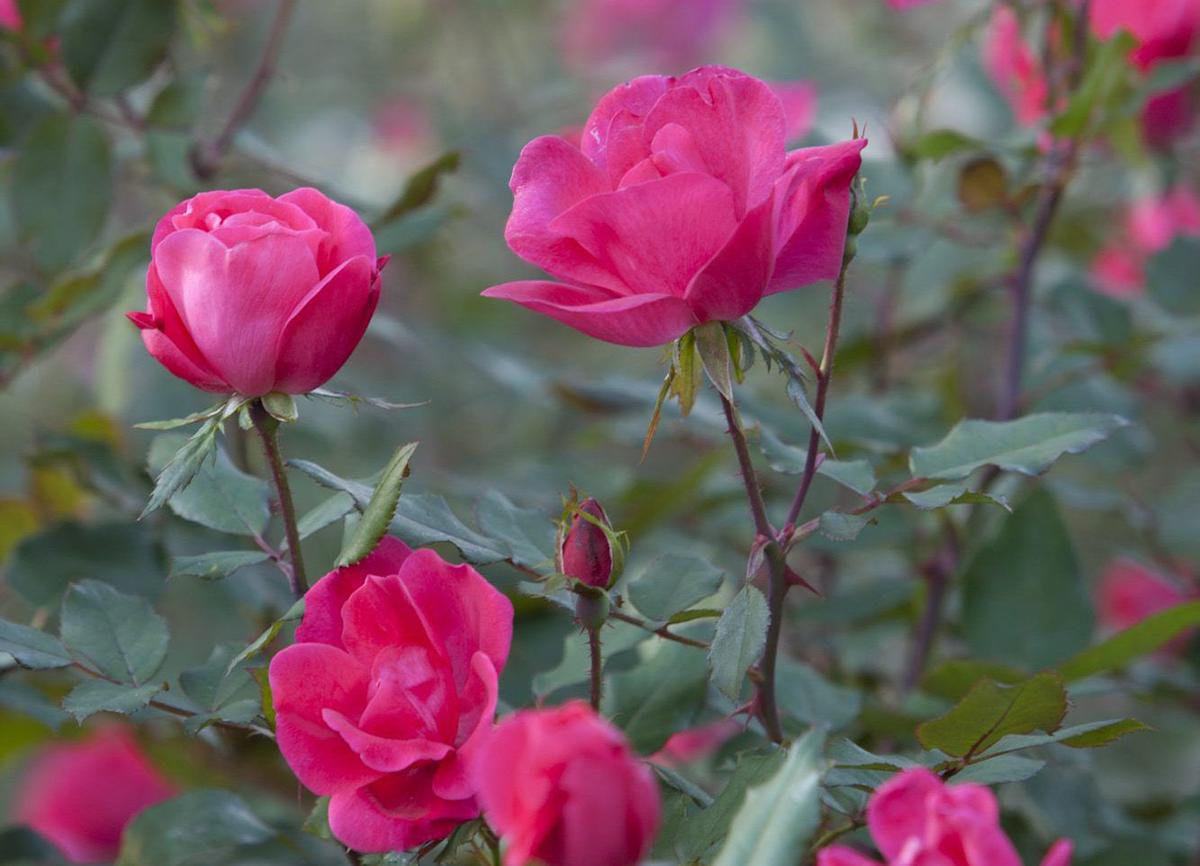
When the red ‘Knock Out’ rose was released, it was an All-America Rose Selection winner that was universally lauded as a long-blooming, easy-to-care-for, disease-resistant plant that could hold its own in the garden and take a beating from Mother Nature. Roses are notoriously finicky and prone to diseases like black spot and powdery mildew, so this tougher version that could roll with the punches and didn’t require regular spraying with fungicide seemed like the champion of shrub roses. But it had a fatal weakness.
A Garden Hero
Over the years, new Knock Out series selections were developed in various colors (like pink, blush, coral, yellow, orange, and white) and in both single and double flower forms. These beauties flew off the shelves at garden centers and became ubiquitous in backyards and business parking lots, where they thrived. And one of the places where they found a home was in the flower bed in my own front yard.
A Knockout Punch
Credit: Lisa McCollum / @lisakmll
But nothing is invincible, and my Knock Out roses met their match in the form of a virus called rose rosette disease. The real culprit is a microscopic bug called the eriophyid mite, which feeds on the rosebushes and transfers the disease from plant to plant. The wind can carry these tiny mites, spreading the problem around the landscape to other bushes. This disease causes misshapen flowers that don’t open fully and strange-looking, thicker, thornier stems that can form red bunches of shoots and foliage on the ends.
Advertisement
Advertisement
Related: 7 Easy-To-Grow Replacements For Dying Knock Out Roses
Down For The Count
Unfortunately, the only solution is to throw the plant in the trash to prevent further spread. If your Knock Out rose has met its match, you can’t plant another type of rose in that spot, or it will have the same sad fate. However, there are a multitude of other blooming shrubs that could take its place, like azaleas, lantanas, hydrangeas, camellias, rhododendrons, forsythias, gardenias, viburnums, butterfly bushes, flowering quinces, and loropetalums. Consider how much light that particular location gets, what your planting zone is, and what type of soil you have to find a choice that’s suited to your garden.
Read the original article on Southern Living
Comments are closed.