
I purchased this new succulent and look at the flowers! So pretty! I think it’s called an Elise!
by Curiouslyshortt

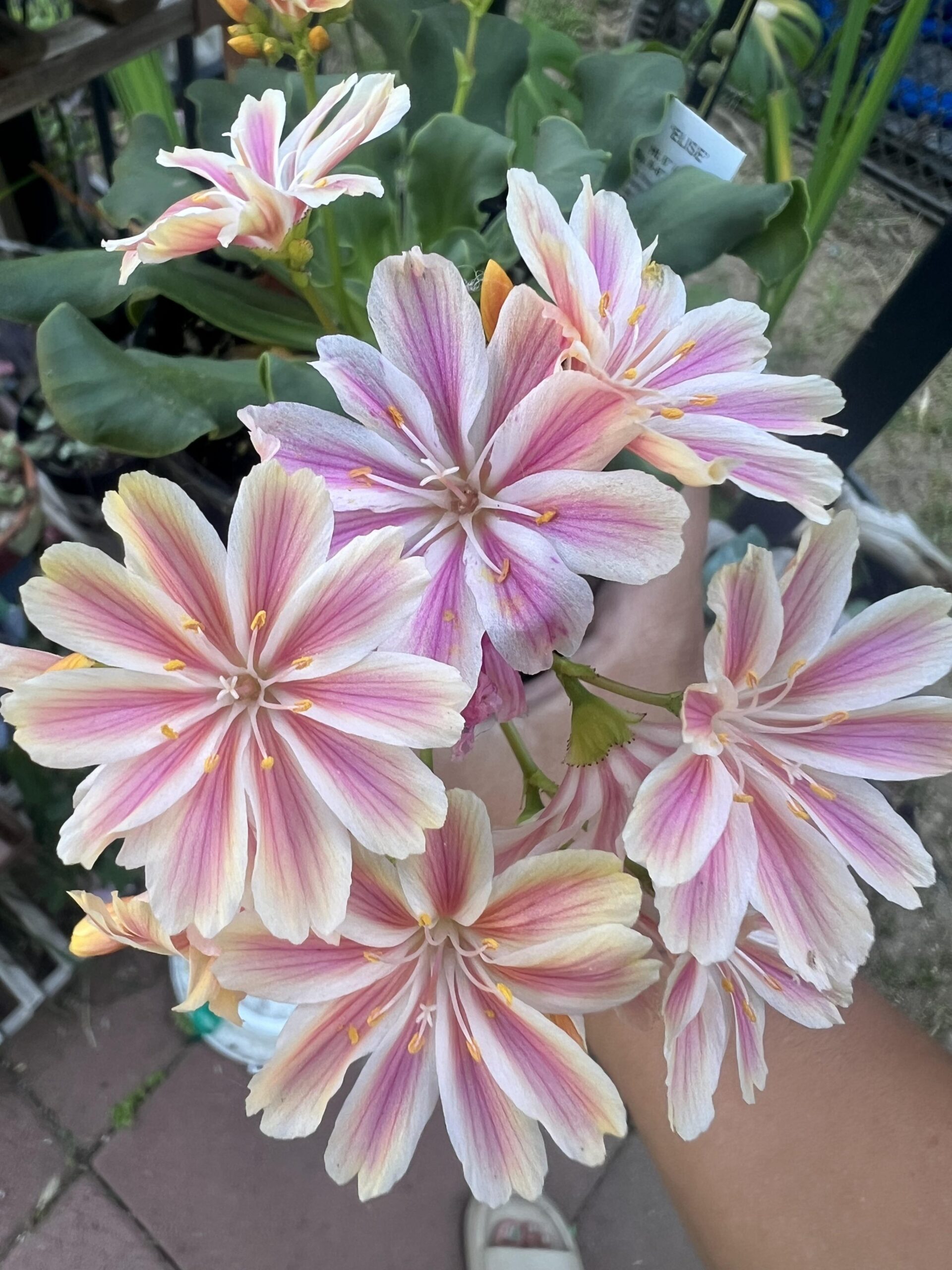
I purchased this new succulent and look at the flowers! So pretty! I think it’s called an Elise!
by Curiouslyshortt
2 Comments
Lewisia
Nice! That’s a variety of Lewisia cotyledon, also known as Siskiyou bitterroot. It’s an alpine plant with slightly succulent leaves and fat roots. I’ve been growing the “Sunset” strain for many years. The wild version of it, native to the Siskiyou mountains in Northern California and Oregon, are mostly white flowered, with an occasional pink blush, but several varieties have been developed which enhance this light coloration to make some really amazing flowers. Give it good sun, and good drainage. Being alpine plants that normally grow in cracks in cliffs or on talus slopes, they like a good, gritty, free draining potting mix. They also appreciate cooler weather. Where I’m growing, in the Santa Cruz area, it gets too hot for mine in the summer, and they quit flowering start looking a bit ragged. I try to give them a little shade during the hot parts of the year. Once it cools down, they start blooming and bloom nearly nonstop. It’s one of the most heavily flowering plants I’ve ever seen, and will also self-seed easily. However, in my experience, many of the second generation will revert back to the plain white flowers of the wild species.
It’s a great little plant, and seems very hardy once you meet its basic needs of gritty, mountain-type soil and cool weather.