
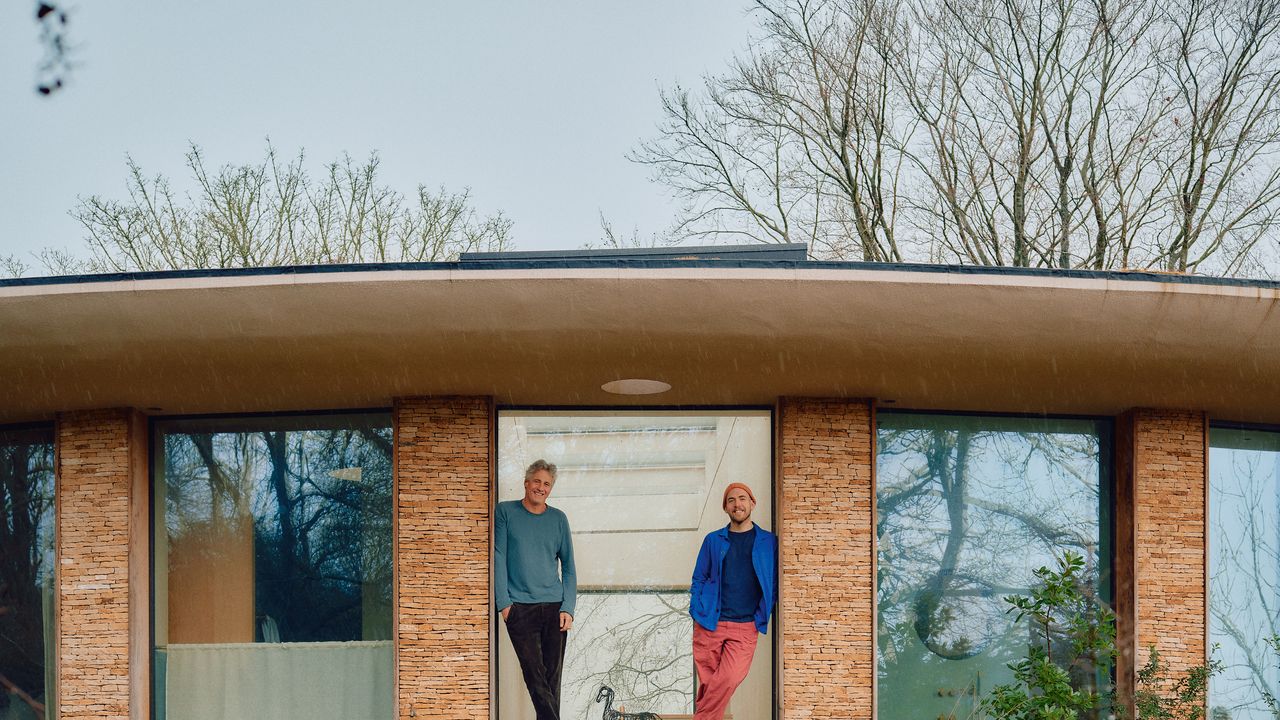
Harry’s plant palette brings together suitably hardy, salt-tolerant species of native grass, viper’s bugloss and climate-adapted edimentals, including sea buckthorn and rock samphire, grouped around a symbolic central structure. ‘We conceived this as a shelter and also as a learning space, demonstrating the possibility of regeneration through creativity, and the way in which developing practical skills can lead to a brighter future through careers in the green industries,’ says Harry.
The pavilion, which sits in a pool of water in the centre of the garden, has a roof covered in solar panels. Its design was inspired by the shell of a mussel, recalling the historical importance of fishing in Morecambe Bay, and its floor and panels around the perimeter will be constructed from clam-crete – a shell-based, low-carbon concrete alternative.
Modelled on sections of local limestone pavement, water-rippled sand and other natural features of the region, these panels were created by artist Finbar Ward working with young adults from Morecambe, and will be re-homed in the town. ‘The new Eden Project Morecambe won’t open until 2028 but, after the show, every element of our Chelsea garden will form part of the one-and-a-half-acre public space we are creating next to the Eden site,’ explains Harry. ‘It will be planted up this autumn and will start benefitting the local community immediately, which makes this project even more worthwhile.’
-production_digital.jpg)
A bright planting palette reflects the positive role gardens will play for future generations.
Project Giving Back
After five years of ground-breaking philanthropy, funding over 60 show gardens inspired by good causes and relocated to public spaces around the country, Project Giving Back (PGB) is appearing for the final time at Chelsea. And it is going out in style. Provence-based designer James Basson has been commissioned to create an unjudged feature garden for PGB, which promises to be every bit as exceptional as the charity itself. James has taken inspiration from the historic ochre mines around Roussillon, near his home in southern France, to produce a richly coloured, otherworldly landscape. ‘These mines were once heavily damaged features but, over time, through natural succession and soil regeneration, an extraordinary landscape has emerged,’ he says. ‘I wanted to bring a little of this drama and raw beauty to Chelsea.’
PGB is also funding 11 judged gardens in 2026, including the YoungMinds Garden designed by Charlie Chase for the All About Plants category. Charlie’s small south London studio, Chase Gardens, specialises in restorative landscape design and he is starting to attract attention for his interesting approach to biodiverse planting design. So look out for an intriguing palette; this includes a rare Aralia chapaensis, the sub-tropical woodlander Manihot grahamii and vibrant yellow Zizia aurea. ‘This is a garden designed not just for the show, but also to activate young gardeners,’ explains Charlie, who lost his mother at a young age and turned to gardening to help to manage his grief. He is now on a mission to democratise access to nature and promote careers in horticulture for young people. After Chelsea, the garden will be relocated to a community space in Newham, east London. You can read more about his garden here.
Other gardens that are being supported by PGB include the Bat Conservation Trust’s naturalistic Nocturnal Garden, designed by Melanie Hick to demonstrate how easy it is to plant a beautiful garden that will also appeal to Britain’s 18 native bat species; and A Garden for Every Parkinson’s Journey, created by Arit Anderson as a sanctuary for people navigating life with this complex neurological condition.
Comments are closed.