

 3 min read
Whether you’re starting a garden, filling window boxes, or sprucing up your yard, you need plants that will give you more bang for your buck—both in time and money spent. Smart gardeners turn to perennials to do just that. Unlike annuals, once perennials are established, they will come back strong year after year without much extra effort on your part. Some plants, like Shasta daisies and gladiolus, will even multiply on their own.
These plants are some of the toughest ones out there when it comes to extreme temperatures and weather and soil conditions. Just as importantly, they are beautiful to look at and will add lovely foliage and plenty of blooms to your outdoor spaces.
Daylilies
Lisa Hubbard
A beautiful addition to beds or borders, daylilies aren’t picky about their environment and can survive in just about any type of weather. True to their name, the flowers bloom for just a day, but the plants tend to have lots of buds, which means that they’ll provide flowers for much longer. Daylilies also spread easily and multiply, which is great if you need to fill a large space. There are thousands of varieties beyond the common orange and yellow ones you’ll see in most gardens, including deep purple and variegated hues.
Shasta Daisies
JudiParkinson//Getty Images
These cheap and cheerful plants spread happiness wherever they grow. Once established, they will return every spring or early summer, and come back bigger each year. Hardy Shasta daisies grow in clumps, and you can easily dig up and separate dense groupings and move them to other places in your garden. This will also help boost the number of blooms you’ll get.
Catmint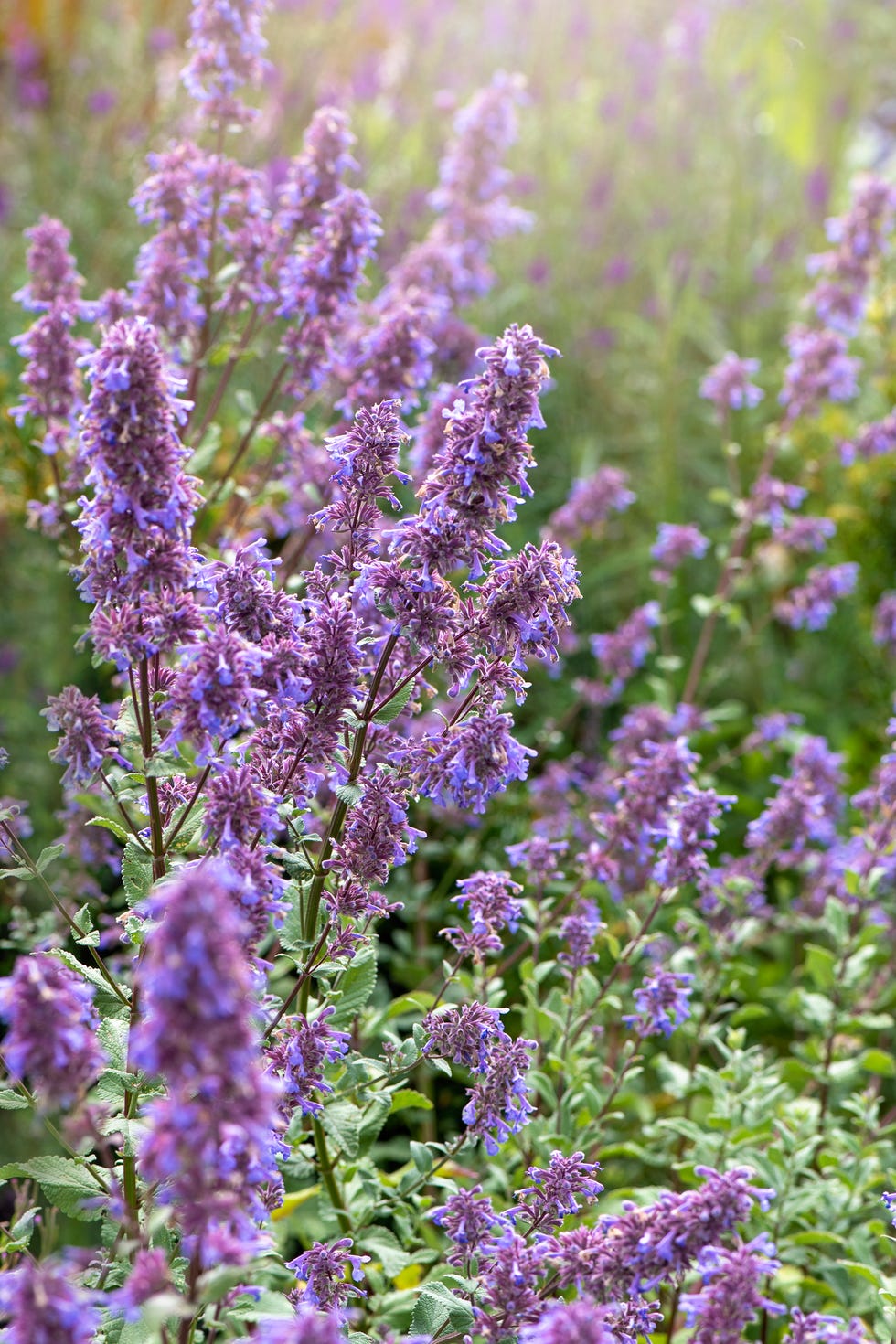
Jacky Parker Photography//Getty Images
This perennial is tough-as-nails, a pollinator magnet, drought-tolerant, and it smells great too. Covered in tiny, silvery-green leaves and clusters of bluish-purple blossoms, catmint is one of the most low-maintenance additions to any landscape. It will return stronger each year, and depending on the variety, it can grow low to the ground or tall and dense.
Amsonia
Alex Manders//Getty Images
Also called “blue star,” this shrub has tiny, pale blue star-shaped flowers in the spring and summer and long, wispy green leaves that turn vibrant yellow-orange in the fall. Despite its delicate appearance, amsonia thrives in tough soil conditions. Use it to create a striking border or add texture and color to a cottage-style garden.
Black-Eyed Susans
Ghiringhelli Ausrey / EyeEm//Getty Images
If you’re looking for a plant that needs minimal care, these summertime favorites are as easy as they come. These plants will come back for several years in a row, leaving you with plenty of flowers for cutting well into fall. Because Black-eyed Susans are self-seeding, they tend to spread and take over, which is ideal if you’re filling a large area of your yard, but not if you’re adding them to a small garden with other plants.
Hydrangeas
Proven Winners
With their fluffy flower heads and abundant foliage, hydrangeas will beautify your garden from spring until fall. These plants come in so many varieties, whether you want to keep them in containers (look for dwarf or compact varieties) or turn them into a wall of shrubbery (try panicle hydrangeas). No matter what kind you choose, they grow quickly and tend to come back bigger each year.
Coneflowers
Darwin Perennials
If you think this type of plant only produces pink-purple flowers with domed brown centers, you’re missing out on the colorful world of coneflowers. These easygoing pollinator plants come in hues ranging from snowy white to deep red and have a long blooming season—from spring to fall in many areas.
Gladiolus
Orest Lyzhechka//Getty Images
Add drama to your garden with these tall, spiky plants covered in showy, ruffled flowers. Ideal for floral arrangements, gladiolus come in a rainbow of eye-popping colors and are extremely easy to maintain. The plants are grown from bulbs, and as they grow, they will produce more tiny bulbs and multiply each year.
Comments are closed.