
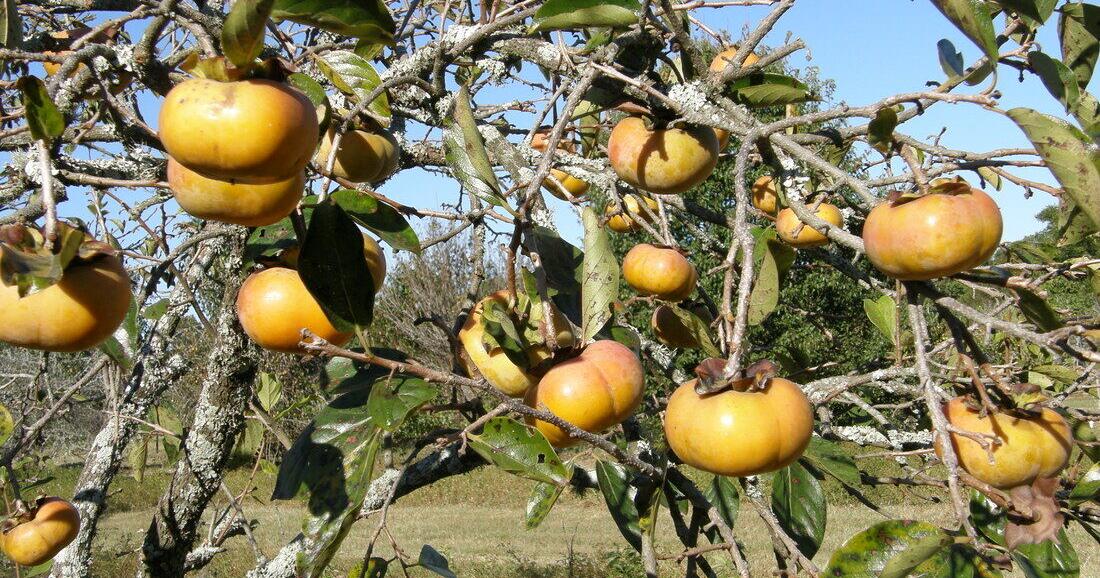
I have a persimmon tree over 25 years old. It is an astringent type that must be soft to eat. Last year, it produced more persimmons than ever before, at least 100. This year, I fertilized the tree in late February. The tree looks great, but it flowered very little, and I don’t see any fruit. I am puzzled why it is not producing a crop this year. What do you think? — Steve
This is likely a matter of overproduction last year. When a fruit tree produces an unusually large crop, it depletes its resources. As a result, the tree may not produce the next year as it builds back up. Your persimmon tree should produce a good crop next year.
I have dallisgrass growing in my St. Augustine lawn. What is the best way to control it? — Herbie
There are three options for controlling dallisgrass in St. Augustine.
1. Physical control. Use a shovel to dig out individual dallisgrass plants. Be sure to dig down and get the roots and rhizomes. This is labor intensive but can be effective for light infestations.
2. Spot treatment with glyphosate (Killzall, Eraser Grass and Weed Killer). Glyphosate is nonselective and will also kill St. Augustine grass. Apply this just to the dallisgrass, getting as little as possible on the St. Augustine. If some of the lawn grass is killed in the spot, the surrounding grass will grow back into small dead spots. But if you must kill a larger area of these weeds, you should consider removing the dead weeds and laying sod over the area. This will quickly repair the damage. An area that stays bare of grass for an extended period is an invitation to weeds.
3. There are no highly effective selective herbicides that will kill dallisgrass without hurting the St. Augustine. Celsius herbicide is most often recommended for suppression of dallisgrass in St. Augustine. Plan on making three applications following label directions. You may just spray individual plants or patches of dallisgrass. This weed killer will also control a wide variety of lawn weeds and can be used through the summer despite high temperatures.
The ends of my monkey grass have turned brown. How far back should I cut them? — Rosemary
The best time to cut back monkey grass (Ophiopogon japonicum) to remove unattractive foliage and rejuvenate the plants is late February or early March, before new spring growth. At that time, we cut it back near the soil and let the new growth come up. At this point, the new growth has already occurred.
You have two options. You can just trim enough to remove the brown ends of the leaves. The monkey grass would look better, and it preserves the spring growth. Or you can cut back the monkey grass the way we would do in early spring, leaving a one-inch stubble. The monkey grass will recover from this, but it is hard on the plants to produce a second flush of growth. It may not come back as thick. But over time, it will fill in and thicken up.
My amaryllises have finished blooming, and I have removed the old flower stalks. They are starting to produce new green leaves. Do I leave them in their pots, or do I remove and store them? — Andrea
Do not remove and store them. Continue to water and care for them. They need the summer growing season to bloom next spring. Move the pots to a protected area during winter anytime temperatures below the upper 20s are predicted. They will bloom again next year around April.
GARDEN TIPS
KEEP PALM AND CARRY ON: If you want to plant palms in your landscape, the best time is May through August. Palms establish best when planted in warm soil. Select hardier palms that survive severe freezes, such as cabbage or sabal palm (Sabal palmetto), windmill palm (Trachycarpus fortunei), Chinese fan palm (Livistona chinensis), Mediterranean fan palm (Chamaerops humilis), jelly palm (Butia capitata), Canary Island date palm (Phoenix canariensis), date palm (Phoenix dactylifera), palmetto (Sabal minor) and needle palm (Rhapidophyllum hystrix). Always ask how hardy a palm is before you purchase it. This is particularly important when planting palms on the northshore. Ideally, palms should be hardy down to 15 degrees.
REACH OUT: If you are having insect or disease problems in your landscape or vegetable gardens, be sure to get the proper diagnosis and determine what, if anything, should be done. For help, contact your local LSU AgCenter extension horticulturists by email. Find your parish horticulturist’s name and email address by typing — LSU AgCenter and your parish name — into a search engine. Find the horticulturist in the staff listing and use their email address to contact them.
GET YOUR FILL: Soil subsidence may require fill to occasionally be spread over the lawn area. This is especially common on the south shore of the New Orleans area. Filling over lawns can be done now through August. Use a sandy soil, like pump sand or river sand (avoid spillway sand due to weed issues like torpedograss). Where the fill is deeper than 2 inches, you may have to replace the grass.
STAY DRY: Try to avoid wetting the foliage of plants prone to leaf diseases, like vegetables, bedding plants and roses. Wetting the foliage encourages fungal diseases to attack.
GARDEN QUOTE:
“The best thing one can do when it’s raining is to let it rain.” — Henry Wadsworth Longfellow, American poet
Comments are closed.