
When you buy through links on our articles, Future and its syndication partners may earn a commission.
Pollinators play a crucial role in garden biodiversity and food production, but they need a helping hand as populations have declined over the years. Don’t worry that a garden for these beneficials will be high maintenance, though, as you can create a beautiful drought-tolerant pollinator garden with native plants.
Many studies have found that pollinator populations have declined steadily this century. Thankfully, attitudes have changed in recent years, and more gardeners are adding plants for pollinators to their outside spaces.
Advertisement
Advertisement
The best choices are native plants, which have evolved alongside your pollinators and are suited to local conditions. This makes them low-maintenance and drought-tolerant. Below are seven great native plants for a drought-tolerant pollinator garden that will look fabulous and provide a reliable food source throughout the seasons for bees, butterflies, moths, and hummingbirds.
1. Bee Balm
Credit: Getty Images/Johnat APW
Bee balm, also known as monarda or bergamot, is ideal for a drought-tolerant pollinator garden as its colorful, tubular petals are a beacon for bees, butterflies, moths, and hummingbirds.
This North American native plant prefers moist soil but can survive drier periods without too much fuss. It will need regular deep watering to help the perennial bed in, but it is more drought-tolerant once strong roots are established.
In periods of drought, though, watering at least every 10 days will keep the flowers coming for pollinators to enjoy.
Advertisement
Advertisement
If you are after the most drought-tolerant Monarda varieties, look for spotted bee balm (Monarda punctata) or wild bergamot (Monarda fistulosa). This collection of bee balm seeds at Amazon contains packets to grow both of those drought-tolerant varieties.
2. Blanket Flower
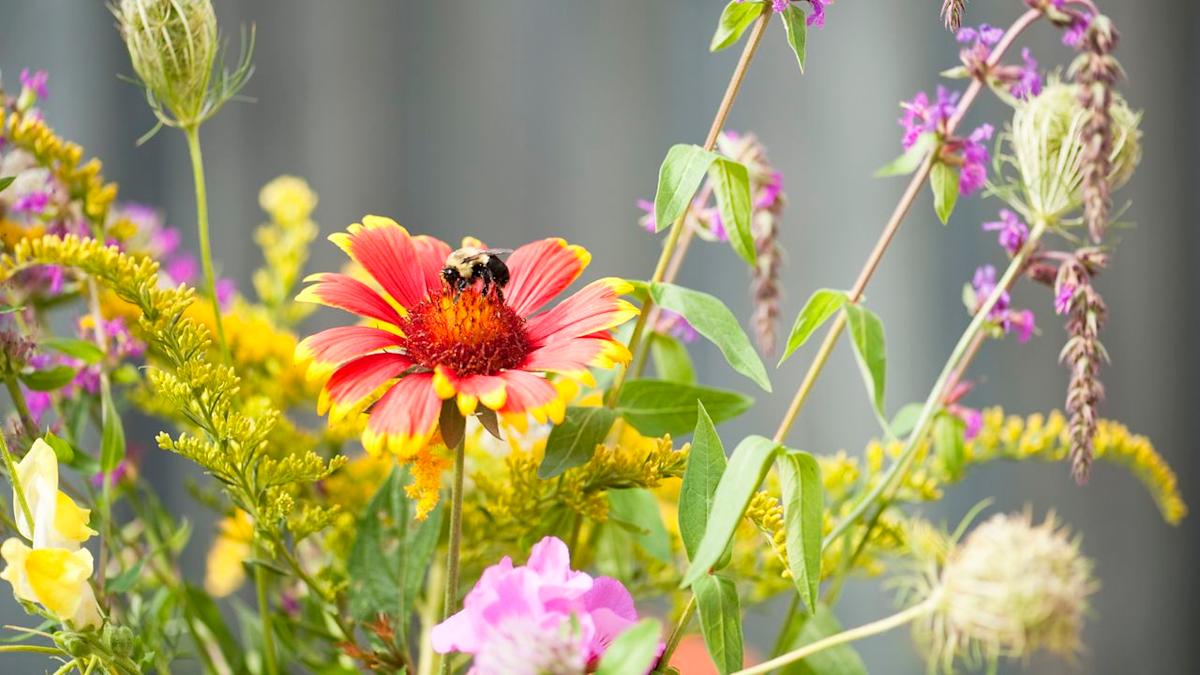
Blanket flower, or gaillardia, is a native wildflower of drier regions of the US. The bright plants come in perennial and annual varieties that can be grown in zones 3-9.
These native plants are perfect for drier, hotter gardens, where they will brighten up flower beds with fiery hues of red, orange, and yellow. They are long-blooming plants, capable of putting on a show from June to October.
Many types of bees and butterflies are attracted to the bright flowers. Indeed, blanket flowers make great plants for fall pollinators as they offer nectar late into the season. After that, the seed heads make great food for birds.
Advertisement
Advertisement
Blanket flowers are tolerant of heat and drought conditions once established. They prefer drier conditions and will only need watering every two weeks when water is scarce. These drought-tolerant plants are very low-maintenance, but deadheading blanket flowers will help to extend the flowering display.
This SpinTop Orange Halo Blanket Flower at Nature Hills is an ideal variety for smaller gardens, as it reaches just 1-2 feet tall and wide yet puts on a dramatic show that attracts bees and butterflies.
3. Blazing Star
Blazing star, known as liatris, is native to the prairies of North America, and its tall spikes of purple, pink, or white blooms dazzle from late summer into fall.
The vertical blooms not only add drama and height to any garden, but are high-nectar magnets for butterflies and bees. This includes being a beneficial food source to fuel Monarch butterflies ahead of their migration in late summer.
Advertisement
Advertisement
As these drought-friendly perennials naturally grow in prairies and drier locations, they are ideal for rock gardens, prairie planting, or xeriscaping, as well as more classic mixed herbaceous borders.
New plants will need watering during their first year after planting, but afterwards will only need watering during extended drought periods.
You can get a mix of purple and white Blazing Star bulbs at Burpee to add to your garden.
4. Ceanothus
Credit: Getty Images/Photos from Japan, Asia and othe of the world
Advertisement
Advertisement
If you seek a drought-tolerant shrub to add to any pollinator or wildlife garden, a ceanothus ticks all the right boxes.
Also known as a California lilac, it comes in various sizes and is covered in clouds of blue flowers (though some cultivars have white or pink blooms) from early spring to summer, depending on the variety.
Those flowers are highly fragrant and nectar-rich, which is why bees, butterflies, and hummingbirds flock to them during the blooming season.
Ceanothus can grow in US hardiness zones 4-10 and is drought-tolerant once established. The shrubs don’t like wet roots, so adding compost ahead of planting can improve heavier soil types, making them more suitable.
Advertisement
Advertisement
You can get a live Ceanothus americanus shrub at Amazon, a white-flowering variety that grows 3-4 feet.
5. Coneflower
Credit: B LaRue / Alamy
Coneflower, or echinacea, makes one of the best choices for a drought-tolerant pollinator garden thanks to its deep roots.
The bright perennials come in shades of purple, pink, red, orange, yellow, white, and green, and the plants have deep roots when established. This means they seek out moisture deep down in the ground. This trait makes them one of the most drought-tolerant perennial plants.
Native to the eastern and central United States, coneflowers bloom over a long period from summer into fall, with their daisy-like flowers attracting bees, butterflies, and hummingbirds.
Advertisement
Advertisement
Later in the year, the dried seed heads are a vital food source for many birds, such as American goldfinches, cardinals, and chickadees.
The purple coneflower (Echinacea purpurea) is one of the most popular coneflower varieties, and it reliably attracts pollinators to its light purple blooms season after season. You can get purple coneflower plants at Nature Hills.
6. Coreopsis
Credit: Getty Images / Alex Manders
There are more than 100 species and a huge number of different hybrids of coreopsis, including annual and perennial types. Also known as tickseed, the native plants have bright, nectar-rich, daisy-like blooms in vivid shades of red, orange, and yellow,
Coreopsis can be one of the longest-flowering perennials you can add to a garden to attract lots of pollinators throughout the year. Add these vibrant, showy plants to your borders or containers, and bees, butterflies, and hummingbirds will flock to them from summer through fall.
Advertisement
Advertisement
Perennial varieties can be grown in US hardiness zones 4-9 and have good drought-tolerance once established after the first year. Coreopsis is perfect for locations with hot, dry summers, but regular deep watering during extended hot, dry periods will help prolong the blooming.
For a stunning, darker coreopsis, this ‘Mercury Rising’ coreopsis plant from Burpee has dark wine-red blooms with frosted white tips.
7. Milkweed
Credit: ARCosta Photography / Alamy Stock Photo
Milkweed produces clusters of colorful, fragrant flowers from late spring to late summer. Its name doesn’t do it justice, as it is certainly not a weed and thoroughly deserves a place in any drought-tolerant pollinator garden.
A great reason to grow milkweed is that they are a host plant for Monarch butterflies. When you grow milkweed for Monarch butterflies, it helps to support the sharp decline in their numbers by providing food and habitat.
Advertisement
Advertisement
On top of helping Monarchs survive, milkweed’s nectar-rich flowers attract bees, hummingbirds, and other types of butterflies. The plant is very valuable to garden biodiversity and can work in borders, container gardens, or meadows.
Milkweed plants are very low-maintenance and can tolerate dry, arid conditions. They only need watering once the top inch or two of the soil dries out, and they can handle periods of drought once established in the ground. Plants in containers will require more frequent watering.
The common milkweed is one of the best native varieties for supporting Monarchs, and you can get a live common milkweed plant at Nature Hills.
Seeds for a Drought-Tolerant Pollinator Garden
Pollinator Mix Wildflower Seeds
This mix contains seeds for 18 different pollinator-friendly plants, including coneflower and black-eyed Susan, and can be broadcast sown into the garden.

Precious Pollinators Seed Shaker
This mix has seeds for 14 different plants, including bee balm, coreopsis, milkweed, and coneflower, and can be shaken over the ground to grow plants for pollinators.

Drought Tolerant Wildflower Mix
This mix contains seeds for 21 drought-tolerant wildflowers. It includes gaillardia, coreopsis, coneflower, and more to attract lots of pollinators.
If you want to create a pollinator pit stop in your yard, you can purchase plants, sow seeds, or take cuttings. Spring is a great opportunity to grow new pollinator-friendly plants from softwood cuttings, and the likes of bee balm, lavender, salvia, and nepeta are among the best plants to propagate in May through cuttings.
If you are already growing any of these pollinator plants, you can easily get new ones for your garden for free at this time of year.
If you love inspiring garden ideas, outdoor advice, and the latest news, why not sign up for our newsletter and get the latest features delivered straight to your inbox?
Comments are closed.